Introduction to Bayoud disease
Bayoud disease, caused by the soil-borne fungus Fusarium oxysporum f. sp. albedinis, is the most devastating disease affecting date palms (Phoenix dactylifera) in arid and semi-arid regions. First identified in Morocco in the early 20th century, the disease has since spread across North Africa and into parts of the Middle East, threatening both commercial plantations and traditional oasis systems. The pathogen invades the vascular system of the palm, blocking water and nutrient transport and leading to rapid decline and death of infected trees.
The economic impact is severe: entire groves can be lost within a few years if the disease is not contained. Because the fungus persists in soil for many years and spreads easily through irrigation water and contaminated planting material, Bayoud disease poses a long-term challenge for date producers worldwide.
Identifying Symptoms & Damage
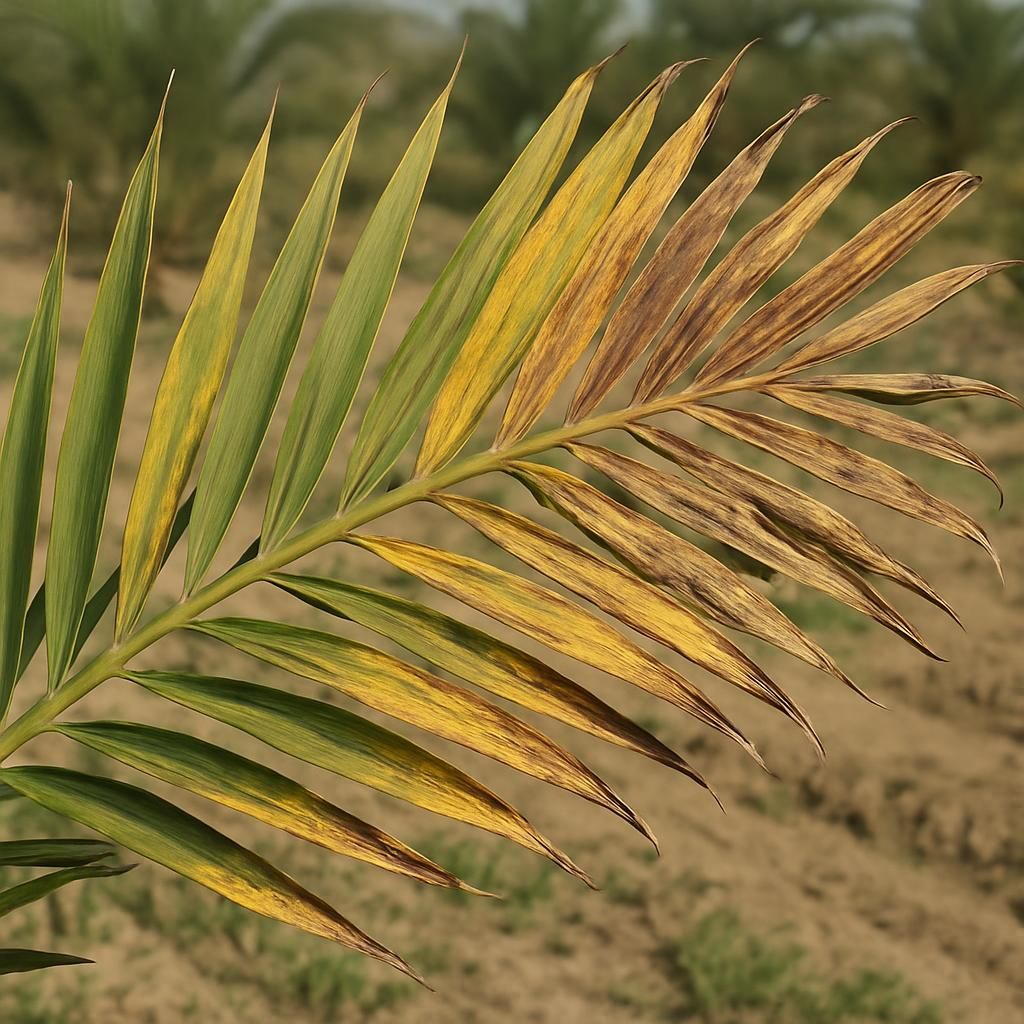
Early recognition is critical. Initial symptoms appear on older fronds, which turn yellow starting from the tips and progressing toward the base. As the infection advances, younger fronds also yellow and wilt, giving the canopy a characteristic one-sided appearance. Eventually, the entire crown collapses and the palm dies.
Internal examination of the trunk reveals brown vascular discoloration in the xylem. In advanced stages, the fungus may produce pinkish-white mycelial growth at the base of the trunk or on exposed roots. Offshoots (suckers) from infected mother palms frequently carry the pathogen, spreading the disease to new plantings.
Lifecycle and Progression of Bayoud disease
The pathogen survives as chlamydospores in soil and plant debris for decades. Under favorable conditions, spores germinate and infect roots through wounds or natural openings. The fungus then colonizes the vascular tissue, producing toxins that cause wilting and tissue necrosis.
| Lifecycle Stage | Description | Duration | Key Conditions |
|---|---|---|---|
| Spore Survival | Chlamydospores persist in soil and debris | Years to decades | Dry or moist soil, wide temperature range |
| Germination & Infection | Spores germinate and penetrate roots | 1–4 weeks | Soil temperatures 20–30 °C, adequate moisture |
| Vascular Colonization | Fungus spreads through xylem, blocking water flow | 2–8 weeks | Warm temperatures, stressed host |
| Symptom Expression | Frond yellowing, wilting, and canopy collapse | 1–6 months | High disease pressure, susceptible variety |
| Reproduction & Spread | New spores produced in dying tissue and soil | Ongoing | Irrigation water movement, contaminated offshoots |
Environmental Triggers & Risk Factors
Bayoud disease thrives in warm, arid climates typical of date-growing regions. Soil temperatures between 20 °C and 32 °C combined with periodic irrigation favor spore germination and root infection. Heavy soils that retain moisture for long periods increase risk, while sandy soils may allow faster drainage but still permit spread through irrigation canals.
| Factor | Optimal Range for Disease | Management Implication |
|---|---|---|
| Soil Temperature | 20–32 °C | Avoid planting in overheated soils; use shade during establishment |
| Soil Moisture | Frequent irrigation or poor drainage | Improve drainage and avoid overwatering |
| Soil pH | 6.5–8.5 | Maintain neutral to slightly alkaline pH; avoid excessive liming |
| Planting Density | High density groves | Increase spacing to improve airflow and reduce root contact |
| Water Quality | Contaminated irrigation sources | Use clean water sources or treat irrigation water |
Organic Control & Treatment Plans
Once established in soil, Bayoud disease is extremely difficult to eradicate. The primary strategy is prevention through resistant cultivars and strict sanitation. Infected palms should be removed and destroyed, and the surrounding soil solarized or treated with organic amendments to reduce inoculum.
| Treatment Option | Application Frequency | Method & Notes |
|---|---|---|
| Resistant Date Varieties (e.g., Medjool, Deglet Noor selections) | At planting | Source certified disease-free offshoots from resistant mother palms |
| Soil Solarization | Once per season (summer) | Cover moist soil with clear plastic for 4–6 weeks to reduce spore viability |
| Compost Tea & Beneficial Microbes | Every 4–6 weeks during growing season | Apply aerated compost tea to enhance soil microbiome and suppress Fusarium |
| Biofumigation (Mustard or Brassica cover crops) | Once per year before replanting | Incorporate green manure and allow decomposition to release suppressive compounds |
| Strict Sanitation | Continuous | Remove and burn infected palms; disinfect tools between trees |
| Drip Irrigation Management | Daily or as needed | Reduce surface wetting and avoid splashing soil onto trunks |
Preventing Bayoud disease in the Future
Long-term prevention centers on using certified disease-free planting material, implementing rigorous quarantine measures, and maintaining healthy soil biology. Crop rotation with non-host species for at least 5–7 years before replanting dates can significantly reduce soil inoculum. Regular monitoring for early symptoms allows rapid removal of infected trees before the pathogen spreads further.
Improving overall palm vigor through balanced organic fertilization and proper irrigation reduces plant stress and susceptibility. In regions where Bayoud disease is endemic, planting only resistant or tolerant varieties is the most reliable safeguard.
Crops Most Affected by Bayoud disease
Bayoud disease is highly host-specific and primarily affects date palms. While the fungus does not typically infect other major crops, related Fusarium wilt pathogens cause similar vascular wilts in Tomato, Banana, and Melon species. Date palm growers should therefore avoid planting these crops in rotation or adjacent to infected groves without thorough soil testing and sanitation.
For additional context on managing soil-borne fungal diseases in arid environments, see Crop Diseases Under the Microscope: 9 Organic Fixes for Small Farm Resilience.