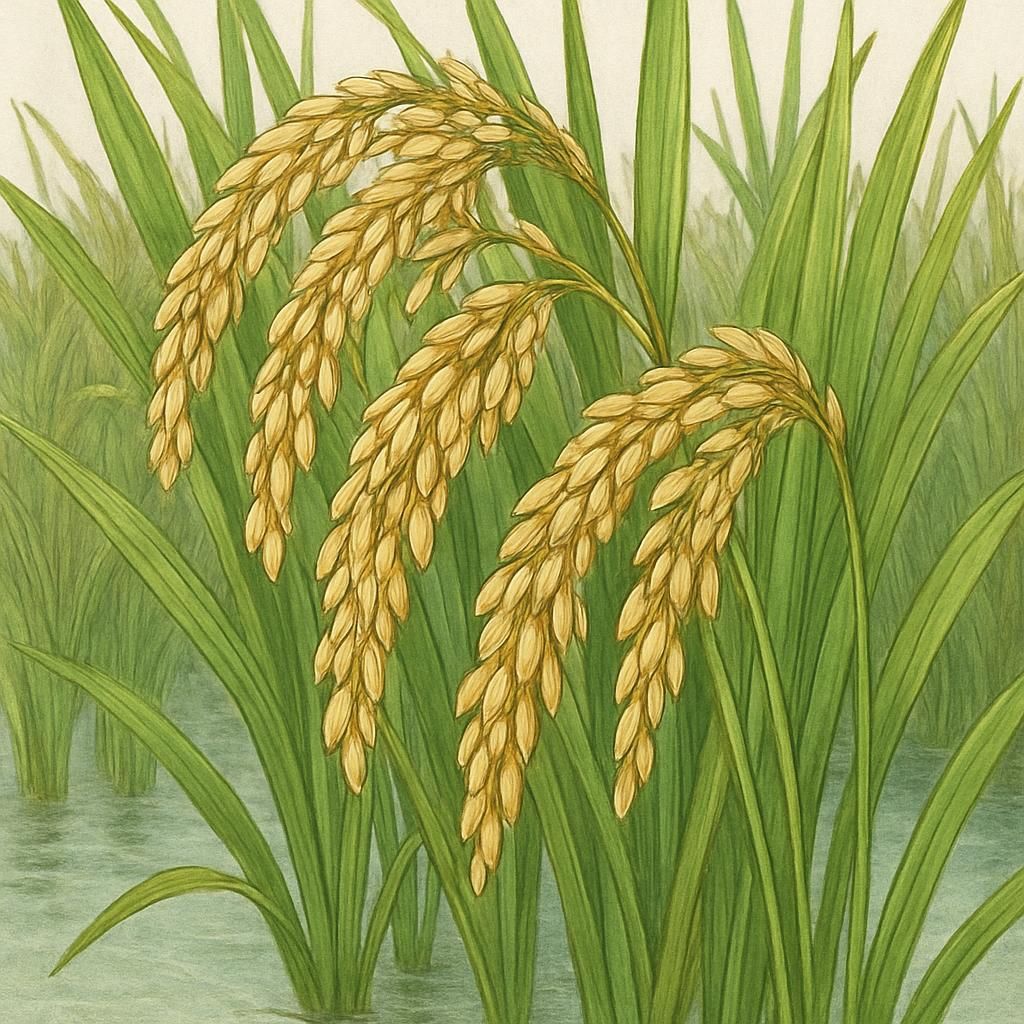
Introduction to Basmati Rice (Pusa 1121)
Basmati Rice, particularly the Pusa 1121 variety, is famed for its long grain size, exquisite aroma, and unique taste. This premium rice variety is primarily grown in the Indian subcontinent and is highly valued in international markets. It is an excellent choice for dishes that require fluffy, separate grains, such as biryanis and pilafs.
Botanical Profile of Basmati Rice (Pusa 1121)
Botanically classified as Oryza sativa, Basmati Rice (Pusa 1121) is a member of the grass family, Poaceae. It exhibits elongated grains that significantly increase in length after cooking, a hallmark trait of this particular rice type. The variety is known for its innate resistance to certain diseases and its adaptability to specific climatic conditions.
Soil, pH, and Climate Requirements for Basmati Rice (Pusa 1121)
Basmati Rice (Pusa 1121) requires a specific set of environmental conditions for optimal growth and yield. The ideal soil, pH, and climate conditions are crucial for maximizing the quality and quantity of the harvest.
| Parameter | Ideal Condition |
|---|---|
| Soil Type | Loamy, well-drained |
| Soil pH | 5.5 to 7.0 |
| Temperature Range | 20°C to 37°C |
| Rainfall | 1000 to 1500 mm annually |
Step-by-Step Planting & Propagation
- Seed Selection: Begin with high-quality, certified seeds from a trusted supplier.
- Seed Treatment: Soak seeds in a water solution with appropriate fungicides to prevent soil-borne diseases.
- Sowing: Prepare nursery beds and sow seeds in well-prepared soil. Sowing should ideally be done 4-6 weeks before transplanting.
- Transplanting: Transfer seedlings to the main field when they are approximately 15-20 cm tall, typically 3-4 weeks old.
- Spacing: Plant with a spacing of 15-20 cm between plants and 20-25 cm between rows to ensure proper airflow and penetration of sunlight.
Care & Maintenance Regimes for Basmati Rice (Pusa 1121)
Proper care and maintenance are crucial for the healthy growth of Basmati Rice. The following schedule outlines key practices.
| Activity | Details | Frequency |
|---|---|---|
| Watering | Irrigate consistently, especially during dry periods | Every 5-7 days |
| Fertilization | Use NPK (nitrogen, phosphorus, potassium) fertilizers | At planting and mid-growth |
| Weeding | Manual or mechanical weeding to reduce competition | Every 2-3 weeks |
| Pest Control | Monitor and manage pests with organic options | As needed |
Pests, Diseases & Organic Management
Basmati Rice (Pusa 1121) is susceptible to pests such as Spider Mites and diseases like blast, sheath blight, and brown spot. Integrated pest management (IPM) and organic methods, such as neem oil sprays and predatory insects, provide effective control. For more details on organic strategies, refer to our blog Crop Diseases Under the Microscope: 9 Organic Fixes for Small Farm Resilience.
Harvesting, Curing & Optimal Storage
Basmati Rice is ready for harvest when the grains are firm and have a golden hue. Threshing should follow immediately post-harvest to reduce loss. Proper curing enhances the rice's aromatic properties, so sun-dry grains for 2-3 days before storing. Use airtight containers to prevent moisture ingress and pest attacks.
Companion Planting for Basmati Rice (Pusa 1121)
Companion planting offers several benefits, such as pest control and soil enrichment. Consider incorporating legumes like Soybeans and cover crops such as Clover to improve soil fertility and reduce weeds. For more insights on companion planting, visit the blog Summer Companion Planting: 10 Organic Pairings to Boost Small Farm Resilience.