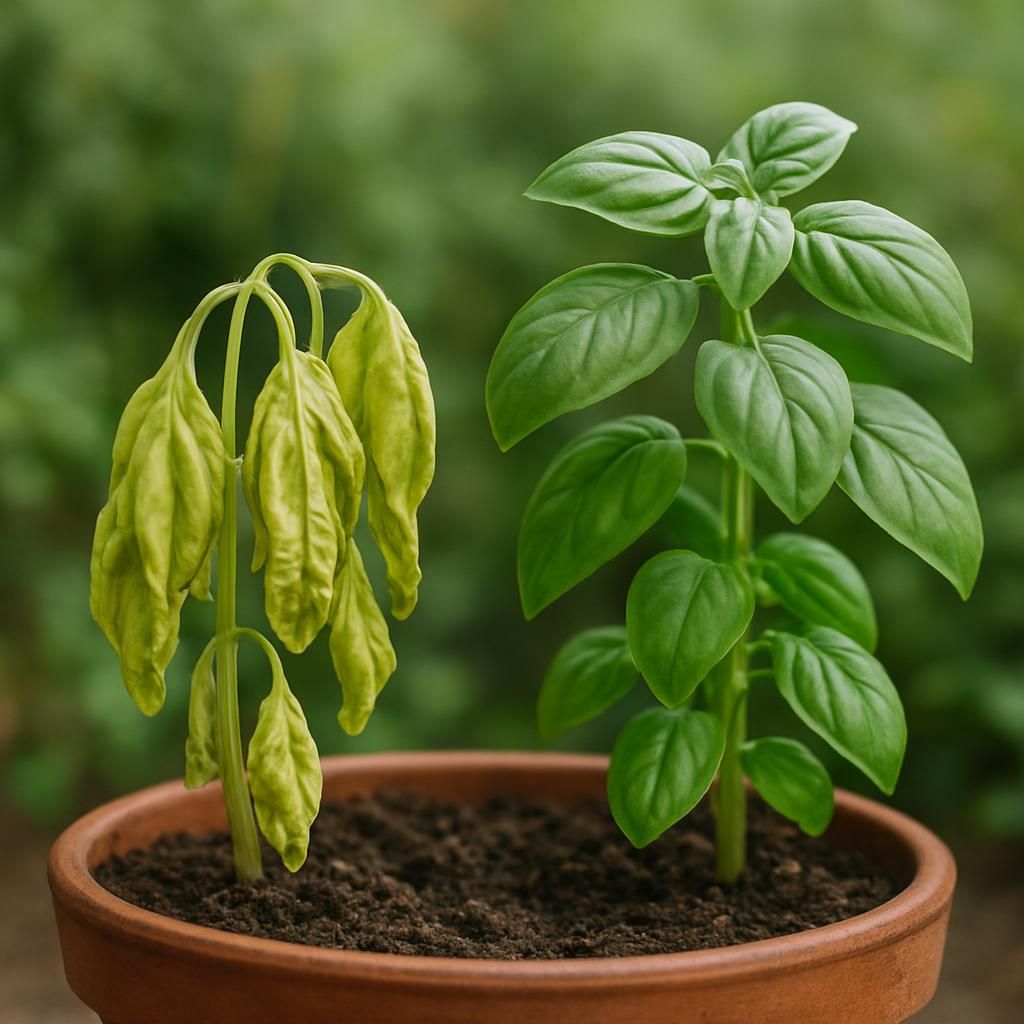
How to Revive Wilting Basil Plants: Common Causes and Organic Fixes
Basil plants that suddenly droop, yellow, or stop growing can be frustrating for any gardener. Whether you're growing Thai Basil in containers or garden beds, wilting often signals an environmental imbalance that can be corrected with organic practices.
Introduction
Wilting basil typically results from stress rather than irreversible damage. New plants are especially vulnerable during the transition from nursery to home conditions. By identifying the root cause early, you can restore vigor within days using simple, chemical-free adjustments.
Common Causes
Several factors commonly trigger basil decline. Understanding each helps target the right remedy.
| Cause | Symptoms | Typical Triggers |
|---|---|---|
| Overwatering | Yellow lower leaves, mushy stems, foul soil smell | Frequent watering, poor drainage |
| Underwatering | Dry, crispy leaf edges, soil pulling from pot edges | Hot weather, small containers |
| Insufficient Light | Leggy stems, pale leaves, slow growth | Indoor placement away from windows |
| Temperature Stress | Brown leaf spots, sudden collapse | Cold drafts below 50°F or extreme heat |
| Nutrient Deficiency | Stunted growth, pale overall color | Depleted potting mix without amendments |
| Pests | Visible insects, sticky residue, holes | Aphids, spider mites on stressed plants |
Step-by-Step Organic Solutions
Follow this sequence to diagnose and treat your basil systematically.
1. Assess and Adjust Watering
Check soil moisture by inserting a finger two inches deep. If damp, hold off on watering for 2-3 days. For overwatered plants, gently remove the root ball, trim any rotted roots, and repot in fresh, well-draining organic mix containing perlite or coarse sand.
2. Optimize Light Exposure
Move basil to a location receiving at least 6-8 hours of direct sunlight daily. South-facing windows or supplemental grow lights on a 14-hour timer work well indoors. Rotate pots every few days for even growth.
3. Improve Soil and Drainage
Use a high-quality organic potting mix amended with compost. Ensure containers have drainage holes. Top-dress with worm castings or aged compost tea every two weeks to replenish nutrients without chemical fertilizers.
4. Manage Temperature and Humidity
Keep basil between 65-85°F. Protect from cold windowsills or air conditioning vents. In hot climates, provide afternoon shade and mist leaves lightly during peak heat.
5. Address Pests Organically
Inspect leaf undersides daily. Spray with a solution of 1 teaspoon neem oil, 1 quart water, and a drop of castile soap. Repeat every 3-5 days until pests disappear. Companion planting with Tomato or Cucumber can naturally deter insects.
6. Prune and Encourage Recovery
Remove damaged leaves and pinch growing tips to stimulate bushiness. Avoid heavy harvesting until new growth appears strong.
Prevention Tips
- Start with healthy transplants from reputable sources.
- Water deeply but infrequently, allowing the top inch of soil to dry between sessions.
- Use containers at least 8-10 inches wide for adequate root space.
- Mulch garden beds with organic straw to retain moisture and suppress weeds.
- Rotate planting locations yearly to prevent soil-borne issues.
- Monitor regularly for early signs of stress, especially during seasonal transitions.
Consistent attention to these fundamentals keeps basil productive throughout the growing season. With organic care, most "sad" plants rebound quickly and provide abundant harvests.