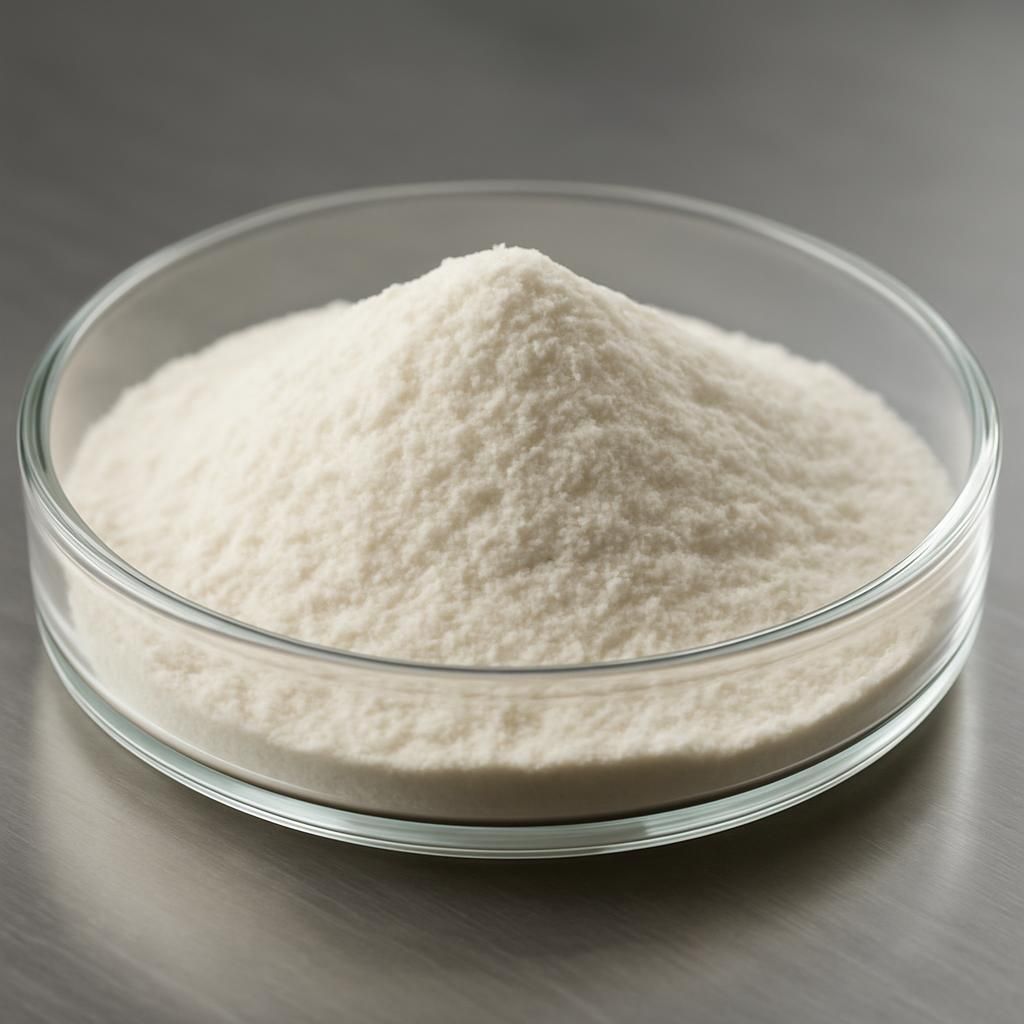
Introduction to Xanthan Gum
Xanthan gum is a high-molecular-weight hydrocolloid produced industrially by the aerobic fermentation of carbohydrate substrates using the bacterium Xanthomonas campestris. First discovered in the 1960s by the USDA Northern Regional Research Laboratory, it rapidly became a staple ingredient due to its ability to form highly viscous solutions at low concentrations. The polymer is prized for its pseudoplastic flow behavior, meaning viscosity decreases under shear stress, which makes it ideal for sauces, dressings, and gluten-free baking where smooth texture and pourability are required.
Commercial production occurs in large stainless-steel fermenters where temperature, pH, aeration, and nutrient supply are tightly controlled. After fermentation, the broth is pasteurized to kill the bacteria, and the gum is recovered by precipitation with isopropyl alcohol or ethanol, followed by drying and milling into a fine powder. This process yields a product that is stable from pH 2 to 12 and remains functional at temperatures up to 120 °C, outperforming many plant-derived gums.
Because xanthan gum is produced via microbial fermentation rather than traditional field cropping, the “growing guide” focuses on optimizing the fermentation environment, substrate selection, and downstream processing parameters that mimic agricultural best practices. Understanding these controlled conditions allows producers to achieve consistent high yields and quality specifications demanded by global markets.
Botanical Profile of Xanthan Gum
Xanthan gum is not a plant but an exopolysaccharide synthesized by the Gram-negative bacterium Xanthomonas campestris. The polymer consists of a cellulose backbone with trisaccharide side chains containing glucose, mannose, and glucuronic acid, often acetylated or pyruvylated. These structural features confer its unique rheological properties. The organism itself is a rod-shaped, motile bacterium that thrives in aerobic conditions and utilizes a wide range of simple sugars.
While the bacterium can be isolated from cruciferous plants where it causes black rot, industrial strains have been selected and mutated for high gum productivity and low pathogenicity. The biosynthetic pathway involves the polymerization of nucleotide-sugar precursors via glycosyltransferases located in the cell membrane, followed by export through a dedicated secretion system.
Soil, pH, and Climate Requirements for Xanthan Gum
Although xanthan gum production occurs in bioreactors rather than soil, the fermentation medium must replicate optimal nutrient and environmental conditions. The table below summarizes the ideal parameters for maximum biomass and polymer yield.
| Parameter | Ideal Range/Value | Notes |
|---|---|---|
| pH | 6.8 – 7.2 | Maintained with NaOH or H2SO4 |
| Temperature | 28 – 30 °C | Critical for enzyme activity |
| Dissolved Oxygen | >20 % saturation | Aeration and agitation must be balanced |
| Carbon Source | 2 – 4 % glucose or sucrose | Higher levels may cause catabolite repression |
| Nitrogen Source | 0.1 – 0.3 % (NH4)2SO4 or yeast extract | Organic nitrogen improves yield |
| Trace Minerals | Mg2+, Fe2+, Mn2+, Zn2+ | Essential cofactors for polymer synthesis |
| Fermentation Time | 48 – 72 hours | Batch or fed-batch strategies used |
Step-by-Step Planting & Propagation
- Strain Selection: Choose a high-yielding, non-pathogenic Xanthomonas campestris strain from a certified culture collection. Maintain master and working cell banks in glycerol at −80 °C.
- Inoculum Preparation: Revive the culture on nutrient agar, then transfer to shake flasks containing 50 mL of seed medium (2 % glucose, 0.5 % yeast extract, minerals) and incubate at 28 °C, 200 rpm for 24 h.
- Seed Fermenter: Inoculate a 10–50 L seed fermenter at 5–10 % v/v. Control pH at 7.0, temperature at 28 °C, and dissolved oxygen above 20 %. Grow until optical density reaches 4–6.
- Production Fermenter: Transfer inoculum to the main fermenter containing production medium. Begin aeration at 1.0 vvm and agitation at 300–600 rpm, adjusting to maintain dissolved oxygen. Feed additional glucose when residual sugar drops below 1 %.
- Monitoring: Sample every 4–6 hours to track biomass, viscosity, residual sugar, and pH. Adjust feed rates to avoid substrate inhibition.
- Termination: When viscosity plateaus (typically 48–72 h), raise temperature to 80 °C for 30 min to pasteurize and stop metabolism.
Care & Maintenance regimes for Xanthan Gum
Maintaining optimal fermentation conditions requires precise control of multiple variables. The schedule below outlines routine checks and interventions.
| Activity | Frequency | Details |
|---|---|---|
| pH Adjustment | Every 2 hours | Automatic addition of 2 M NaOH or 1 M H2SO4 to keep pH 7.0 |
| Dissolved Oxygen Check | Continuous | Maintain >20 % via cascade control of agitation and airflow |
| Glucose Feed | As needed | Fed-batch addition when sugar <1 %; total glucose 40–60 g/L |
| Antifoam Addition | On demand | Silicone-based antifoam at 0.05–0.1 % to control foam |
| Temperature Control | Continuous | Jacket cooling/heating to hold 28–30 °C |
| Sampling & Analysis | Every 4–6 hours | Measure OD600, viscosity (Brookfield), residual sugar (DNS method) |
| Equipment Sanitation | Between batches | CIP cycle with 1 % NaOH followed by 0.5 % peracetic acid |
Pests, Diseases & Organic Management
Industrial fermentation systems are closed and therefore largely free from traditional agricultural pests. However, contamination by bacteriophages or competing microorganisms can devastate yields. Implement strict aseptic techniques, use 0.2 µm sterile air filters, and regularly test for phage presence using plaque assays. If contamination occurs, the batch must be discarded and the fermenter subjected to validated sterilization cycles. For organic certification, ensure all media components and processing aids meet organic standards and avoid synthetic antifoams.
Harvesting, Curing & Optimal Storage
After pasteurization, the broth is diluted with water to reduce viscosity, then precipitated by adding two volumes of chilled isopropyl alcohol. The fibrous precipitate is recovered by centrifugation or filtration, washed with additional alcohol, and dried under vacuum at 60 °C. The dried gum is milled to a particle size of 80–200 mesh and packaged in moisture-barrier bags. Store at 15–25 °C and <60 % relative humidity; under these conditions the powder retains functionality for at least 24 months. Re-test viscosity and microbial counts before use in sensitive applications.
Companion Planting for Xanthan Gum
Because xanthan gum is produced in sterile bioreactors, traditional companion planting does not apply. However, producers often co-locate fermentation facilities with downstream food processing plants that utilize xanthan gum alongside other hydrocolloids such as guar gum or locust bean gum. This integration reduces transportation costs and allows real-time quality feedback. Additionally, some facilities cultivate Saffron Crocus in adjacent greenhouses to diversify revenue streams while maintaining separate production environments.