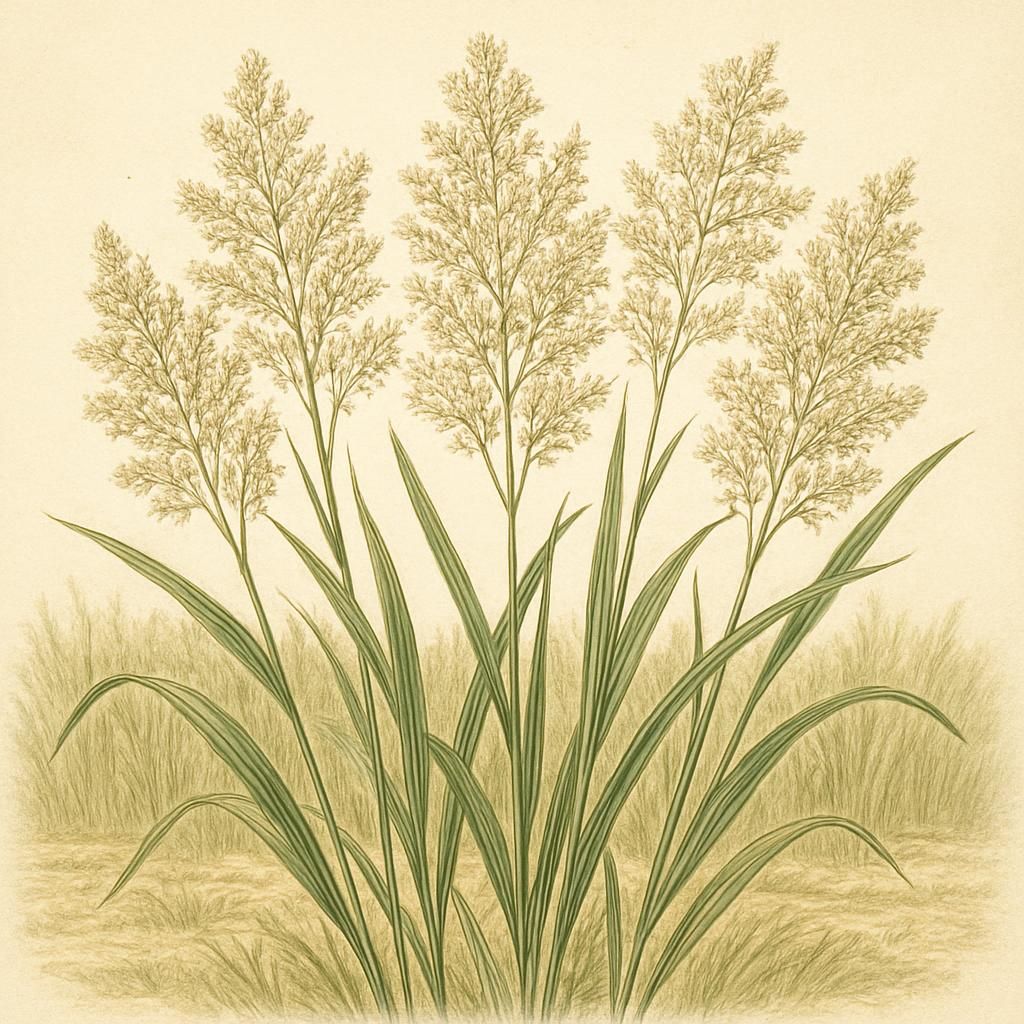
Introduction to Teff (White Enat)
Teff (White Enat) is an ancient grain native to Ethiopia and Eritrea, cultivated for thousands of years for its rich nutritional profile. Known for its small seed size, teff is a staple in East African cuisine, particularly in traditional dishes such as injera. Its popularity has spread globally due to its high iron and calcium content and gluten-free qualities. As such, Teff plays an important role in health-conscious diets and is a viable alternative crop for farmers seeking resilience in various climatic conditions.
Botanical Profile of Teff (White Enat)
Teff belongs to the Poaceae family and is a warm-season annual grass. Its botanical name is Eragrostis tef. Teff plants have a fine, hair-like appearance with a tillering growth form. They are fast-growing and can reach heights of up to 1.5 meters. The small seeds are produced in an open, loose panicle. This adaptability to different environmental conditions makes it a valuable crop in arid and semi-arid regions.
Soil, pH, and Climate Requirements for Teff (White Enat)
Teff is a highly versatile crop, but optimal growth requires certain conditions. The crop thrives in both waterlogged soils and semi-arid conditions, although it performs best under well-drained conditions with adequate rainfall.
| Condition | Requirement |
|---|---|
| Soil Type | Well-drained loamy |
| Soil pH | 5.5 - 7.5 |
| Temperature | 18°C - 27°C |
| Rainfall | 450mm - 550mm annual |
Step-by-Step Planting & Propagation
- Seed Selection: Begin with high-quality certified seeds to ensure good yields and establish a strong plant base.
- Soil Preparation: Plow the soil to a fine tilth to enable a smooth planting bed. Ensure a well-prepared seedbed by leveling the land to prevent waterlogging in case of rain-fed planting.
- Planting: Teff can be sown directly in the field. Plant seeds at a depth of 0.5-1 cm and maintain a spacing of 15-20 cm between rows.
- Sowing Season: Depending on the region, sowing can begin from late spring to early summer when temperatures are above 15°C.
- Watering: If rain-fed, ensure planting coincides with the rainy season. For irrigated fields, maintain moderate moisture levels without oversaturating the soil.
Care & Maintenance Regimes for Teff (White Enat)
Proper care includes maintaining an optimal balance of nutrients and moisture.
| Aspect | Schedule |
|---|---|
| Water | Bi-weekly watering if no rainfall |
| Fertilizer | Apply balanced NPK fertilizer at seeding and mid-growth |
| Pruning | Not typically required for teff due to its grass-like form |
Pests, Diseases & Organic Management
Teff is relatively hardy but can be affected by pests such as Spider Mites and diseases like rust and ergot. Implementing crop rotation and using neem-based organic pesticides can help manage pest populations. Regular field monitoring and maintaining plant diversity help in reducing disease incidence.
Harvesting, Curing & Optimal Storage
Teff is usually ready to harvest 3-4 months after planting. Harvest when the plant turns a golden-brown. Use sickles or mechanized harvesters, and allow the crop to cure for a few days in the field to reduce moisture content. Store seeds in a dry, cool place in sealed containers to prevent pest infestations and maintain seed viability.
Companion Planting for Teff (White Enat)
Teff can be intercropped with Soybeans as they enhance soil nitrogen levels, promoting healthy plant growth. Pairing with legumes also helps manage weed growth.
For more on boosting farm resilience, explore Summer Companion Planting: 10 Organic Pairings to Boost Small Farm Resilience.