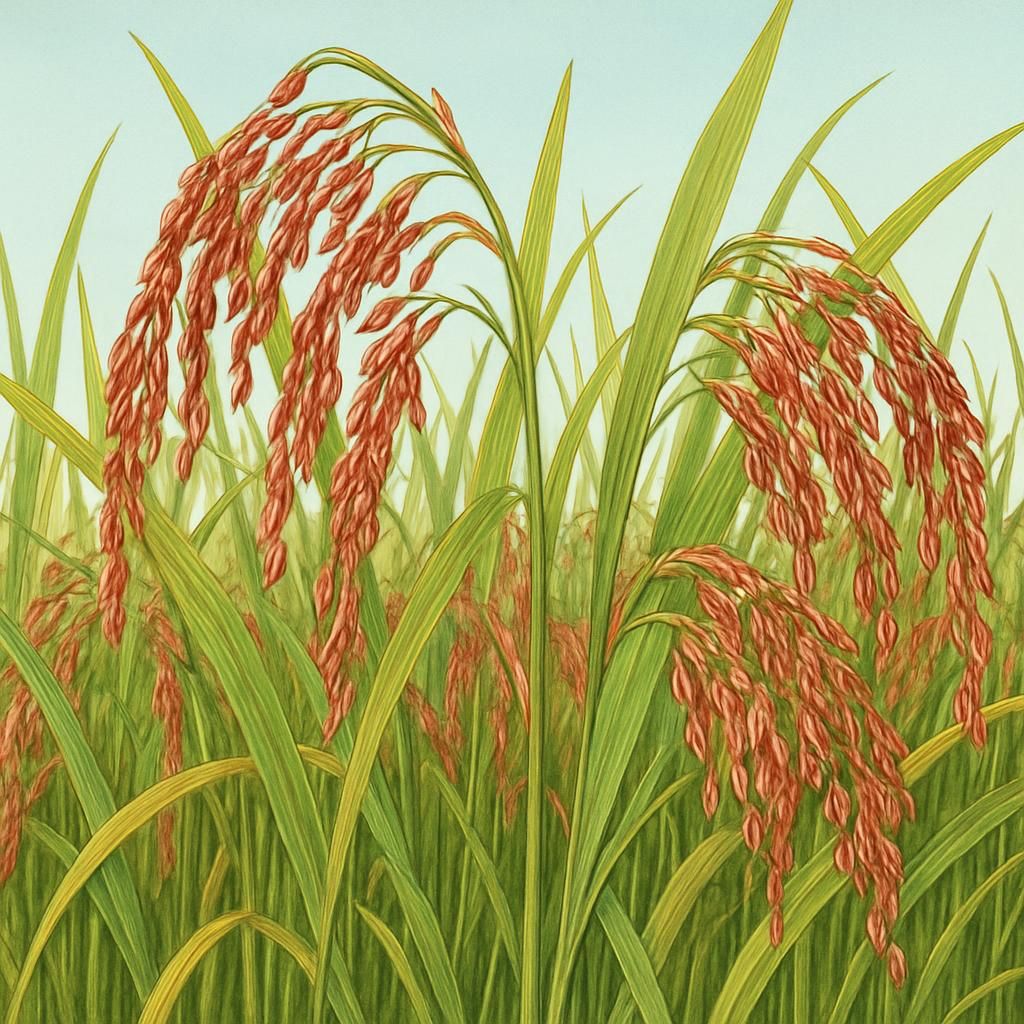
Introduction to Red Rice (Rakthashali)
Red Rice, also known as Rakthashali, is a traditional variety of rice that holds a high place in various cuisines due to its nutritional benefits and distinctive red hue. Originating from India, this variety is celebrated for its iron-rich and antioxidant-packed properties. The reddish color comes from anthocyanin, offering health benefits such as improved digestion and reduced risk of cardiovascular diseases.
Botanical Profile of Red Rice (Rakthashali)
Rakthashali belongs to the species Oryza sativa, a staple cereal grain cultivated in many parts of the world. Like other rice varieties, it is a member of the Poaceae family, characterized by its robust stalks and rich green foliage. The grains are unique with a reddish tint, which is due to pigments in the bran.
Soil, pH, and Climate Requirements for Red Rice (Rakthashali)
To thrive, Rakthashali requires specific conditions that align with traditional rice-growing environments. Here's a detailed look at its ideal conditions:
| Parameter | Ideal Condition |
|---|---|
| Soil Type | Clay and loamy soils |
| Soil pH | 5.5 to 7.0 |
| Climate | Warm and humid, subtropical to tropical |
| Temperature | 70-104°F (21-40°C) |
| Rainfall | 50-90 inches annually |
Step-by-Step Planting & Propagation
- Seed Selection: Begin with certified seeds from a reliable source to ensure germination rate and disease resistance.
- Land Preparation: Prepare the field by plowing and leveling to ensure uniform water distribution. Rice thrives in thick mud, so a well-prepared field is essential.
- Sowing: In a wet nursery bed, sow seeds densely and cover them lightly with soil. Alternatively, seed drills can be used for direct sowing.
- Transplanting: Once seedlings reach a height of 6-8 inches, they should be transplanted in rows, maintaining a spacing of 9-12 inches.
Care & Maintenance Regimes for Red Rice (Rakthashali)
Effective care practices are crucial for maximizing yield and maintaining plant health.
| Practice | Frequency | Description |
|---|---|---|
| Watering | Regular; keep the field flooded | |
| Fertilization | Pre-sowing, tillering, and panicle initiation | Use N-P-K based fertilizers appropriately |
| Pruning | As needed. Mainly hand-pick weeds | Maintains healthy growth and yield |
Pests, Diseases & Organic Management
Rakthashali, like other rice varieties, is susceptible to certain pests and diseases. Common pests include Spider Mites which can be managed using organic insecticides such as neem oil. Fungal diseases like leaf spots can be controlled using copper-based fungicides.
For complete organic pest management strategies, you can refer to our detailed article on 7 Summer Pest Traps That Sabotage Small Farm Harvests.
Harvesting, Curing & Optimal Storage
Harvesting red rice involves de-watering the fields approximately 15 days before the expected harvest date to allow the grain to mature. Use a sickle for manual harvesting or combine packets for larger fields. Post-harvest, the rice needs thorough drying to a moisture content of around 14% to ensure optimal storage. Store the rice in cool and dry conditions to maintain its quality and prevent spoilage.
Companion Planting for Red Rice (Rakthashali)
Companion planting can offer several benefits, including pest control and improved yields. Pairing with plants such as Clover and Marigold can enhance soil nitrogen levels and deter pests with their strong scent, respectively.
For more information on companion planting, refer to this insightful blog post: Spring Companion Planting: 8 Organic Pairings to Maximize Small Farm Yields.