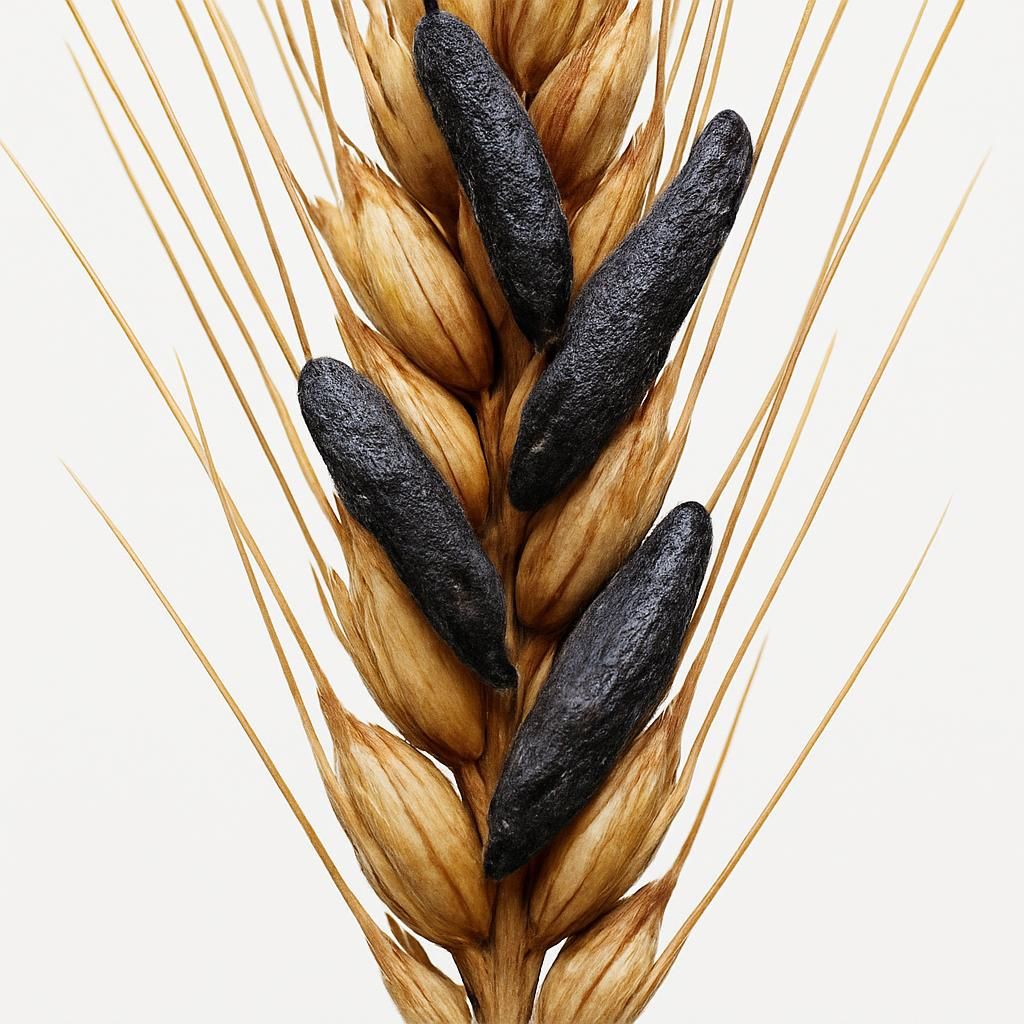
Agricultural Guide to Purpurea (Ergot) in Cereal Crops
Purpurea, scientifically known as Claviceps purpurea, is a fungal disease that infects flowering grasses and cereals. The pathogen replaces developing grain with dark, hardened fungal bodies called sclerotia. These structures contain toxic alkaloids harmful to humans and animals, making contaminated grain unsuitable for food or feed. Early recognition and integrated management are essential for protecting yields and grain quality.
Biology and Life Cycle
The disease cycle begins when sclerotia overwinter in soil or on crop residues. In spring, sclerotia produce fruiting bodies that release airborne ascospores. These spores infect susceptible cereal flowers during anthesis when the stigma is exposed. Once inside the floret, the fungus colonizes the ovary and forms a sticky honeydew stage that attracts insects and spreads conidia. The honeydew phase is followed by sclerotia formation that replaces the grain. Sclerotia mature with the crop and are harvested along with grain or fall to the ground to complete the cycle.
Key environmental factors favor infection: cool, wet weather during flowering increases ascospore release and prolongs the susceptible period. Dense crop canopies and prolonged humidity also raise infection risk. Rye, durum wheat, and triticale are generally more susceptible than bread wheat or barley.
Symptoms and Identification
Early signs include honeydew droplets on florets and sticky residues on leaves. As infection progresses, purple-black sclerotia replace kernels. These sclerotia are 1–5 cm long, hard, and curved, contrasting sharply with healthy grain. At harvest, sclerotia may be visible in the combine or on the ground. Laboratory confirmation can detect ergot alkaloids if visual identification is uncertain.
Impact on Yield and Quality
Ergot reduces both yield and grain quality. Infected florets produce no grain, and sclerotia contaminate harvested lots. Even low contamination levels (0.05–0.3 %) can exceed regulatory limits for human food and animal feed. Livestock consuming contaminated feed may suffer from ergotism, characterized by reduced feed intake, lameness, gangrene, and reproductive failure. Grain buyers routinely reject lots exceeding allowable sclerotia counts.
Integrated Management Strategies
Cultural Practices
- Use certified, ergot-free seed.
- Rotate with non-host crops such as soybeans, canola-rapeseed, or sunflower for at least two years.
- Control volunteer cereals and grassy weeds that serve as alternate hosts.
- Avoid planting highly susceptible varieties like rye in high-risk fields.
Mechanical and Sanitation Measures
- Deep plow to bury sclerotia below 5 cm depth, reducing ascospore production.
- Clean seed thoroughly with gravity tables or color sorters to remove sclerotia.
- Destroy crop residues by burning or incorporation where permitted.
Chemical and Biological Options
Fungicides applied at early flowering can reduce infection but are not 100 % effective. Products containing azoxystrobin, propiconazole, or metconazole are commonly labeled. Always follow label rates and timing. Biological agents such as bacterial antagonists are under development but not yet widely commercialized.
Monitoring and Thresholds
Scout fields during heading and flowering, especially after cool, wet periods. Count sclerotia in harvested grain samples. Regulatory thresholds vary by country and end use; many jurisdictions set a maximum of 0.05 % sclerotia by weight for food-grade grain.
Key Data Summary
| Parameter | Recommended Range/Value | Notes |
|---|---|---|
| Soil pH | 6.0 – 7.5 | Optimal for most cereals; adjust as needed |
| Flowering Temperature | 15 – 22 °C | Highest infection risk window |
| Relative Humidity | >85 % for >48 h | Favors ascospore germination |
| Crop Rotation Interval | Minimum 2 years non-host | Reduces sclerotia viability |
| Seed Cleaning Efficiency | >99 % sclerotia removal | Gravity table + color sorting |
| Fungicide Application | Early anthesis (Feekes 10.5) | One well-timed spray reduces incidence |
| Maximum Sclerotia (Food) | 0.05 % by weight | Regulatory limit in most regions |
| Maximum Sclerotia (Feed) | 0.1 – 0.3 % by weight | Varies by livestock species |
Post-Harvest Handling
Store clean grain at <13 % moisture to prevent further mold growth. Segregate any suspect lots and test for ergot alkaloids before feeding or sale. Contaminated screenings should be destroyed or used only under strict veterinary guidance.
Future Outlook and Research
Breeding programs are developing ergot-resistant cereal varieties, although complete resistance remains elusive. Precision agriculture tools that predict flowering windows based on weather models help optimize fungicide timing. Continued research into biological control agents offers promise for reducing reliance on synthetic fungicides.
Conclusion
Purpurea (ergot) remains a persistent threat to cereal production worldwide. An integrated approach combining resistant varieties, cultural sanitation, timely fungicide use, and rigorous seed cleaning provides the most reliable protection. Regular monitoring and adherence to regulatory thresholds safeguard both farm profitability and food safety.
For more information on related fungal issues in small grains, see Crop Diseases Under the Microscope: 9 Organic Fixes for Small Farm Resilience.