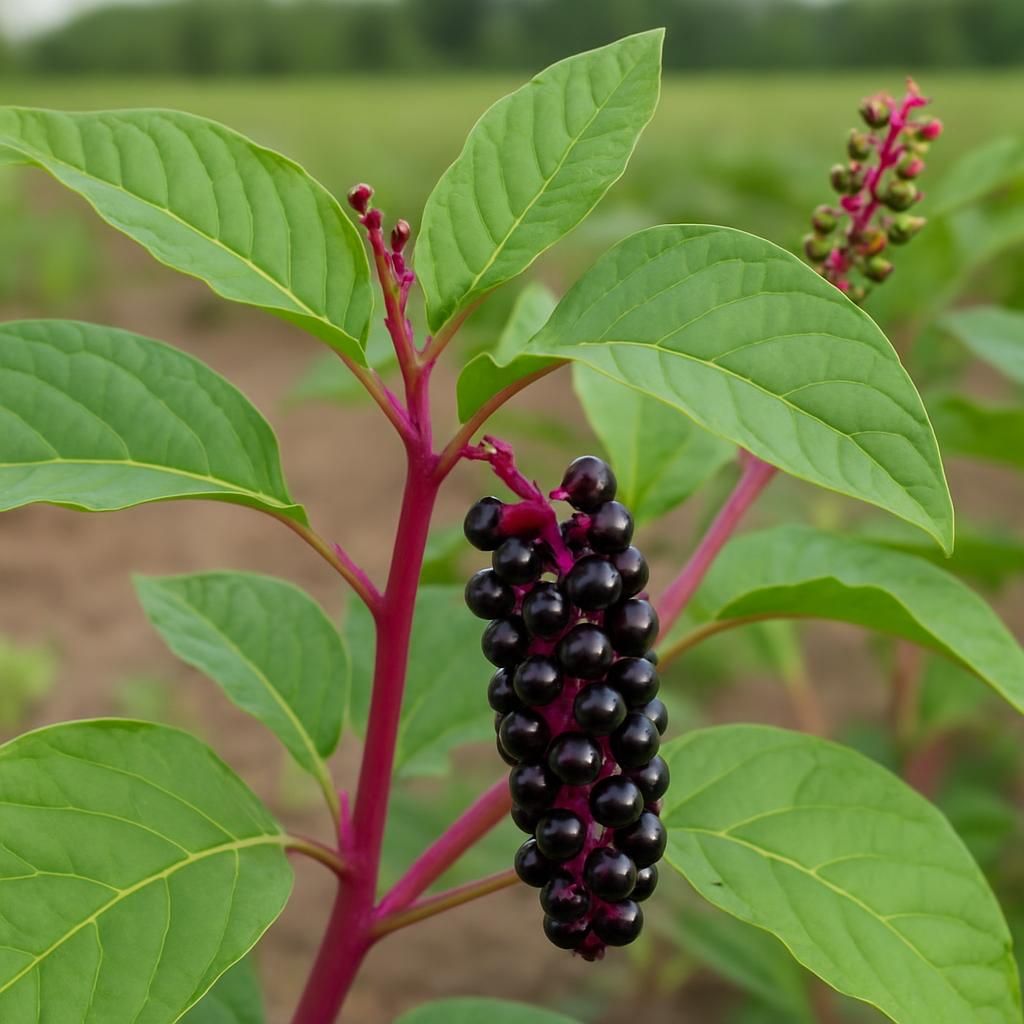
Introduction to Poke Root
Poke Root (Phytolacca americana), also known as American pokeweed, is a tall herbaceous perennial that can reach heights of 2–3 meters under favorable conditions. Despite its historical use in traditional medicine and folk practices, the entire plant contains potent toxins including phytolaccatoxin and phytolaccigenin, making it unsuitable for consumption or casual handling. Modern cultivation is primarily limited to native plant restoration projects, controlled botanical collections, or as a dramatic specimen in managed landscapes where access can be strictly controlled.
Professional growers must understand that Poke Root is not a conventional food or medicinal crop. Its cultivation demands rigorous safety protocols, proper site isolation, and clear labeling. This guide provides detailed agronomic data for those who need to produce the plant responsibly for research, restoration, or educational purposes.
Botanical Profile of Poke Root
Phytolacca americana belongs to the Phytolaccaceae family. It features large, alternate, ovate leaves up to 30 cm long with prominent veins and a distinctive reddish-purple petiole. The stems are stout, hollow when mature, and transition from green to deep magenta as the season progresses. In late summer, drooping racemes of small white to pinkish flowers give way to clusters of dark purple berries that persist into autumn.
The root system is a thick, fleshy taproot that can extend more than 30 cm deep and become woody with age. This perennial regrows each spring from the crown. Berries are dispersed primarily by birds, leading to naturalization in disturbed soils, forest edges, and roadsides across USDA zones 4–10.
Soil, pH, and Climate Requirements for Poke Root
Poke Root thrives in fertile, well-drained soils with high organic matter content. It tolerates a range of textures from loam to clay loam but performs poorly in compacted or waterlogged conditions. The plant prefers full sun to partial shade and benefits from consistent moisture during establishment.
| Parameter | Ideal Range | Notes |
|---|---|---|
| Soil Type | Loam to clay loam | Avoid heavy compaction |
| Soil pH | 5.5 – 7.0 | Slightly acidic to neutral |
| Temperature Range | 15–30 °C (growing season) | Frost tolerant to –15 °C once established |
| USDA Hardiness Zones | 4–10 | Performs best in zones 5–8 |
| Light Requirements | Full sun to partial shade | Minimum 6 hours direct sun |
| Moisture | Moderate, consistent | 25–40 mm water/week during active growth |
| Organic Matter | 3–6 % | Incorporate compost at planting |
Step-by-Step Planting & Propagation
Poke Root is most reliably propagated from seed or root divisions. Seed requires cold stratification for 60–90 days at 4 °C to break dormancy. Sow stratified seed 5 mm deep in well-prepared seedbeds in early spring; germination occurs in 14–30 days at 18–24 °C.
Root divisions are taken from mature crowns in late autumn or early spring. Each division should contain at least one bud and a portion of fleshy root. Plant divisions 30–45 cm deep with 60–90 cm spacing between plants. Water thoroughly after planting and maintain even moisture until new shoots emerge.
Because of the plant's toxicity, all propagation work should be performed with gloves and long sleeves. Dispose of any plant material responsibly to prevent accidental ingestion by livestock or children.
Care & Maintenance regimes for Poke Root
Established plants require minimal intervention once they are two years old. Focus on weed suppression, moisture management, and safety signage. Mulch with 5–8 cm of organic material to conserve moisture and suppress weeds. Remove flower stalks before berry formation if seed dispersal is undesirable.
| Task | Schedule | Rate / Method |
|---|---|---|
| Watering | Weekly during active growth | 25–40 mm; reduce in dormancy |
| Fertilizer | Early spring and midsummer | 5-10-10 at 50 g/m²; avoid excess nitrogen |
| Pruning | Late autumn or early spring | Cut back to 10 cm above soil; remove debris |
| Mulching | Spring and fall | 5–8 cm organic mulch; keep 5 cm from crown |
| Safety Check | Monthly during growing season | Inspect signage and fencing integrity |
Pests, Diseases & Organic Management
Poke Root experiences few serious pest issues due to its toxicity, but aphids, spider mites, and leaf-feeding caterpillars may occasionally appear. Monitor young growth and treat with insecticidal soap or neem oil if populations exceed economic thresholds. Fungal leaf spots can develop in humid conditions; improve air circulation and remove infected foliage promptly.
Root rots may occur in poorly drained soils. Prevent by ensuring adequate drainage and avoiding overwatering. No major viral diseases are commonly reported, though plants may serve as alternate hosts for certain generalist pathogens.
Harvesting, Curing & Optimal Storage
If root harvest is required for research or restoration, dig mature roots in late autumn after foliage senescence. Use heavy gloves and protective clothing. Wash roots thoroughly, cut into 5–10 cm sections, and dry at 35–40 °C with good airflow until brittle. Store in airtight containers away from light and moisture.
All harvested material must be clearly labeled as toxic. Never store near edible crops or feed. Disposal of unused plant parts should follow local hazardous waste guidelines.
Companion Planting for Poke Root
Due to its height and toxicity, Poke Root is rarely paired with edible crops. It may be used as a dramatic background plant behind Nasturtium or Marigold in ornamental native gardens. Its dense foliage can provide temporary shade for shade-tolerant understory species during establishment. Avoid planting near vegetable beds or livestock forage areas.
For broader guidance on soil health strategies that support resilient plantings, see The Hidden Power of Mulching: 8 Organic Strategies to Transform Small Farm Soil.