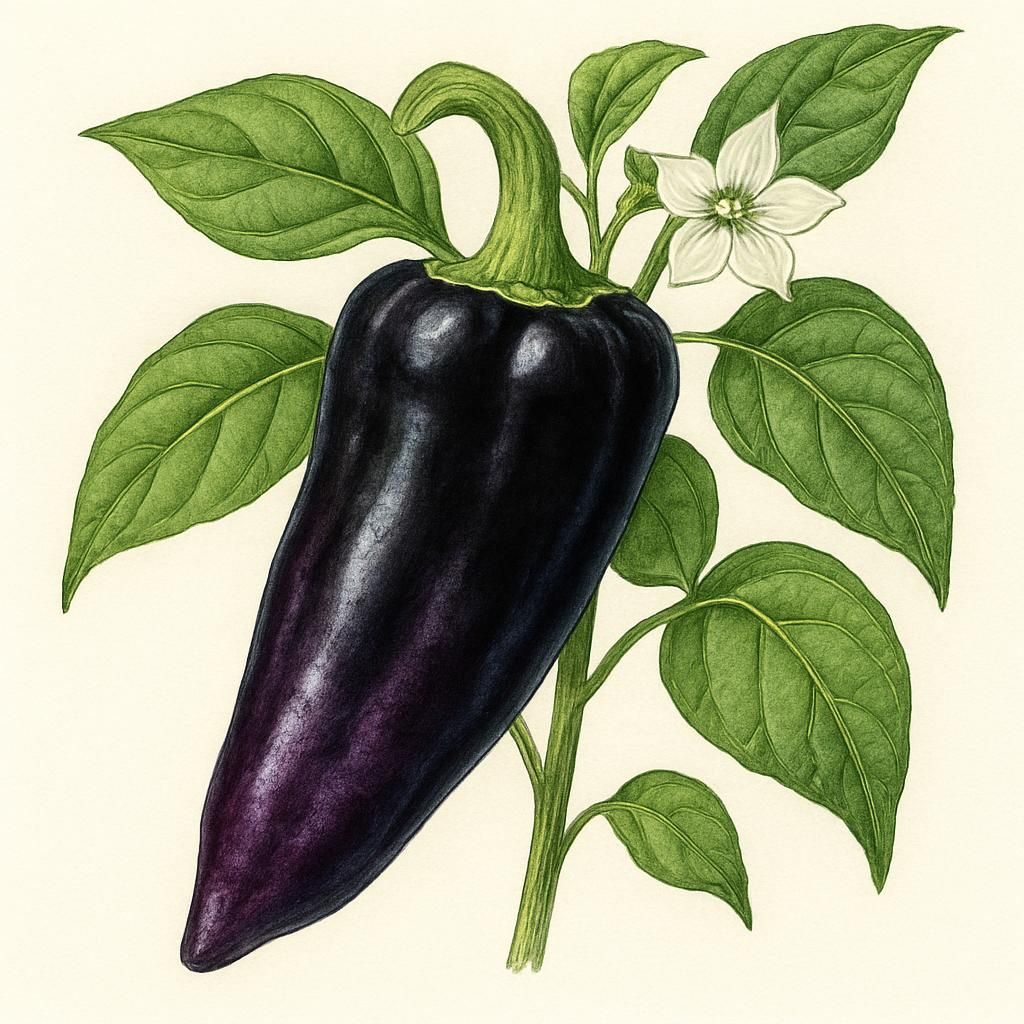
Introduction to Pimento de Neide
Pimento de Neide is a captivating chili pepper variety that stands out due to its striking dark coloration and rich flavor profile. Its origin traces back to intentional breeding selections of traditional chili varieties to enhance not only aesthetic appeal but also taste and culinary versatility. Known for its glossy black to deep purple hues, Pimento de Neide peppers provide a luxurious touch to any dish while offering a mild to moderate heat.
Botanical Profile of Pimento de Neide
The Pimento de Neide, scientifically known as Capsicum annuum 'Pimento de Neide', belongs to the Solanaceae family. It is an annual plant in most climates, characterized by a bushy growth habit. The plant produces small to medium-sized fruits that mature from dark green to black and finally to a deep red upon full ripeness. Its distinctive color is due to high anthocyanin content.
Soil, pH, and Climate Requirements for Pimento de Neide
Successful cultivation of Pimento de Neide requires specific soil and climate conditions to thrive and produce high yields.
| Factor | Ideal Condition |
|---|---|
| Soil Type | Well-drained loam |
| Soil pH | 6.0 - 6.8 |
| Climate | Warm, temperate to tropical |
| Temperature | 70°F to 85°F (21°C to 29°C) |
| Sunlight | Full sun, at least 6 hours |
Step-by-Step Planting & Propagation
- Seed Selection: Start with quality seeds from reputable suppliers to ensure genetic purity and vigor.
- Seed Starting: Sow seeds indoors 8 to 10 weeks before the last expected frost date. Use seed trays with a light, seed-starting mix.
- Germination: Maintain soil temperatures between 80°F to 85°F (27°C to 29°C) for optimal germination. Expect seedlings to emerge in 7-14 days.
- Transplanting: Once seedlings have at least two true leaves, harden them off by gradually exposing them to outdoor conditions for about a week.
- Planting Outdoors: Transplant to a sunny location with spacing of 18-24 inches (45-60 cm) between plants in rows spaced 24-36 inches (60-90 cm) apart.
Care & Maintenance Regimes for Pimento de Neide
Proper care is essential to maximize the quality and yield of Pimento de Neide peppers.
| Task | Frequency/Schedule |
|---|---|
| Watering | 1-2 inches of water per week |
| Fertilizing | Every 4 to 6 weeks with a balanced fertilizer |
| Pruning | Light pruning once during the growing season, mainly to remove dead or diseased leaves |
Pests, Diseases & Organic Management
Pimento de Neide, like other pepper plants, can be vulnerable to various pests and diseases, including Spider mites, aphids, and fungal infections.
- Integrated Pest Management (IPM): Utilize companion planting, beneficial insects like ladybugs, and neem oil sprays to deter pests.
- Disease Management: Ensure proper spacing for air circulation, rotate crops to prevent soil-borne diseases, and apply organic fungicides as needed.
Harvesting, Curing & Optimal Storage
- Harvesting: Pick peppers when they reach a mature color (dark red), firm texture, and desired size. Harvesting can be done by cutting the fruit off the plant using garden shears.
- Curing: Allow peppers to air dry for a couple of days in a shaded, ventilated area to enhance flavor.
- Storage: Store fresh peppers in the crisper drawer of a refrigerator for up to 2 weeks. For longer storage, consider drying or freezing the peppers.
Companion Planting for Pimento de Neide
Pimento de Neide benefits from being planted alongside certain crops that help repel pests and enhance growth, such as basil, marigolds, and Cherry Tomatoes. Conversely, avoid planting it near brassicas to minimize potential nutrient competition.