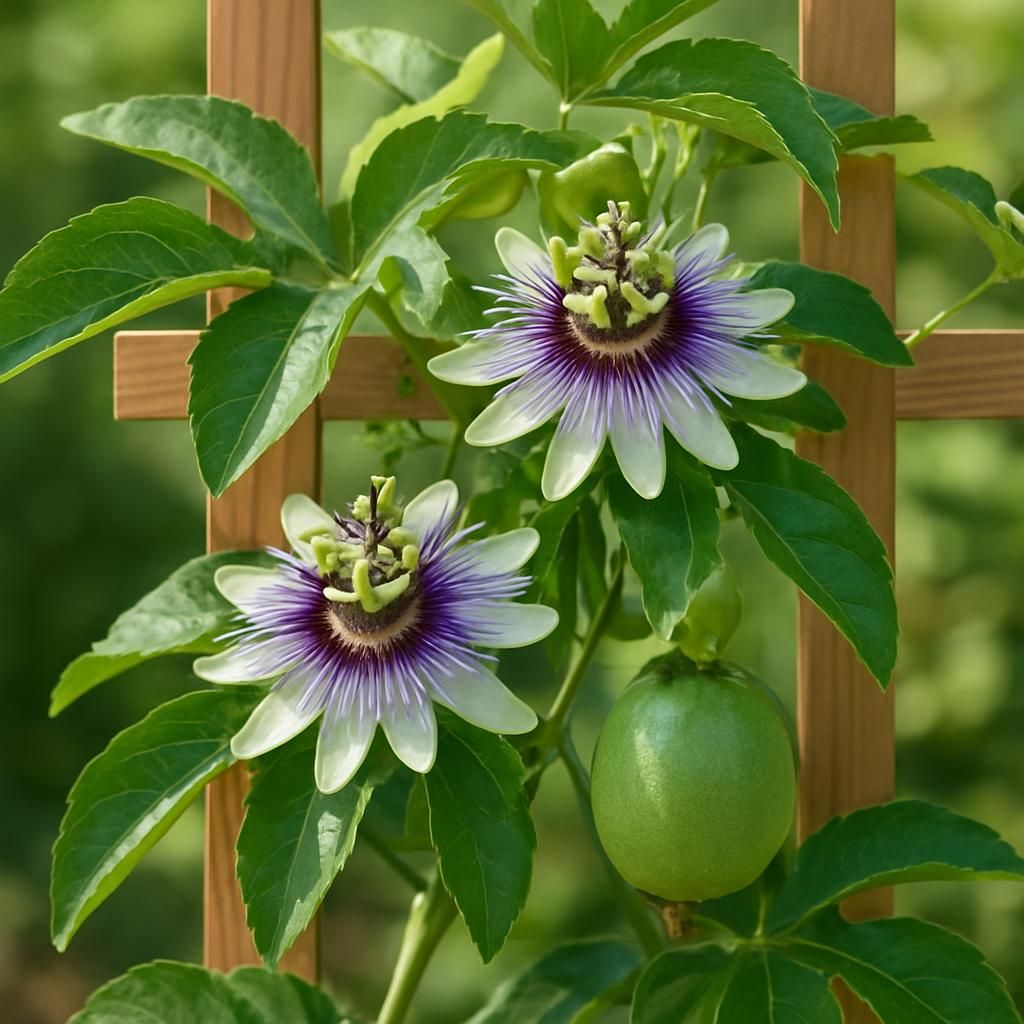
Introduction to Passionflower
Passionflower (Passiflora edulis) is a fast-growing perennial vine native to South America that produces striking flowers and sweet-tart fruit. Commercial and home growers value the crop for both fresh market sales and value-added products such as juices, jams, and herbal teas. With proper site selection and management, vines can remain productive for 5–7 years while delivering 10–20 kg of fruit per mature plant annually.
Successful passionflower production requires attention to temperature, irrigation consistency, and structural support. The plant’s aggressive growth habit makes it ideal for trellis systems or pergolas, but also demands regular pruning and nutrient monitoring. This guide provides detailed, field-tested recommendations for soil preparation, planting, seasonal care, and organic pest control.
Botanical Profile of Passionflower
Passiflora edulis belongs to the Passifloraceae family and features deeply lobed, evergreen leaves and tendril-bearing stems that can reach 5–10 meters in length. The hermaphroditic flowers are 7–9 cm across with white petals and a central corona of purple filaments. Fruit develops as an oval berry 6–8 cm long containing numerous black seeds embedded in juicy, aromatic pulp.
Two main botanical varieties dominate commercial production: the purple-fruited P. edulis f. edulis suited to cooler subtropics and the yellow-fruited P. edulis f. flavicarpa preferred in tropical lowlands. Both types exhibit rapid vegetative growth and can begin flowering within 6–9 months of planting when provided optimal warmth and nutrition.
Soil, pH, and Climate Requirements for Passionflower
Passionflower performs best in well-drained sandy loam to clay loam soils rich in organic matter. The vine is highly sensitive to waterlogging, which quickly leads to root rot. Raised beds or mounds are recommended in heavy soils to ensure adequate drainage.
| Parameter | Ideal Range | Notes |
|---|---|---|
| Soil Type | Sandy loam to clay loam | High organic matter improves fertility |
| Soil pH | 5.5–6.5 | Slightly acidic conditions optimize uptake |
| Temperature (Day) | 20–30 °C | Growth slows below 15 °C |
| Temperature (Night) | 15–20 °C | Frost below 0 °C causes severe damage |
| Annual Rainfall | 1000–2000 mm | Supplemental irrigation needed in dry periods |
| USDA Zones | 9–11 | Protect from frost in marginal areas |
| Sunlight | Full sun (6+ hours) | Partial shade reduces flowering |
Step-by-Step Planting & Propagation
Passionflower is most reliably propagated from semi-hardwood cuttings taken in spring or early summer. Select 15–20 cm stems with 3–4 nodes, remove lower leaves, and dip in rooting hormone before placing in a sterile, well-draining mix. Maintain high humidity and bottom heat of 24–26 °C; roots typically form within 4–6 weeks.
Seed propagation is possible but slower and less uniform. Fresh seeds should be scarified lightly and sown 1 cm deep in a moist seed-starting mix at 25 °C. Germination occurs in 10–20 days. Transplant seedlings when they reach 10–15 cm and have at least four true leaves.
Field planting should occur after the last frost when soil temperature exceeds 18 °C. Space plants 2–3 m apart in rows 3–4 m wide on a sturdy trellis system. Incorporate 5–10 kg of well-rotted compost per planting hole and water thoroughly after transplanting.
Care & Maintenance regimes for Passionflower
Consistent moisture is critical during establishment and fruit development. Mature vines require 25–40 mm of water per week, adjusted according to rainfall and evapotranspiration. Mulch with 7–10 cm of organic material to conserve moisture and suppress weeds.
| Task | Frequency | Details |
|---|---|---|
| Watering | 2–3 times weekly (establishment) | Deep soak to 30 cm; reduce in dormancy |
| Watering | Weekly (mature vines) | Maintain even moisture; avoid waterlogging |
| Fertilizer | Every 6–8 weeks (growing season) | 10-10-10 NPK or organic equivalent at 200 g/plant |
| Fertilizer | Post-harvest | Apply 5 kg compost + 50 g potassium sulfate |
| Pruning | Late winter / early spring | Remove dead wood; train to 2–3 main leaders |
| Pruning | After each harvest flush | Cut back laterals to 2–3 buds |
Pests, Diseases & Organic Management
Common insect pests include aphids, spider mites, and fruit flies. Regular scouting and introduction of beneficial insects such as lady beetles and predatory mites provide effective biological control. Horticultural oil or insecticidal soap applied at the first sign of infestation minimizes damage while preserving pollinators.
Fungal diseases such as Phytophthora root rot and Fusarium wilt are the primary disease concerns. Ensure excellent drainage, avoid overhead irrigation, and rotate plantings every 4–5 years. Copper-based fungicides and compost teas can suppress early infections when used preventively.
Harvesting, Curing & Optimal Storage
Fruit is ready for harvest when it reaches full color and begins to soften or drops naturally. Pick yellow varieties when skin turns bright yellow; harvest purple types when color shifts from green to deep purple. Handle fruit gently to avoid bruising.
Cure harvested fruit at 20–25 °C with 85–90 % relative humidity for 3–5 days to develop full flavor. Store at 7–10 °C for up to 3 weeks. For longer preservation, pulp can be extracted, pasteurized, and frozen at −18 °C.
Companion Planting for Passionflower
Passionflower benefits from nitrogen-fixing companions such as Clover and Pigeon pea planted in adjacent rows. These legumes improve soil fertility and attract beneficial insects. Aromatic herbs including Rosemary and Thyme deter aphids and spider mites while providing ground cover that reduces soil splash.
Avoid planting near solanaceous crops that share Phytophthora susceptibility. Marigolds interplanted along trellis rows further suppress nematodes and enhance biodiversity.