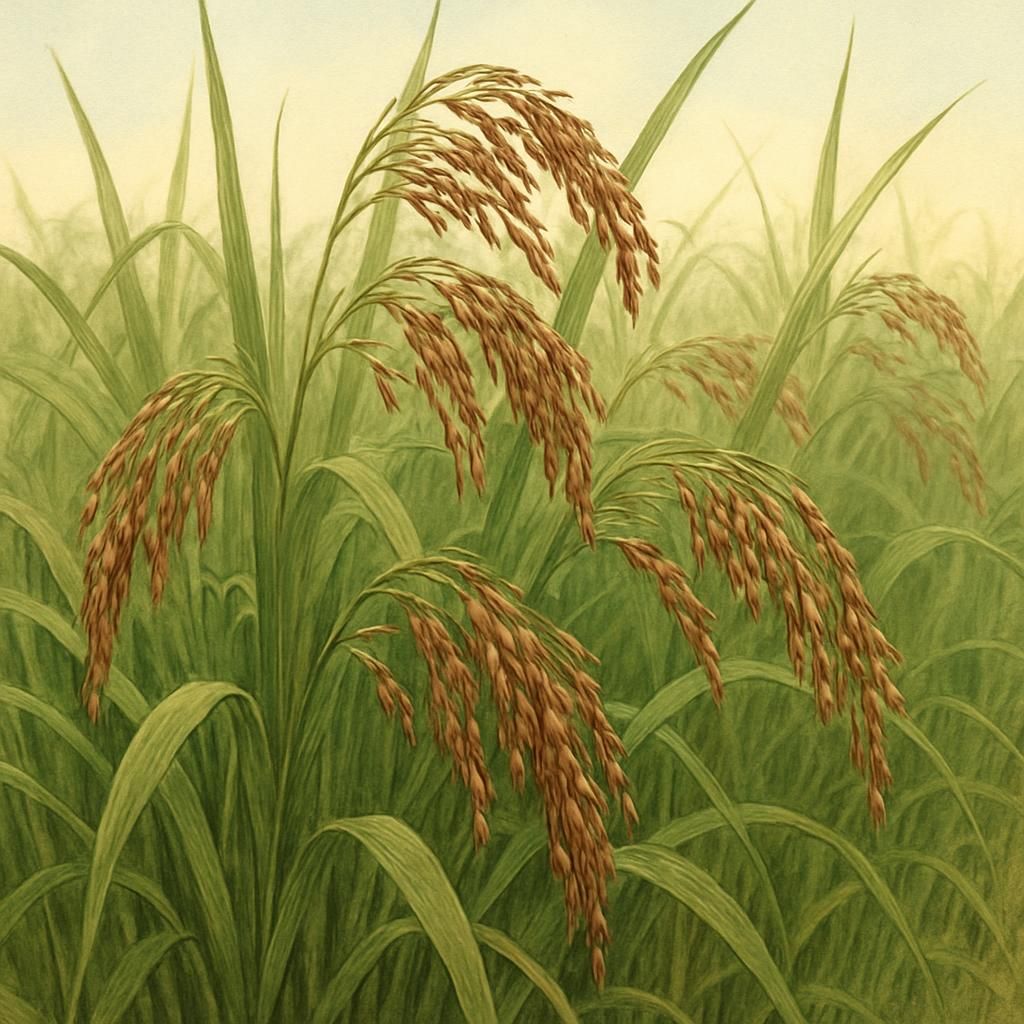
Introduction to Mappillai Samba Rice
Mappillai Samba Rice, also known as Bridegroom's rice, is a traditional and ancient rice variety that originates from Tamil Nadu, India. Famed for its stamina-boosting properties, it is deeply rooted in the culture and agriculture of South India. Rich in iron and antioxidants, Mappillai Samba is a staple in local diets and is gaining popularity for its health benefits, which include enhancing immunity and promoting cardiovascular health.
Botanical Profile of Mappillai Samba Rice
Mappillai Samba belongs to the species Oryza sativa. It is characterized by its red hue, elongated grains, and a robust structure. The plant typically grows to an average height with bushy, broad leaves that are more resilient to pests and diseases compared to other rice varieties. The grain's rich coloration comes from the presence of high levels of anthocyanins, which contribute to its health benefits.
Soil, pH, and Climate Requirements for Mappillai Samba Rice
Mappillai Samba is well-suited to the climatic conditions of South India. It is a hardy crop that can thrive in less fertile soils, although optimal conditions can enhance productivity.
| Requirement | Ideal Condition |
|---|---|
| Soil Type | Clay loam, fertile with organic matter |
| Soil pH | 5.5 to 6.5 |
| Climate | Tropical, warm and humid |
| Temperature | 25°C to 35°C |
| Rainfall | 1000mm to 1600mm annually |
Step-by-Step Planting & Propagation
Seed Selection: Choose high-quality, untreated seeds for planting. Ensure seeds are healthy and free from any pests or diseases.
Nursery Preparation: Prepare a nursery bed with well-tilled soil, maintaining adequate moisture levels for seed germination.
Seed Sowing: Sow seeds evenly in the nursery bed. Cover lightly with soil and maintain moisture to facilitate germination, which occurs within 7-10 days.
Field Preparation: While seeds are growing in the nursery, begin preparing the main field by plowing and leveling. Incorporate well-rotted organic matter.
Transplanting: After 25-30 days, when seedlings reach the appropriate size, transplant them into the main field. Maintain a spacing of 15-20 cm between plants.
Water Management: Ensure consistent water supply, particularly during the crucial growth stages of tillering and flowering.
Care & Maintenance Regimes for Mappillai Samba Rice
Proper care ensures healthy crop growth and maximized yield. Below are essential maintenance practices:
| Procedure | Watering | Fertilization | Pruning |
|---|---|---|---|
| Frequency | Maintain 2-3 inches of water in paddy fields | Base dressing with organic manure, e.g., FYM | N/A |
| Description | Regularly check water levels during growth | Supplement with nitrogen-rich fertilizers as needed | Pruning not required |
- Weed Management: Manual or mechanical weeding is necessary to prevent nutrient competition.
Pests, Diseases & Organic Management
Mappillai Samba is relatively resistant to common pests and diseases but requires vigilance.
- Pests: Common pests include Rice Water Weevil and Armyworms. Utilize crop diversity, encourage beneficial insects, and use neem oil as organic control.
- Diseases: Monitor for Rice Blast and bacterial leaf blight, applying Bordeaux mixture or similar organic fungicides as preventive measures.
For comprehensive strategies, explore 7 Summer Pest Traps That Sabotage Small Farm Harvests.
Harvesting, Curing & Optimal Storage
Harvesting: Mappillai Samba is ready for harvest when grain moisture content is about 20%. Typically, this occurs 130-150 days after sowing.
Curing: Dry the harvested grains under the sun to reduce moisture content to 12%. This process can take 2-3 days, depending on weather conditions.
Storage: Store dried grains in cool, dry, and dark conditions. Use airtight, moisture-proof containers to prevent pest infestation.
Companion Planting for Mappillai Samba Rice
- Legumes (e.g., Soybeans): Enhance soil fertility through nitrogen fixation.
- Marigold: Acts as a pest repellent.
For further reading on effective companion planting strategies, see Summer Companion Planting: 10 Organic Pairings to Boost Small Farm Resilience.