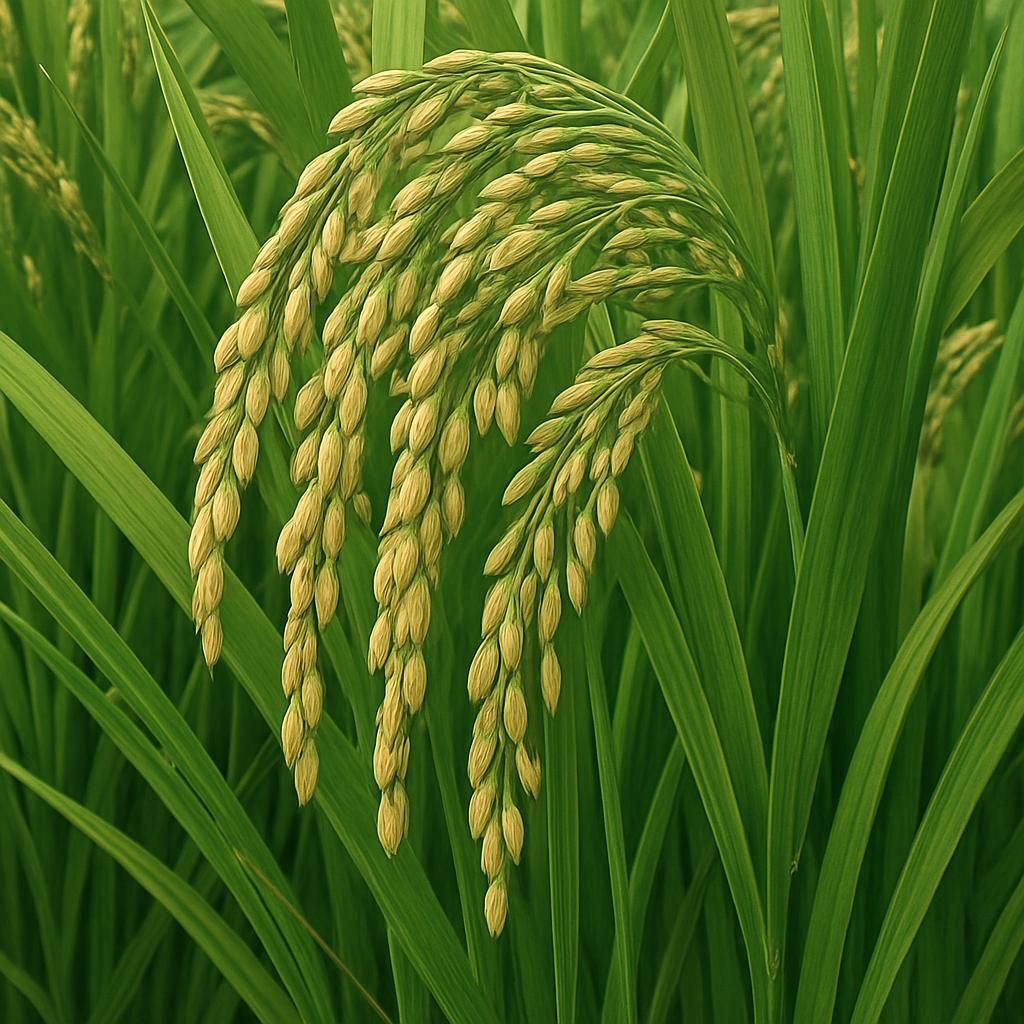
Introduction to M-202 Rice
M-202 Rice is a medium-grain rice variety developed by the University of California’s breeding program, specifically tailored for the Sacramento Valley. Known for its robust quality traits and high yield potential, M-202 adapts well to the diverse environments of California, making it a preferred choice among growers.
Botanical Profile of M-202 Rice
M-202 Rice (Oryza sativa) belongs to the family Poaceae. It characteristically has medium grains, which are somewhat aromatic and possess a unique texture when cooked. The crop reaches maturity in approximately 160 days from seedling emergence and demonstrates a good level of tolerance to common rice diseases.
Soil, pH, and Climate Requirements for M-202 Rice
M-202 Rice thrives in well-drained, loamy soils rich in organic matter. Proper water management is essential to ensure optimal tiller production and prevent root rot diseases.
| Condition | Ideal Range |
|---|---|
| Soil Type | Loamy, Well-Drained |
| Soil pH | 6.0 to 7.5 |
| Temperature | 20°C to 30°C (68°F to 86°F) |
| Rainfall | 900 to 1200 mm/year |
Step-by-Step Planting & Propagation
- Seedbed Preparation: Clear and level the field to facilitate uniform flooding and drainage. Apply organic matter to enhance soil fertility.
- Planting Method: M-202 Rice can be direct-seeded or transplanted. Direct seeding involves broadcasting pre-germinated seeds evenly across flooded fields.
- Seed Rate: Use approximately 80 to 100 kg/ha for direct seeding. Ensure uniform seed distribution to avoid overcrowding.
- Water Management: Establish a shallow water level after planting to promote seedling growth. Gradually increase depth as plants mature.
- Transplanting: If using transplants, space seedlings about 15 to 20 cm apart in a checkerboard pattern.
Care & Maintenance regimes for M-202 Rice
Proper water management, timely fertilization, and vigilant pest control are crucial.
| Task | Schedule |
|---|---|
| Watering | Maintain depth of 5-10 cm of water during growing season. Drain fields 2 weeks before harvest. |
| Fertilizing | Apply nitrogen fertilizers at tillering and panicle initiation stages. A balanced application of phosphorus and potassium is advised. |
| Pruning | Not typically required, but rogue out off-type plants to maintain varietal purity. |
Pests, Diseases & Organic Management
M-202 Rice is susceptible to several pests and diseases, though its robust nature offers some resistance.
- Common Pests: Leaf-feeding caterpillars, Spider Mites.
- Diseases: Bacterial blight and blast.
- Organic Management: Employ neem oil and beneficial predators like spiders and lady beetles to manage pests. Rotate crops to minimize disease incidence. For more insights, read Crop Diseases Under the Microscope: 9 Organic Fixes for Small Farm Resilience.
Harvesting, Curing & Optimal Storage
Harvest M-202 Rice when grains reach physiological maturity, with moisture content around 20-25%.
- Harvesting: Use a combine harvester when the crop is ready to reduce shattering losses.
- Curing: Allow the grains to dry naturally to around 14% moisture for safe storage.
- Storage: Store in dry conditions, ideally with temperatures below 25°C to prevent fungal growth.
Companion Planting for M-202 Rice
M-202 Rice benefits from companion planting with legumes such as Soybeans which can fix nitrogen, enhancing soil fertility. Avoid planting near trees which can harbor pests. For summer strategies, visit our Summer Companion Planting: 10 Organic Pairings to Boost Small Farm Resilience.
These practices will ensure a healthy and bountiful growth of M-202 Rice, optimizing both yield and quality.