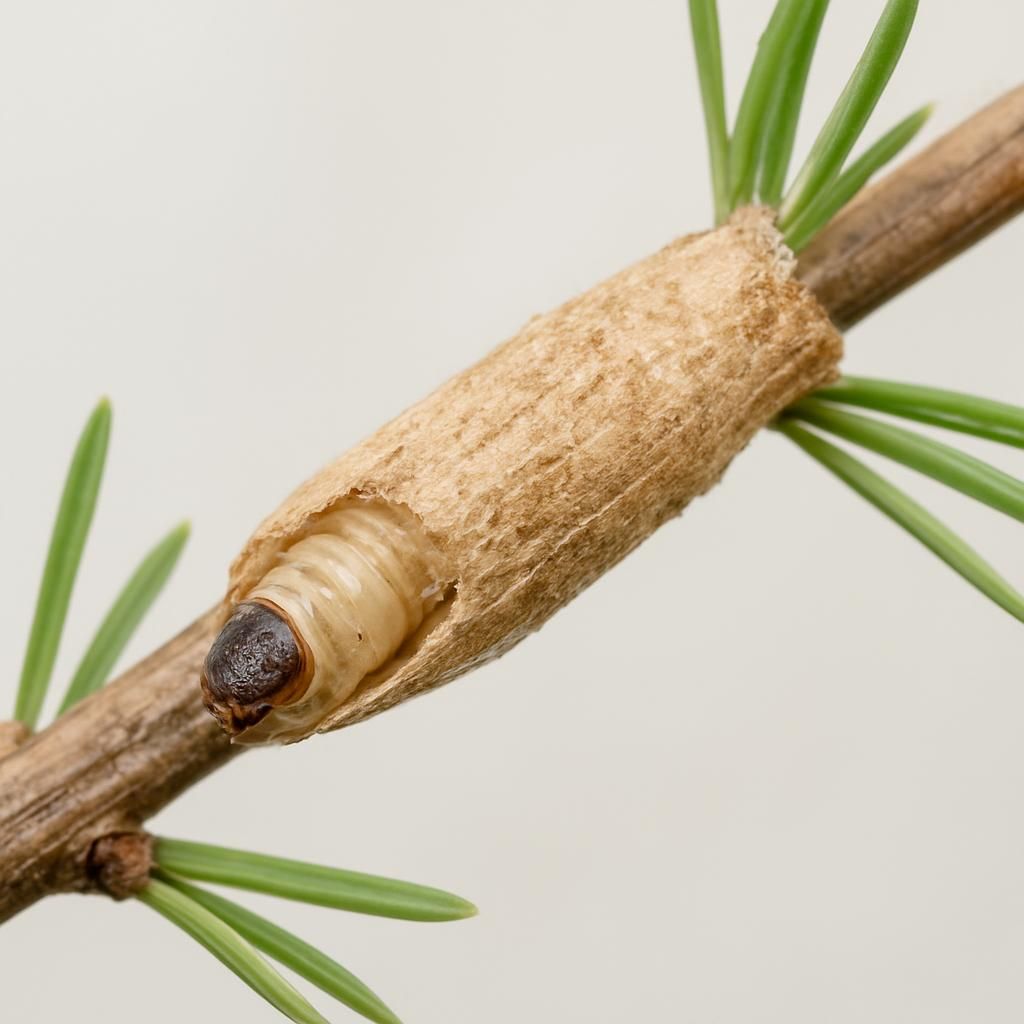
Introduction to Larch casebearer
The larch casebearer (Coleophora laricella) is a specialized lepidopteran pest that primarily targets species within the genus Larix. Native to Europe and Asia, this invasive moth was introduced to North America in the early twentieth century and has since become a persistent threat to both native and planted larch forests. Adult moths are tiny, silvery-gray insects with a wingspan of approximately 8–12 mm. While the adults cause no direct damage, their offspring—the larvae—are responsible for the characteristic injury observed by foresters and arborists. The pest’s ability to overwinter inside protective cases makes it particularly resilient and difficult to control once established.
Larch casebearer infestations can lead to repeated defoliation events that weaken trees, reduce radial growth, and predispose hosts to secondary pathogens and bark beetles. In severe outbreaks, entire stands may experience canopy thinning and branch dieback, lowering timber quality and aesthetic value. Because larch is valued for its rapid growth, decay resistance, and ornamental qualities, protecting these trees from casebearer damage is a priority for commercial forestry operations, Christmas tree growers, and landscape managers alike.
Identifying Symptoms & Damage
The most distinctive sign of larch casebearer is the presence of small, cigar-shaped cases constructed from hollowed-out larch needles. These cases, typically 4–7 mm long, are tan to brown and attached to the needles or twigs by silk. Larvae inside the cases feed by mining the interior of needles, causing them to turn straw-colored and eventually drop prematurely. Heavy infestations produce a scorched or “frosted” appearance across the canopy, especially noticeable from late spring through midsummer.
Close inspection reveals frass (insect excrement) accumulating at the base of needles and within the cases. Trees under sustained attack exhibit reduced needle retention, shortened shoot growth, and sparse foliage the following season. Chronic defoliation can also trigger the production of adventitious shoots and witches’-broom-like structures as the tree attempts to compensate for lost photosynthetic tissue. In advanced stages, bark may begin to crack and resin flow may increase as trees become stressed.
Lifecycle and Progression of Larch casebearer (MUST INCLUDE A MARKDOWN TABLE OF LIFECYCLE STAGES)
The larch casebearer completes one generation per year in most temperate regions. Overwintering occurs as mature larvae inside protective cases attached to twigs or needle axils. In early spring, larvae resume feeding briefly before pupating. Adults emerge in late spring or early summer, mate, and females lay eggs on newly expanding needles. The resulting larvae mine needles, construct cases, and feed until autumn, at which point they migrate to overwintering sites.
| Stage | Timing | Description | Key Activity |
|---|---|---|---|
| Egg | Late spring–early summer | Tiny, oval, laid singly on current-year needles | Hatching within 7–14 days |
| Larva (mining) | Early–midsummer | Young larvae mine inside needles; later construct portable cases | Needle mining and case building |
| Larva (case) | Midsummer–autumn | Larvae feed externally while protected inside needle cases | Continued defoliation |
| Pupa | Early spring | Formed inside the case after overwintering | Metamorphosis |
| Adult | Late spring–early summer | Small silvery moths active at dusk; short-lived | Mating and oviposition |
Environmental Triggers & Risk Factors
Outbreaks are favored by warm, dry springs that accelerate larval development and reduce natural enemy populations. Stands planted on south-facing slopes or in open landscapes experience higher light and temperature, which can increase survival rates. Prolonged drought stress further weakens trees, making them more attractive to ovipositing females and less able to recover from defoliation. Monoculture plantings of European larch (Larix decidua) or hybrid larch are particularly susceptible compared with mixed-species forests that support diverse natural enemy communities.
Organic Control & Treatment Plans (MUST INCLUDE A MARKDOWN TABLE OF TREATMENT OPTIONS AND FREQUENCIES)
Integrated pest management begins with regular monitoring using visual inspections and pheromone traps in spring. When case densities exceed five per 100 needles or when more than 30 % of shoots show damage, intervention is warranted. Cultural practices such as promoting understory vegetation to support predatory insects and parasitoids provide long-term suppression. When needed, targeted applications of Bacillus thuringiensis var. kurstaki (Btk) timed to early larval stages offer effective control with minimal non-target impact.
| Treatment Option | Active Ingredient / Method | Application Timing | Frequency / Rate | Notes |
|---|---|---|---|---|
| Monitoring | Pheromone traps & visual counts | April–June | Weekly during adult flight | Threshold: 5 cases/100 needles |
| Cultural | Promote understory & biodiversity | Year-round | Ongoing | Enhances natural enemies |
| Biological | Bacillus thuringiensis var. kurstaki | Early larval stage (late May–June) | 1–2 applications at 7–10 day intervals | Apply at first sign of mining |
| Horticultural oil | 2 % dormant oil | Pre-bud break (March–April) | Once per season | Smothers overwintering larvae |
| Neem oil | Azadirachtin | Early larval stage | Repeat every 7–14 days as needed | Also deters oviposition |
| Hand removal | Physical removal of cases | Late winter–early spring | As needed on small trees | Labor-intensive but effective |
Preventing Larch casebearer in the Future
Long-term prevention relies on diversifying planting schemes to include non-host species and maintaining tree vigor through proper site selection and irrigation during drought. Removing and destroying heavily infested branches in winter reduces the overwintering population. Avoiding the movement of infested nursery stock and inspecting new plantings can prevent accidental introductions. Regular scouting combined with early intervention prevents populations from reaching damaging levels.
Crops Most Affected by Larch casebearer
While the larch casebearer is highly host-specific, it occasionally attacks other conifers when larch is scarce. Primary hosts include European larch, tamarack (Larix laricina), and hybrid larch used in reforestation. Secondary hosts may include certain spruces and firs under high population pressure. No major agricultural crops listed in the [AVAILABLE WIKI PAGES] are affected; however, ornamental plantings of Larch and related conifers remain the focus of management efforts.
For additional reading on conifer pest dynamics, consult the Wikipedia entry on Larch casebearer. Landscape professionals seeking broader context on seasonal resilience strategies may also find value in the blog post The Truth About Weather Patterns and Small Farm Resilience.