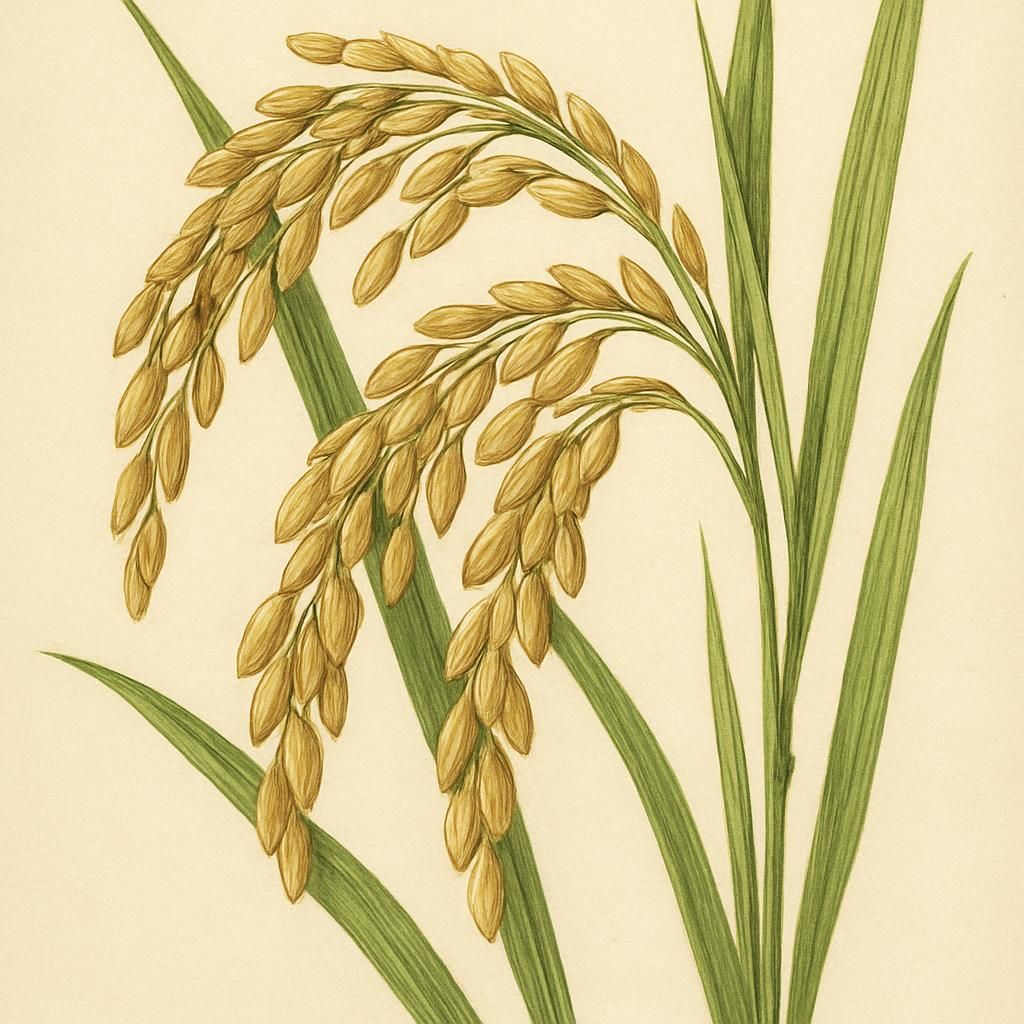
Introduction to Kalanamak Rice (Buddha Rice)
Kalanamak Rice, often referred to as Buddha Rice, is an ancient aromatic rice variety native to India, particularly rooted in the Terai region of Uttar Pradesh. Known for its blackhusk and distinct aroma, Kalanamak rice is celebrated for its quality and its rich cultural heritage that dates back to Lord Buddha, reportedly being cultivated for over 2000 years.
Botanical Profile of Kalanamak Rice (Buddha Rice)
Scientific Name
Oryza sativa
Family
Poaceae
Genus
Oryza
Key Features
- Distinctive aroma and flavor
- Blackhusk when harvested
- Medium-grain size
- High nutritional value
Soil, pH, and Climate Requirements for Kalanamak Rice (Buddha Rice)
| Parameter | Ideal Condition |
|---|---|
| Soil Type | Clay loam or loamy soil |
| Soil pH | 5.5 to 6.5 |
| Climate | Warm, humid climates |
| Temperature Range | 20°C to 28°C (68°F to 82°F) |
| Rainfall | 1000 to 1500 mm annually |
Step-by-Step Planting & Propagation
- Land Preparation: Properly plow and level the field for efficient water retention.
- Seed Selection: Use high-quality seeds from trusted sources to ensure viability and uniformity.
- Sowing: Typically sow seeds in seed beds and transplant seedlings 25-30 days after sowing.
- Spacing: Maintain spacing of 15-20 cm between plants for optimal growth.
- Water Management: Ensure consistent water level maintenance till flowering.
Care & Maintenance Regimes for Kalanamak Rice (Buddha Rice)
| Regime | Details |
|---|---|
| Watering | Regular flooding and proper drainage |
| Fertilization | Use of organic fertilizers like compost |
| Pruning | Not applicable but requires weeding |
Pests, Diseases & Organic Management
Among the common pests affecting Kalanamak rice are Spider Mites, mealybugs, and birds. Diseases include bacterial leaf blight, blast, and sheath blight. Organic management techniques include:
- Regular monitoring and the use of natural predators
- Neem oil sprays and organic composts
- Crop rotation and intercropping practices for enhanced soil health
Explore more about organic pest management in the Crop Diseases Under the Microscope: 9 Organic Fixes for Small Farm Resilience blog post.
Harvesting, Curing & Optimal Storage
Upon maturity, typically around 140-150 days after sowing, harvest Kalanamak rice manually. Post-harvest, grains should be dried until the moisture content reduces to 14% for ideal storage conditions.
- Curing: Essential for enhancing aroma and flavor before milling
- Storage: Store in a cool, dry place, preferably in airtight containers to maintain aroma and deter pests.
Companion Planting for Kalanamak Rice (Buddha Rice)
Companion planting is an age-old practice beneficial for pest control and plant health. Some compatible plant companions include legumes such as chickpeas and lentils, as well as vegetables like onions and garlic. These companions aid in nitrogen fixation and pest control, boosting rice yield.
Explore effective companion planting strategies in the Summer Companion Planting: 10 Organic Pairings to Boost Small Farm Resilience blog post.