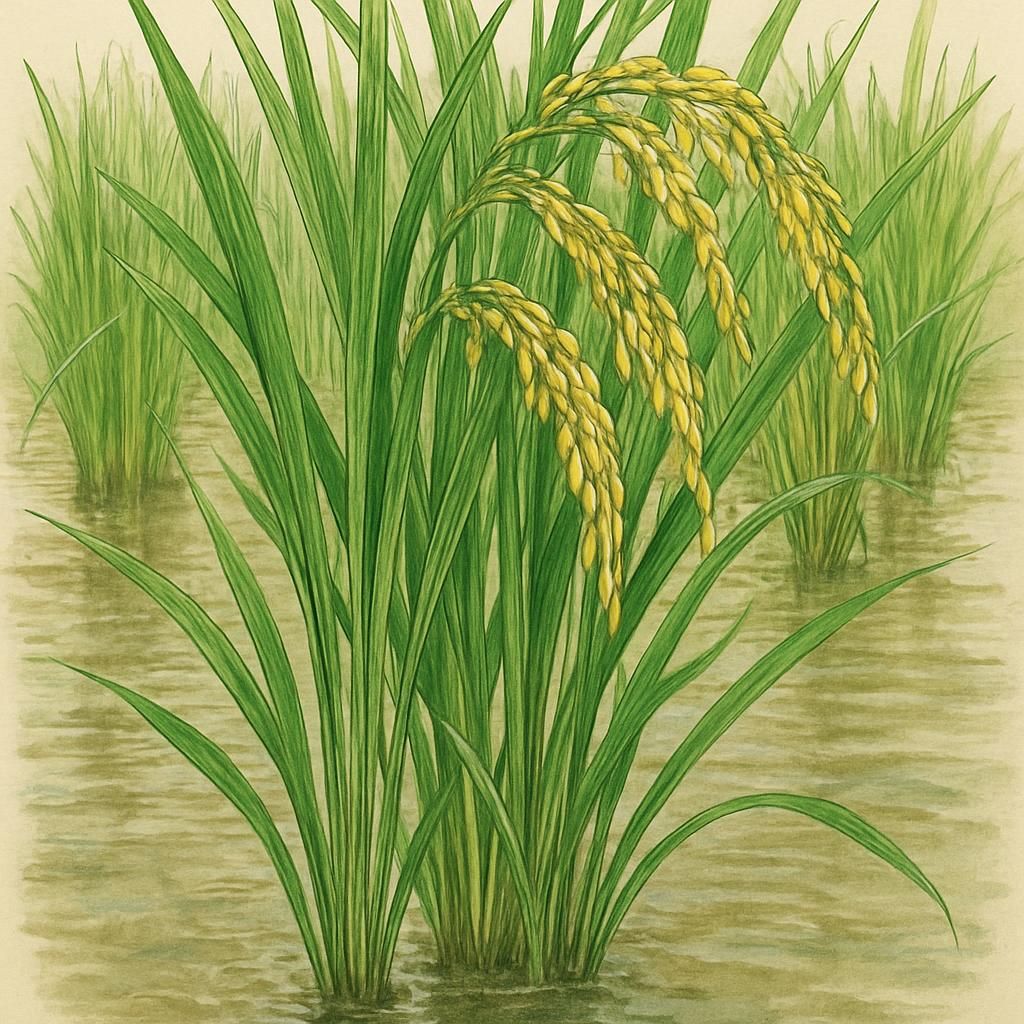
Introduction to Glutinous Rice (RD6)
Glutinous Rice, also known as sticky rice, is an essential crop in numerous Asian culinary traditions. The RD6 variety is specifically developed for higher yield and better adaptability to particular climates which makes it popular among farmers and consumers alike.
Botanical Profile of Glutinous Rice (RD6)
Glutinous Rice (RD6) is a cultivar of Oryza sativa, notable for its opaque grains and high amylopectin content, which contributes to its sticky texture when cooked. The plant typically reaches a height of 1-2 meters under optimal conditions, flourishing in warm, wet climates.
Soil, pH, and Climate Requirements for Glutinous Rice (RD6)
This crop thrives in specific environments, particularly in regions that support submerged rice paddies. Below is a table outlining the ideal conditions for RD6 cultivation:
| Condition | Ideal Range |
|---|---|
| Soil Type | Loamy, Clay |
| Soil pH | 5.5 - 6.5 |
| Temperature | 24°C - 35°C |
| Rainfall | 1500 - 2000 mm/year |
Step-by-Step Planting & Propagation
- Field Preparation: Level the land to ensure even water distribution. Flood fields to suppress weeds before planting.
- Nursery Preparation: Sow seeds in a high-density nursery for 30 days before transplanting.
- Transplanting: Transplant young seedlings into flooded paddies, spaced 20-30 cm apart to allow proper growth.
- Water Management: Maintain 5-10 cm of water over fields until maturity.
Care & Maintenance Regimes for Glutinous Rice (RD6)
Care and maintenance are pivotal for a healthy crop. Key aspects include irrigation, fertilizer application, and minimal pruning:
| Task | Schedule |
|---|---|
| Watering | Continuous paddy flooding |
| Fertilizer | NPK 3 times: transplanting, mid-tillering, panicle initiation |
| Pruning | Not typically required |
Pests, Diseases & Organic Management
Key challenges include pest attacks and diseases like leaf rust and rice blast. Employ crop rotation and introduce natural predators to manage pests like Spider Mites, and maintain organic practices to prevent disease spread.
Harvesting, Curing & Optimal Storage
Harvest when grains mature and become hard (30-35 days post-flowering). Dry harvested grains to 14% moisture content. Store in cool, dry, rodent-proof facilities.
Companion Planting for Glutinous Rice (RD6)
Utilize crops like Lychee in adjacent fields to attract beneficial insects and enhance pollination, improving overall farm biodiversity and resilience against pests.