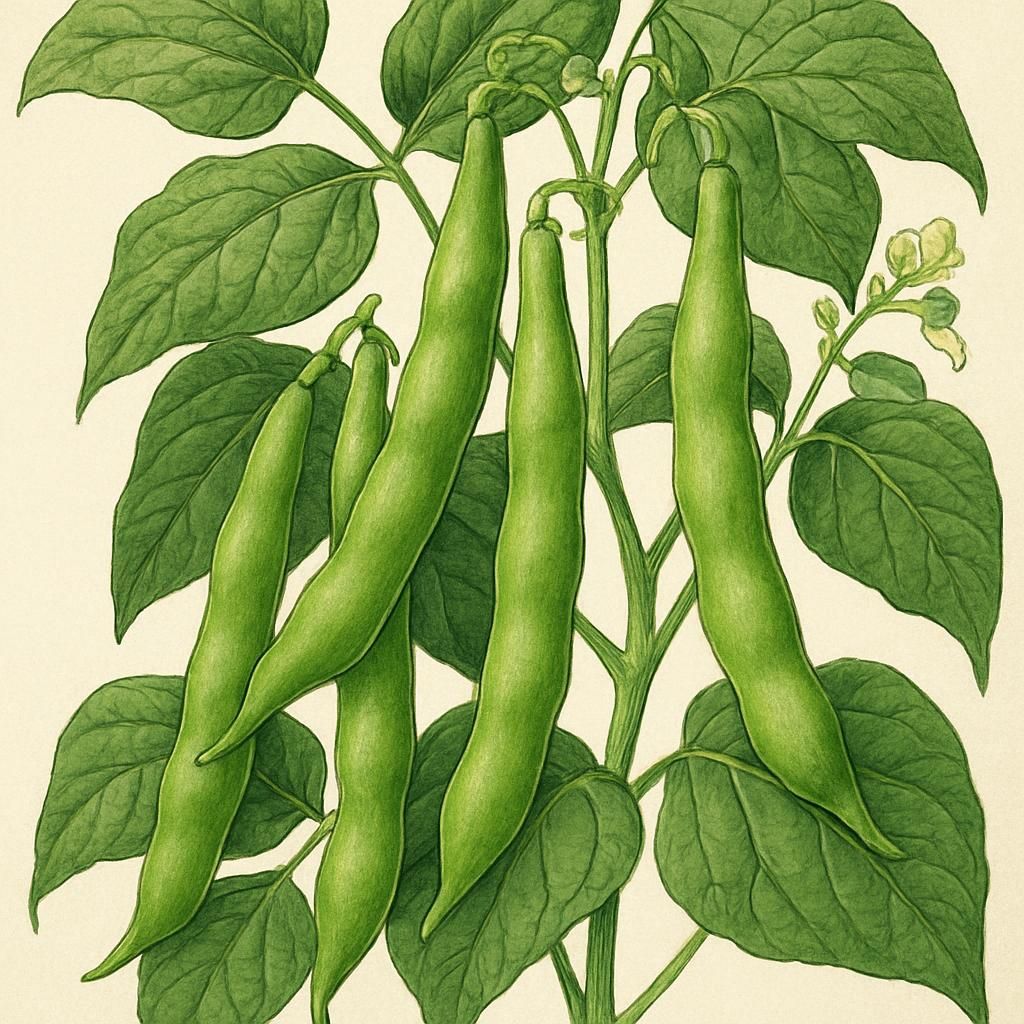
Introduction to French Bean (Maxibel)
French Bean 'Maxibel' is a sought-after legume among gardeners and farmers alike for its prolific yield and fine culinary qualities. Known for its long, slim pods and tender texture, it makes an excellent addition to any vegetable garden. With minimal maintenance and quick maturation, Maxibel enjoys popularity in temperate climates and supports sustainable agricultural practices.
Botanical Profile of French Bean (Maxibel)
The Maxibel French bean is classified under Phaseolus vulgaris, commonly referred to as the common bean. Originating from Central and South America, the 'Maxibel' variety is esteemed for its excellent edible pods which typically measure up to 7 inches long. It grows as a bush rather than a climbing plant, usually reaching a height of approximately 20 inches. With delicate green leaves and white blossoms, the Maxibel bean plant is both productive and ornamental.
Soil, pH, and Climate Requirements for French Bean (Maxibel)
Ensuring optimal growth conditions for Maxibel beans is crucial for a successful harvest. These beans favor a warm, sunny environment and well-drained soil enriched with organic matter.
| Condition | Ideal Parameters |
|---|---|
| Soil Type | Well-drained, loamy |
| Soil pH | 6.0 - 7.5 |
| Temperature Range | 15°C - 30°C (59°F - 86°F) |
| Rainfall Requirement | 400 - 600 mm annually |
| Sunlight | Full sun for at least 6 hours |
Step-by-Step Planting & Propagation
- Timing: Sow seeds outdoors after the last frost date when soil temperature is at least 15°C (59°F).
- Soil Preparation: Work in organic compost and ensure the soil is loose and moist.
- Sowing: Plant seeds 1 inch deep and 18 inches apart in rows 2 feet apart.
- Watering: Maintain consistent moisture; avoid waterlogging.
- Germination: Expect seedlings in 7-14 days.
- Thinning: Thin to one plant every 4 inches once they have a set of true leaves.
Care & Maintenance Regimes for French Bean (Maxibel)
Proper care of Maxibel beans involves regular monitoring and appropriate cultural practices.
| Regime | Water | Fertilizer | Pruning |
|---|---|---|---|
| Frequency | Regular, ensuring moist soil | Apply balanced organic | Not necessary, remove |
| 1-2 inches per week | fertilizer bi-weekly | damaged leaves | |
| Method | Drip irrigation is ideal | Nitrogen-fixing, avoid | |
| high nitrogen |
Pests, Diseases & Organic Management
Maxibel beans, like many legumes, may face challenges from pests like Spider Mites and diseases such as anthracnose. Utilize integrated pest management (IPM) techniques:
- Pests: Introduce beneficial insects like ladybugs and use neem oil as a deterrent.
- Diseases: Rotate crops annually and plant disease-resistant varieties.
- Weeds: Mulch to suppress weed growth.
Harvesting, Curing & Optimal Storage
- Harvest: Pick pods when they are bright green and crisp, typically 55-60 days after sowing.
- Curing: Allow beans to dry on the bush for seed saving.
- Storage: Fresh pods can be stored in the refrigerator for a week, while dried beans last for months in a cool, dry place.
Companion Planting for French Bean (Maxibel)
Companion planting enhances the growth and yield of Maxibel beans. Suitable companions include:
- Corn: Provides support and reduces competition for nutrients.
- Nasturtium: Deters aphids and improves pollination. Explore more in the Summer Companion Planting: 10 Organic Pairings to Boost Small Farm Resilience.
Learn about crop diseases in our related blog post, Crop Diseases Under the Microscope: 9 Organic Fixes for Small Farm Resilience.