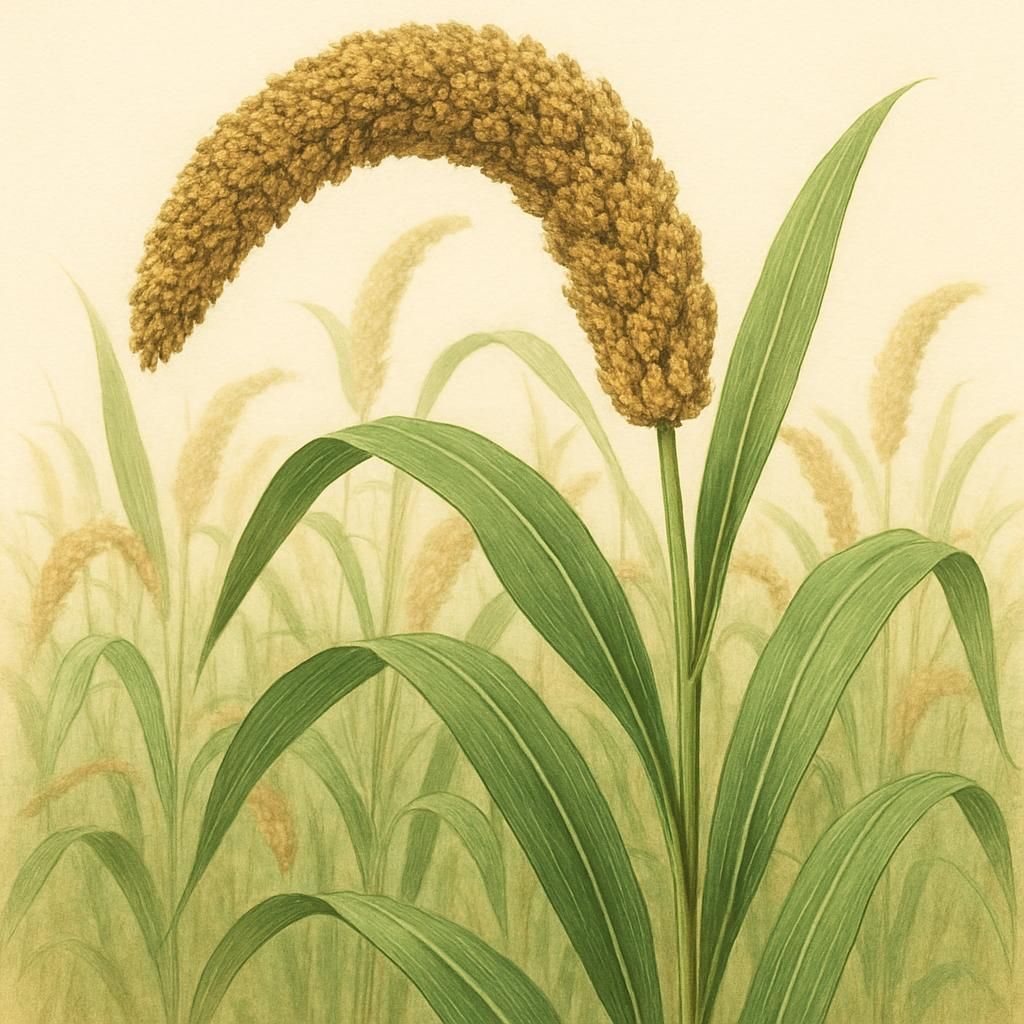
Introduction to Foxtail Millet (Setaria italica)
Foxtail Millet (Setaria italica), known for its resilience and versatility, ranks among the oldest cultivated crops in the world. Originating in Asia, this cereal grain is especially vital in semi-arid regions. Its short growing period and tolerance to poor soils make it an invaluable crop for maintaining food security, particularly in areas that experience erratic rainfall patterns.
Botanical Profile of Foxtail Millet (Setaria italica)
A member of the Poaceae family, Foxtail Millet is an annual grass attaining heights of up to 150 cm. Its slender stems are topped with a dense, brush-like flowering head, commonly referred to as the 'spikelet'. The plant bears narrow, linear leaves with a fibrous root system, contributing to its exceptional drought resilience.
Soil, pH, and Climate Requirements for Foxtail Millet (Setaria italica)
Cultivating Foxtail Millet requires understanding its preference for specific environmental conditions. Although it can grow in various soils, sandy loams are ideal.
| Condition | Ideal Range |
|---|---|
| Soil Type | Sandy loam |
| Soil pH | 5.5 - 7.5 |
| Temperature | 25°C - 30°C (77°F - 86°F) |
| Rainfall | 400 - 600 mm/year |
Foxtail Millet is notably hardy, withstanding varying weather conditions, thus ensuring consistent yield.
Step-by-Step Planting & Propagation
- Site Selection: Choose a location with optimal sunlight, ensuring 6-8 hours of direct light daily.
- Soil Preparation: Conduct soil testing to adjust pH levels. Enrich the soil with compost for better aeration and fertility.
- Sowing: Plant seeds at a depth of 1.5 to 2 cm, leaving a space of 10-15 cm between plants. Ensure rows are spaced 45 cm apart.
- Watering: Adequately water post planting but avoid waterlogging.
- Thinning: Once seedlings reach about 5 cm, thin them to maintain garden space and air flow.
Care & Maintenance regimes for Foxtail Millet (Setaria italica)
Regular maintenance is crucial to assure the health and productivity of Foxtail Millet.
| Task | Frequency | Method |
|---|---|---|
| Watering | Weekly | Deep watering during droughts |
| Fertilizing | Every 3-4 weeks | Use nitrogen-rich fertilizers |
| Weeding | Bi-weekly | Manual or shallow hoeing |
Maintenance involves balancing nutrients and moisture, ensuring robust growth.
Pests, Diseases & Organic Management
Foxtail Millet faces challenges from pests like spider mites Spider Mites and diseases such as rusts. Organic pest control methods include:
- Introducing beneficial insects like ladybugs
- Applying neem oil as a natural pesticide
To prevent diseases, promote crop rotation and ensure proper air circulation to reduce humidity.
Harvesting, Curing & Optimal Storage
Foxtail Millet ripens within 70-90 days post germination. Harvesting occurs when the grains turn golden-brown and the panicles dry. It's crucial to dry collected grains under the sun for 3-5 days to reduce moisture content before storage.
Store millet in a cool, dry place in airtight containers to extend shelf life and maintain quality.
Companion Planting for Foxtail Millet (Setaria italica)
Prioritize crops that benefit the millet environment: incorporating legumes like Soybeans can enhance soil nitrogen levels.
Similarly, planting alongside Pigeon Pea can improve biodiversity, reducing pest prevalence and enhancing resilience.
For further understanding of the benefits of companion planting, exploring Summer Companion Planting: 10 Organic Pairings to Boost Small Farm Resilience offers great insights.