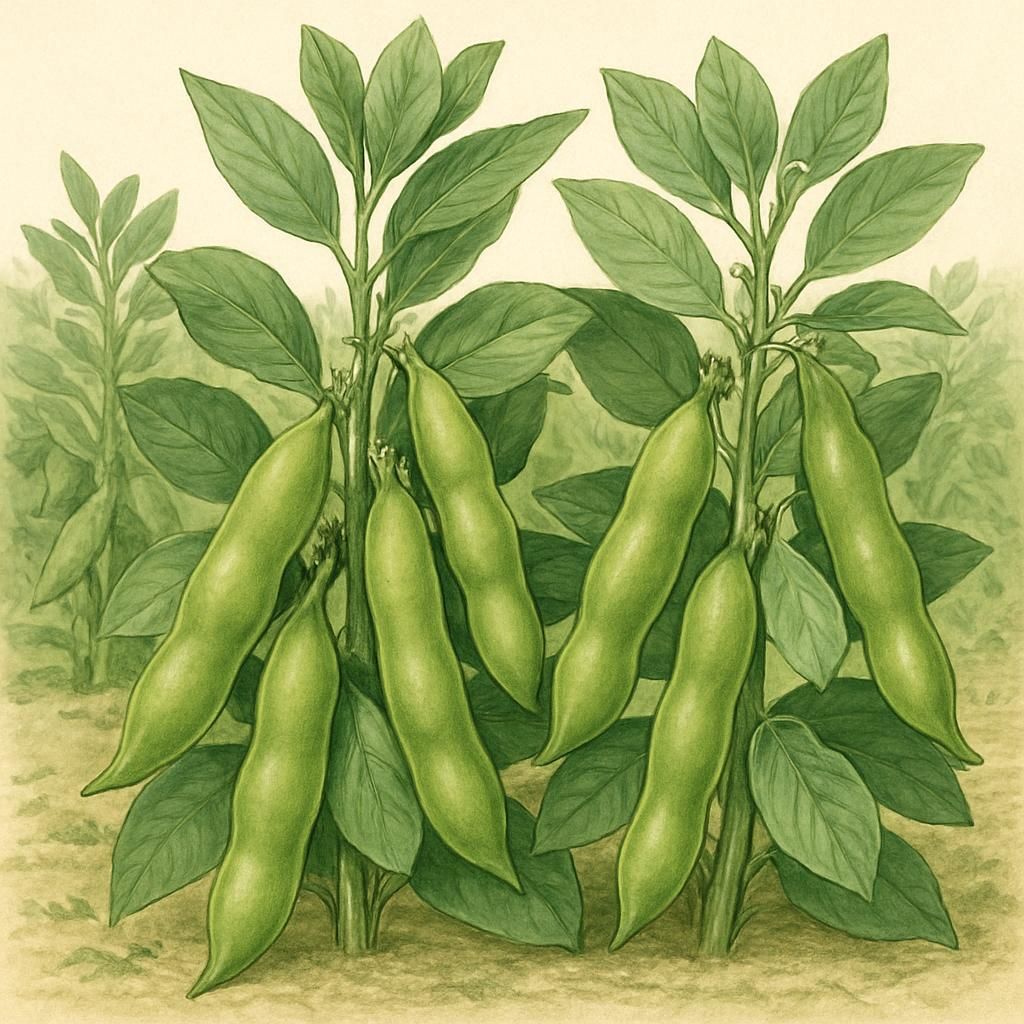
Introduction to Fava Bean (Broad Windsor)
The Broad Windsor Fava Bean is a traditional legume widely grown for its large size and flavorful beans. Known for its ability to thrive in cooler climates, it can also enhance soil fertility through nitrogen fixation. Farmers who wish to incorporate a low-maintenance, soil-enriching crop while yielding a delicious harvest often choose Broad Windsor.
Botanical Profile of Fava Bean (Broad Windsor)
Scientific Name: Vicia faba
Family: Fabaceae
Origin: Mediterranean region
Plant Type: Annual legume
Height: 2 to 6 feet
Pollination: Self-pollinating, but can benefit from bees
Soil, pH, and Climate Requirements for Fava Bean (Broad Windsor)
Growing Broad Windsor Fava Beans successfully requires an understanding of their soil, pH, and climate needs.
| Condition | Ideal Range |
|---|---|
| Soil Type | Loamy, well-drained |
| pH Level | 6.0 to 7.0 |
| Temperature | 60°F to 65°F (15°C to 18°C) |
| Light | Full sun |
Step-by-Step Planting & Propagation
- Site Selection: Choose a location with full sun exposure and well-drained soil.
- Soil Preparation: Amend the soil with compost to improve nutrient content and drainage.
- Sowing Seeds: Plant seeds directly in the ground 1 to 2 inches deep and 6 inches apart. Ensure rows are spaced 18 to 24 inches apart.
- Germination: Expect germination within 7 to 14 days, depending on soil temperature.
- Continuous Sowing: For a prolonged harvest season, sow seeds every 2 to 3 weeks.
Care & Maintenance Regimes for Fava Bean (Broad Windsor)
Proper care for Broad Windsor Fava Beans includes attention to water, fertilizer, and pruning schedules to optimize plant growth and bean yield.
| Aspect | Schedule/Description |
|---|---|
| Watering | Moderate; keep soil moist but not waterlogged |
| Fertilization | Add balanced fertilizer at planting; side-dress with nitrogen if needed |
| Pruning | Not necessary but can trim excess leaves to improve air circulation |
Pests, Diseases & Organic Management
Fava Beans can be affected by certain pests and diseases, but organic management practices can effectively control these issues:
- Aphids: Common pests, often managed organically with neem oil or insecticidal soap.
- Chocolate Spot: A fungal disease controlled by crop rotation and avoiding overhead watering.
- Spider Mites: Infestations can be minimized with regular misting and maintaining plant health. For more organic pest management strategies, read our blog on crop diseases under the microscope.
Harvesting, Curing & Optimal Storage
- Harvesting: Begin harvesting when pods are fully formed, plump, but still bright green.
- Curing: Leave the pods to dry on the plant if dried beans are desired, or pick green for fresh consumption.
- Storage: Store dried beans in a cool, dry place in an airtight container; fresh pods should be stored in the refrigerator.
Companion Planting for Fava Bean (Broad Windsor)
Fava Beans benefit significantly from companion planting:
- Cabbage: A great companion that avoids shading out beans, while beans supply nitrogen.
- Carrot: Benefits from the nitrogen supplied by Fava Beans and also helps in soil aeration.
- Avoid planting near: onions and garlic as they can compete for nutrients.
Explore more on the power of companion planting for resilient farms.