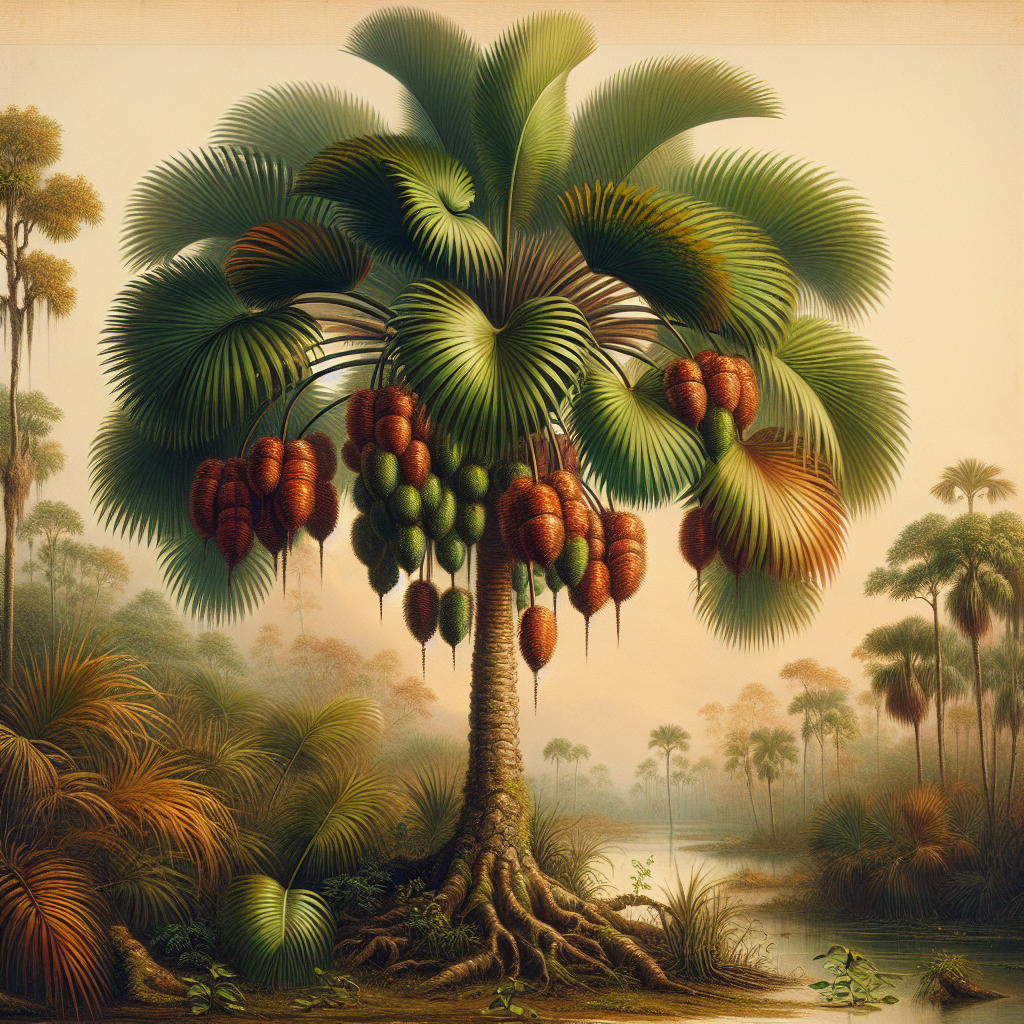
Introduction to Buriti (Mauritia flexuosa)
Buriti, scientifically known as Mauritia flexuosa, is often referred to as the "tree of life" in the Amazon region due to its immense cultural, economic, and ecological value. Native to the tropical wetlands of South America, particularly in Brazil, Peru, and Colombia, this palm tree is a cornerstone of indigenous communities. Its fruit provides nourishment, its leaves are used for thatching, and its fibers are woven into crafts. Beyond its utility, Buriti plays a critical role in swamp ecosystems, supporting biodiversity by offering habitat and food for numerous species. Cultivating Buriti can be a sustainable practice for farmers in tropical zones, contributing to both local economies and environmental conservation. This guide offers a detailed look at growing Buriti, from planting to harvest, ensuring success in suitable climates.
Botanical Profile of Buriti (Mauritia flexuosa)
Buriti is a dioecious palm tree belonging to the Arecaceae family, characterized by its towering height of up to 35 meters (115 feet) and a lifespan that can span decades. The tree features a straight, cylindrical trunk covered with persistent leaf bases and a crown of large, fan-shaped leaves that can reach 6 meters (20 feet) in length. Its fruit, which grows in large clusters, is a reddish-brown drupe about 5-7 cm (2-3 inches) in diameter, covered with shiny scales. Inside, the fruit contains a vibrant orange pulp rich in vitamins A and C, surrounding a hard seed. Buriti typically flowers and fruits year-round in its natural habitat, with peak production often aligned with rainy seasons. The tree’s deep root system is adapted to waterlogged soils, making it a dominant species in swampy areas known as "buritizais" in Brazil.
Soil, pH, and Climate Requirements for Buriti (Mauritia flexuosa)
Buriti thrives in very specific environmental conditions reflective of its native Amazonian wetland habitats. It prefers poorly drained, waterlogged soils rich in organic matter, often found in floodplains or swampy areas. A soil pH range of 4.5 to 6.5 is ideal, as the tree is adapted to slightly acidic conditions typical of tropical peatlands. If you're in a region without natural wetlands, consider creating a controlled environment with consistent moisture retention, using clay-heavy soils amended with compost to mimic natural conditions.
Climatically, Buriti demands a tropical environment with high humidity, annual rainfall between 1,500 and 3,000 mm (59-118 inches), and temperatures ranging from 24°C to 30°C (75°F to 86°F). It is not frost-tolerant and requires a consistent wet season to flourish. For small-scale farmers in non-native regions, replicating these conditions might involve irrigation systems or greenhouse setups, though the tree’s large size can make this challenging. Understanding these requirements is crucial, as deviations can stunt growth or prevent fruiting. For more on managing tropical crops in challenging climates, check out this insightful post on Why Summer Heatwaves Are Silently Killing Small Farm Yields - And 7 Organic Strategies to Fight Back.
Step-by-Step Planting & Propagation
Growing Buriti starts with sourcing viable seeds or seedlings, as this palm is most commonly propagated from seed due to its dioecious nature, requiring both male and female trees for fruit production. Here’s a detailed guide to planting:
- Seed Collection and Preparation: Collect fresh seeds from ripe Buriti fruits, as viability decreases with time. Remove the pulp and soak the seeds in water for 24-48 hours to soften the hard outer coat and encourage germination.
- Germination: Place seeds in a moist, well-draining medium like a mix of sand and peat moss. Maintain a temperature of 25-30°C (77-86°F) and keep the medium consistently wet. Germination can take 2-6 months, so patience is key.
- Seedling Care: Once sprouted, transfer seedlings to individual pots with rich, loamy soil. Keep them in a shaded, humid environment for the first year, watering regularly to prevent drying out.
- Site Selection: Choose a planting site with full sun exposure and access to water, ideally near a natural water source or in an area prone to flooding. If natural conditions aren’t available, install irrigation to maintain soil saturation.
- Planting: Transplant seedlings after 1-2 years when they are sturdy enough to handle field conditions. Space them at least 10-15 meters (33-49 feet) apart to accommodate their eventual size. Dig holes twice the size of the root ball and enrich with organic matter.
- Initial Support: Stake young trees to protect against wind damage in open areas, and mulch around the base with organic material to retain moisture.
Care & Maintenance Regimes for Buriti (Mauritia flexuosa)
Once established, Buriti requires minimal intervention but consistent attention to water and nutrient needs. Regular irrigation is essential, especially in the first few years or during dry spells in tropical regions. Aim to keep the soil consistently moist, mimicking swamp conditions, without allowing complete drying between waterings. Fertilization should focus on organic inputs like compost or well-rotted manure applied annually to replenish soil nutrients, as chemical fertilizers can disrupt the delicate balance of wetland ecosystems.
Pruning is rarely needed except to remove dead or damaged fronds, which can be done with a sharp, sterilized tool to prevent disease spread. Monitor for water stress, indicated by yellowing leaves, and adjust irrigation accordingly. Buriti palms take 8-10 years to reach maturity and begin fruiting, so long-term commitment is necessary. During this period, protect young trees from extreme weather events like storms, which can topple them before their root systems are fully developed.
Pests, Diseases & Organic Management
Buriti is relatively hardy in its native environment but can face challenges from pests and diseases, especially when grown outside natural ecosystems. Common pests include Rhinoceros Beetle, which can bore into the trunk, and various fruit-feeding insects that target the developing drupes. Organic control methods include introducing beneficial insects like predatory beetles or using neem oil sprays to deter infestations. Manual removal of visible pests and maintaining biodiversity around the planting area can also reduce pest pressure.
Diseases such as Bud Rot, often caused by fungal pathogens like Phytophthora palmivora, pose a significant threat in overly wet conditions with poor air circulation. Prevent this by ensuring proper spacing between trees and avoiding overhead irrigation that wets the crown. If bud rot appears, remove and destroy affected parts immediately, and apply organic fungicides like copper-based solutions as a preventative measure. Root rots can also occur in poorly managed soils, so ensure proper drainage despite the tree’s preference for wet conditions.
Harvesting, Curing & Optimal Storage
Buriti fruit is ready for harvest when the outer skin turns a deep reddish-brown, typically 8-10 years after planting, with production peaking during the rainy season. Harvesting is labor-intensive due to the tree’s height; traditional methods involve climbing or using long poles with hooks to detach fruit clusters. Always wear protective gear to avoid injury from falling fruits or sharp fronds.
Post-harvest, the fruit pulp is the primary product and should be processed quickly to prevent spoilage. Remove the pulp manually or with small tools, separating it from the hard seed. The pulp can be consumed fresh, dried, or processed into oil, a valuable product rich in beta-carotene. For storage, fresh pulp should be refrigerated and used within a few days, while dried pulp or oil can be stored in airtight containers in a cool, dark place for several months. Seeds can be saved for propagation if kept dry and cool, though they lose viability after a few months.
Companion Planting for Buriti (Mauritia flexuosa)
In its natural swampy habitat, Buriti often grows alongside other water-loving species, making companion planting a viable strategy for enhancing growth and ecosystem health. Pairing Buriti with nitrogen-fixing plants like Pigeon Pea can improve soil fertility in the surrounding area, benefiting the palm’s nutrient uptake. Additionally, understory plants adapted to wet conditions, such as certain ferns or aquatic herbs, can help maintain soil moisture and provide ground cover to reduce erosion around the palm’s base.
Avoid planting near crops that require dry conditions or compete for space, as Buriti’s extensive root system and height can overshadow smaller plants. Companion planting can also support pest management by attracting beneficial insects or repelling harmful ones, creating a balanced agroecosystem. Thoughtful pairing based on ecological compatibility ensures that Buriti thrives without negatively impacting neighboring species.