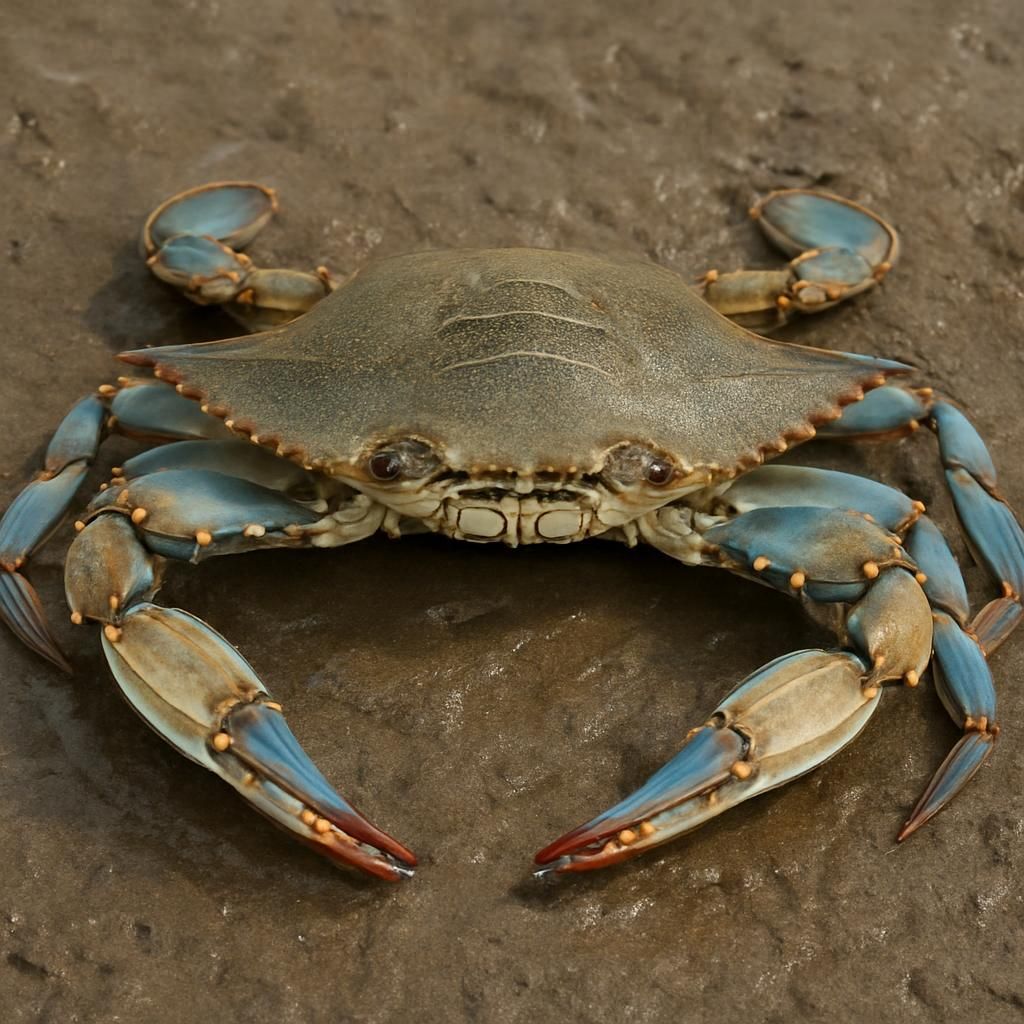
Introduction to blue crabs
Blue crabs (Callinectes sapidus) are highly mobile marine crustaceans native to the western Atlantic but increasingly problematic in estuarine agricultural zones, tidal irrigation channels, and coastal aquaculture ponds. Their powerful claws and burrowing behavior can compromise levees, damage irrigation infrastructure, and reduce productivity in salt-tolerant crops and shellfish operations. While primarily marine, blue crabs enter brackish agricultural waterways during high tides or storm events, where they consume vegetation, disturb sediment, and predate on cultured species. Effective management requires understanding their diagnostic signs, lifecycle, and environmental triggers to protect farm assets.
Identifying Symptoms & Damage
Farmers typically notice blue crab presence through direct sightings of adult crabs or their distinctive sideways movement in irrigation ditches and tidal ponds. Indirect signs include clipped stems on salt-tolerant crops, excavated burrow holes along embankments (often 10–30 cm deep), and cloudy water from sediment disturbance. In aquaculture settings, blue crabs cause direct mortality of shrimp, oysters, and fish fry through predation. Economic losses also occur from structural damage to levees and pumps, requiring costly repairs. Early detection is critical because a single mature female can release up to two million larvae in one spawning event.
Lifecycle and Progression of blue crabs (MUST INCLUDE A MARKDOWN TABLE OF LIFECYCLE STAGES)
The blue crab lifecycle spans marine and estuarine environments and includes seven distinct stages from egg to adult. Understanding each phase helps time control interventions effectively.
| Stage | Description | Duration | Key Characteristics |
|---|---|---|---|
| Egg | Fertilized eggs attached to female swimmerets | 2–3 weeks | Orange to dark brown mass; female migrates to high-salinity waters |
| Zoea | Free-swimming planktonic larvae | 4–6 weeks | Multiple molts; drift in ocean currents; highly vulnerable to predation |
| Megalopa | Transitional post-larval stage | 1–3 weeks | Begins benthic behavior; settles in estuaries; develops claws |
| Juvenile | Small crabs in shallow estuarine habitats | 3–12 months | Rapid growth through molting; feed on detritus and small invertebrates |
| Sub-adult | Larger crabs moving into deeper channels | 2–4 months | Increased mobility and aggression; begin seasonal migrations |
| Adult | Sexually mature crabs | 1–3 years | Males move to lower salinity; females migrate offshore to spawn |
| Mating & Spawning | Reproductive phase | Seasonal | Peak activity spring through fall in temperate zones |
Environmental Triggers & Risk Factors
Blue crab populations surge when water temperatures exceed 15 °C and salinity ranges between 10–30 ppt, conditions common in spring and early summer along coastal farms. Storm surges, king tides, and poorly maintained tidal gates allow rapid inland penetration. High organic sediment loads from agricultural runoff provide abundant food, accelerating growth rates. Farms located within 5 km of estuaries or with open tidal exchange face the highest risk. Prolonged drought followed by heavy rainfall can also trigger mass migrations as crabs seek new foraging grounds.
Organic Control & Treatment Plans (MUST INCLUDE A MARKDOWN TABLE OF TREATMENT OPTIONS AND FREQUENCIES)
Integrated organic management combines physical barriers, trapping, and habitat modification. Prioritize non-chemical methods to protect water quality and beneficial species.
| Treatment Option | Method | Frequency | Notes |
|---|---|---|---|
| Crab Traps (baited with fish) | Place 1 trap per 50 m of ditch | Weekly inspection and rebaiting | Use escape vents sized for juveniles only; release females with eggs |
| Exclusion Fencing | Install 1 m high mesh barriers with 5 cm buried lip | Install once; inspect monthly | Galvanized or plastic-coated wire prevents burrowing underneath |
| Tidal Gate Screens | Fine-mesh screens on intake structures | Clean and inspect every 2 weeks during migration season | Prevents entry of megalopae and juveniles |
| Habitat Modification | Remove excess detritus and maintain steep ditch banks | Quarterly | Reduces shelter and food availability; combine with cover crop rotation |
| Biological Control | Stock predatory fish (e.g., red drum) in ponds | Annual assessment | Maintain 2–3 fish per 100 m²; monitor dissolved oxygen |
| Manual Removal | Hand collection during low tide | Daily during peak presence | Effective for small infestations; wear protective gloves |
Preventing blue crabs in the Future
Long-term prevention focuses on infrastructure hardening and monitoring. Seal all tidal inlets with fine-mesh screens and maintain 30 cm freeboard on levees. Implement a monthly scouting protocol using baited traps at fixed monitoring stations. Rotate salt-tolerant crops such as Rice and Cassava to disrupt preferred foraging patterns. Maintain vegetative buffer strips of native grasses along waterways to reduce sediment that attracts crabs. Record trap counts and water quality data seasonally to forecast risk and adjust management calendars.
Crops Most Affected by blue crabs
Blue crabs primarily impact salt-tolerant and coastal crops through direct consumption and habitat disruption. Most vulnerable species include Rice, Cassava, and various brackish-water vegetables grown in tidal zones. In aquaculture-integrated farms, they threaten oyster, clam, and shrimp operations. Upland crops suffer indirect losses when irrigation systems are compromised or when sediment loads increase disease pressure. Monitoring programs should prioritize fields within estuarine influence zones.