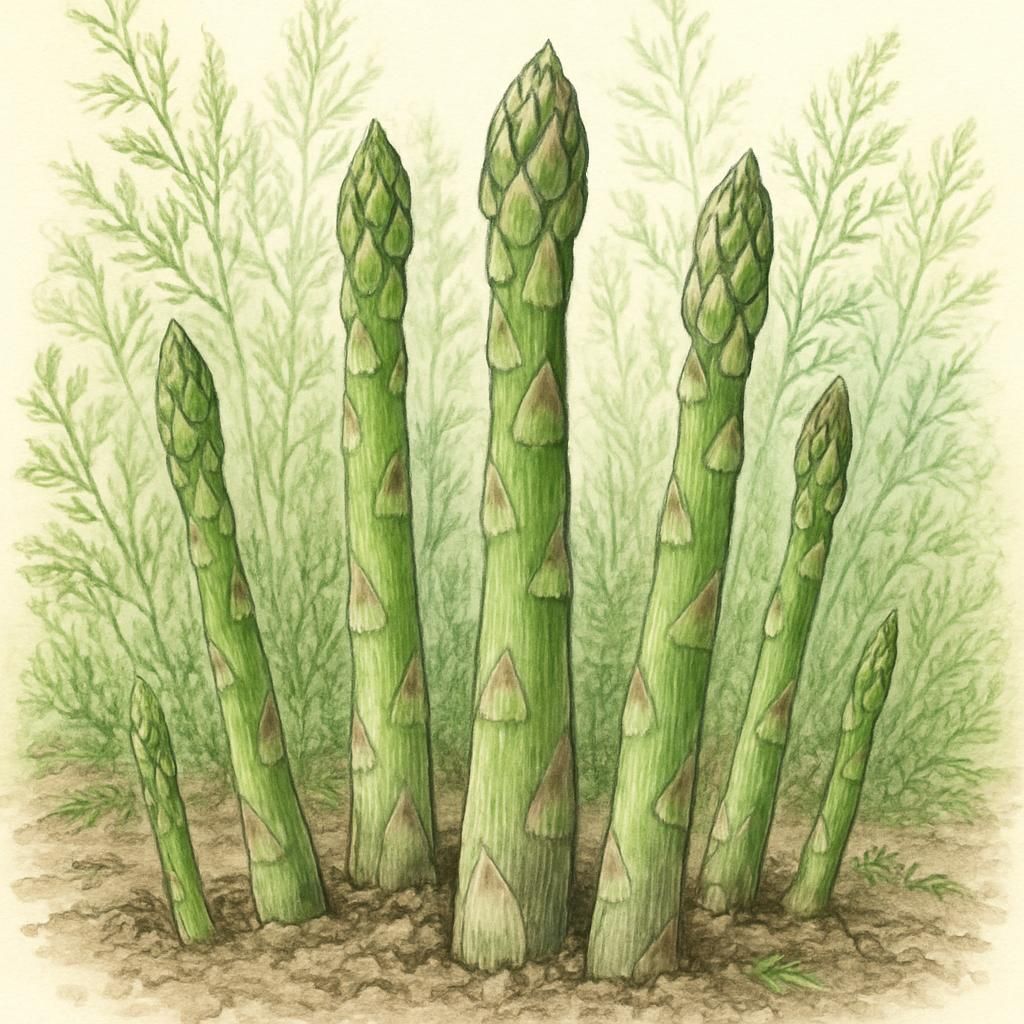
Introduction to Asparagus (Mary Washington)
Asparagus (Mary Washington) is a widely cherished perennial known for its robust nature and prolific yield. This classic variety is renowned for producing thick, tender spears that are highly prized by chefs and home gardeners alike. With excellent disease resistance, Mary Washington is particularly favored in various agricultural settings, from commercial farms to household gardens.
Botanical Profile of Asparagus (Mary Washington)
Botanically known as Asparagus officinalis, Mary Washington Asparagus belongs to the family Asparagaceae. It is a dioecious, flowering plant species whose young shoots, called spears, are edible. The plant reaches a height of 4 to 5 feet when mature and can grow in a well-maintained colony for over 15 years.
Soil, pH, and Climate Requirements for Asparagus (Mary Washington)
Mary Washington Asparagus thrives in specific environmental and soil conditions. Here’s an overview of the ideal requirements for cultivating this variety:
| Aspect | Ideal Conditions |
|---|---|
| Soil Type | Well-drained, sandy loam |
| Soil pH | 6.5 to 7.5 |
| Climate | Temperate to warm, free from early frost |
| Sunlight | Full sun, minimum 6-8 hours a day |
| Temperature Range | 18°C to 29°C (64°F to 84°F) |
Step-by-Step Planting & Propagation
- Site Selection: Choose a sunny location with well-drained soil to prevent root rot.
- Soil Preparation: Incorporate organic matter into the soil to enhance fertility. Test and adjust the pH to between 6.5 and 7.5.
- Planting: Sow seeds indoors 12-14 weeks before the last expected frost or directly plant crowns (one-year-old plants) into prepared trenches 18 inches apart and 12 inches deep.
- Spacing: Row spacing should be 3 to 4 feet apart, providing ample room for plant growth and airflow.
- Watering: Water crowns thoroughly after planting; maintain consistent moisture but avoid waterlogging.
- Mulching: Apply a layer of organic mulch to conserve soil moisture and inhibit weed growth.
Care & Maintenance Regimes for Asparagus (Mary Washington)
Proper care and maintenance are crucial for yielding healthy asparagus spears:
| Activity | Schedule |
|---|---|
| Watering | Moderate, weekly in dry conditions |
| Fertilizer | Balanced fertilizer in early spring |
| Pruning | Cut down browned ferns in late autumn |
Maintain a weed-free environment, and incorporate a balanced organic fertilizer each spring to bolster spear production.
Pests, Diseases & Organic Management
While Mary Washington Asparagus is resilient, it may still fall prey to pests and diseases such as Asparagus Beetle, Spider Mites, and Root-knot Nematodes. Implementing organic practices can help mitigate these problems:
- Interplanting: Cultivate marigolds and nasturtiums to repel aphids and beetles.
- Natural Predators: Encourage beneficial insects like ladybugs and parasitic wasps.
- Neem Oil: Use as an effective control measure against mites and beetles.
Additionally, Fusarium crown and root rot may affect root systems. Rotate crops regularly and improve soil drainage to prevent these issues.
Harvesting, Curing & Optimal Storage
Harvest asparagus spears when they reach 6-8 inches in height. Cut them with a sharp knife just below the soil surface. Avoid harvesting during the first two years to allow the plant system to develop without stress.
- Post-Harvesting: Allow spears to stand in cool water before drying.
- Curing: This step is generally unnecessary. Instead, almost immediately move freshly harvested asparagus to cool, humid storage conditions.
- Storage: Wrap in a damp cloth and store in the refrigerator to maintain moisture and freshness for up to a week.
Companion Planting for Asparagus (Mary Washington)
Asparagus (Mary Washington) benefits from companion planting. Consider sowing with:
- Tomatoes: Encourage a mutual support system where asparagus deters nematodes and tomatoes repel asparagus beetles.
- Parsley: Helps improve asparagus growth and deters harmful insects.
- Basil: Releases aroma that deters thrips and other sap-sucking insects.
Companion planting offers ecological benefits by promoting a biodiverse and balanced asparagus garden.
For more insights into companion planting, you can refer to our guide on Summer Companion Planting: 10 Organic Pairings to Boost Small Farm Resilience.
Learn more about general asparagus cultivation on the Asparagus Wikipedia page.