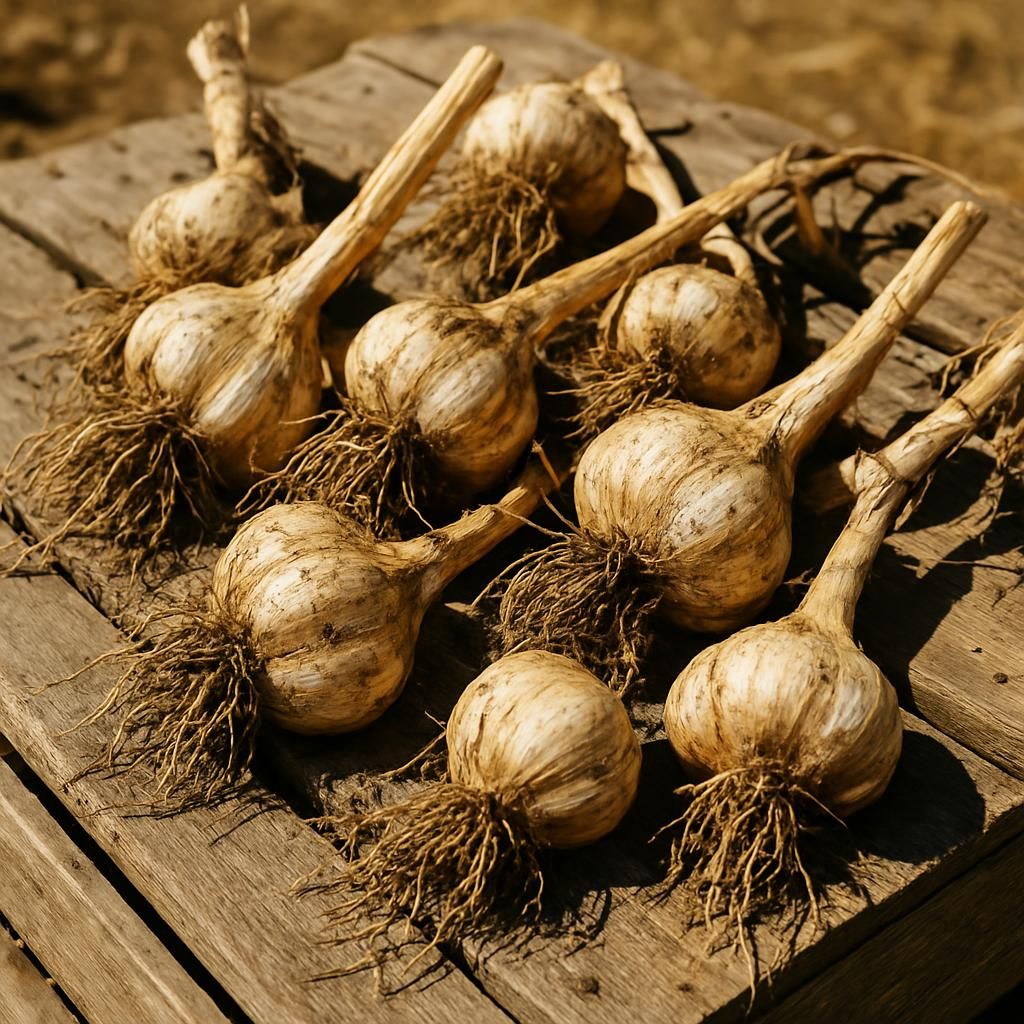
Garlic Production Costs That Rarely Get Discussed
Most small-scale garlic growers focus on bulb size and flavor while ignoring the real cost structure. Seed garlic alone can represent 40-60% of total production expense when using certified stock. Labor for planting, weeding, and harvesting adds another major layer that compounds quickly across even modest plantings.
Soil preparation plays an outsized role in final profitability. Heavy clay soils require more amendment work than sandy loams, yet both demand consistent organic matter additions. The decision between purchasing compost versus producing it on-site creates very different cost trajectories over multiple seasons.
Market Timing and Price Volatility
Garlic prices swing dramatically between fresh green garlic sales and cured storage bulbs. Early-season green garlic commands premium pricing at farmers markets, but requires precise harvest windows that conflict with other spring crops. Storage varieties offer more flexibility yet face competition from larger commercial operations.
Direct market channels versus wholesale routes produce entirely different margin structures. Farmers markets reward quality presentation and variety selection, while restaurant accounts demand consistent sizing and reliable delivery schedules. Each path requires different post-harvest handling investments.
Variety Selection and Regional Performance
Hardneck varieties typically produce larger bulbs but demand more precise vernalization periods. Softneck types offer longer storage potential with less climate sensitivity. Regional adaptation matters more than advertised yield claims because garlic responds strongly to local day-length patterns.
The economics of basil shows similar variety-driven cost differences that apply equally to allium crops. Garlic's multi-year seed stock requirements create different cash flow patterns than annual herb production.
Labor Allocation Realities
Planting garlic by hand remains standard for most operations under five acres. Mechanical planters exist but rarely justify their cost at small scales. The October planting window coincides with other fall tasks, forcing growers to prioritize which crops receive attention first.
Harvest timing creates another labor bottleneck. Garlic requires careful lifting to avoid bruising, followed by proper curing conditions. Operations that spread harvest over several days reduce quality risk but extend labor requirements.
Storage Infrastructure Decisions
Proper curing demands consistent airflow and moderate temperatures for three to four weeks post-harvest. Many operations repurpose existing structures rather than building dedicated facilities. The choice between active ventilation systems and passive designs affects both upfront costs and ongoing energy expenses.
Long-term storage requires temperature and humidity control that varies by variety. Hardnecks store best at cooler temperatures while softnecks tolerate wider ranges. These differences influence infrastructure investments needed to maintain quality through winter markets.
Revenue Stream Comparisons
| Market Channel | Typical Price Range | Volume Requirements | Payment Timing |
|---|---|---|---|
| Farmers Market | Premium pricing | Low to moderate | Immediate |
| CSA Shares | Fixed seasonal rate | Moderate | Seasonal |
| Restaurant Wholesale | Lower per unit | High consistency | 30-day terms |
| Seed Sales | Highest per pound | Limited by quality | Immediate |
Seed garlic sales often provide the highest return per pound but require maintaining disease-free stock and meeting certification standards. This channel demands different production protocols than culinary bulb sales.
Risk Factors Specific to Garlic
Garlic faces fewer pest pressures than many vegetables, but disease carryover through seed stock creates long-term consequences. Once infected, entire plantings can require multiple years of rotation before replanting becomes viable. This reality makes initial seed source selection critical.
Weather impacts appear most during establishment and harvest periods. Fall planting requires adequate soil moisture without waterlogging. Spring growth depends on consistent temperatures, while harvest timing affects both yield and storage quality.
Financial Planning Approaches
Tracking actual input costs against final market returns reveals patterns invisible in general crop budgets. Many operations discover that certain varieties perform better in specific market channels, while others excel as seed stock. These findings only emerge through consistent record-keeping across multiple seasons.
The truth about weather patterns and small farm resilience demonstrates how environmental factors influence all crop economics, including garlic's sensitivity to seasonal variations.
Scaling Considerations
Expanding garlic acreage requires proportional increases in seed stock, labor coordination, and storage capacity. Many operations find the sweet spot between one and three acres before infrastructure costs accelerate faster than revenue growth. Beyond this range, mechanization decisions become necessary.
Diversifying market outlets reduces risk from single-channel dependency. Operations selling through multiple streams maintain steadier cash flow even when individual markets fluctuate. This approach requires more complex logistics but provides stability that single-market strategies cannot match.