Introduction
Gardeners often discover that their lavender has become intertwined with aggressive weeds, vines, or neighboring plants. This common issue can restrict airflow, compete for nutrients, and diminish the visual appeal and aromatic quality of Lavender. Whether the culprit is field bindweed, morning glory, or another vigorous grower, quick and careful intervention prevents long-term stress. This guide focuses on gentle, organic techniques that preserve the delicate woody stems and silvery foliage of lavender while eliminating the unwanted growth.
Common Causes
Several factors lead to entanglement around lavender. Understanding these helps target the right solution.
| Weed or Vine Type | Growth Habit | Why It Tangled with Lavender |
|---|---|---|
| Field Bindweed | Twining stems that wrap tightly | Spreads underground via roots and climbs rapidly in sunny beds |
| Morning Glory | Vigorous climbing vines | Seeds germinate near lavender and use stems for support |
| Creeping Thyme or Thyme Overgrowth | Low-spreading mats | Can intermix when planted as companions without regular trimming |
| Wild Grasses | Fibrous root systems | Invade from lawn edges and become lodged in lower branches |
These invaders thrive in the same well-drained, sunny conditions that lavender prefers, making proactive management essential.
Step-by-Step Organic Solutions
Follow these methods in sequence for the best results. Work during cool morning hours when plants are less stressed.
Assess and Prepare
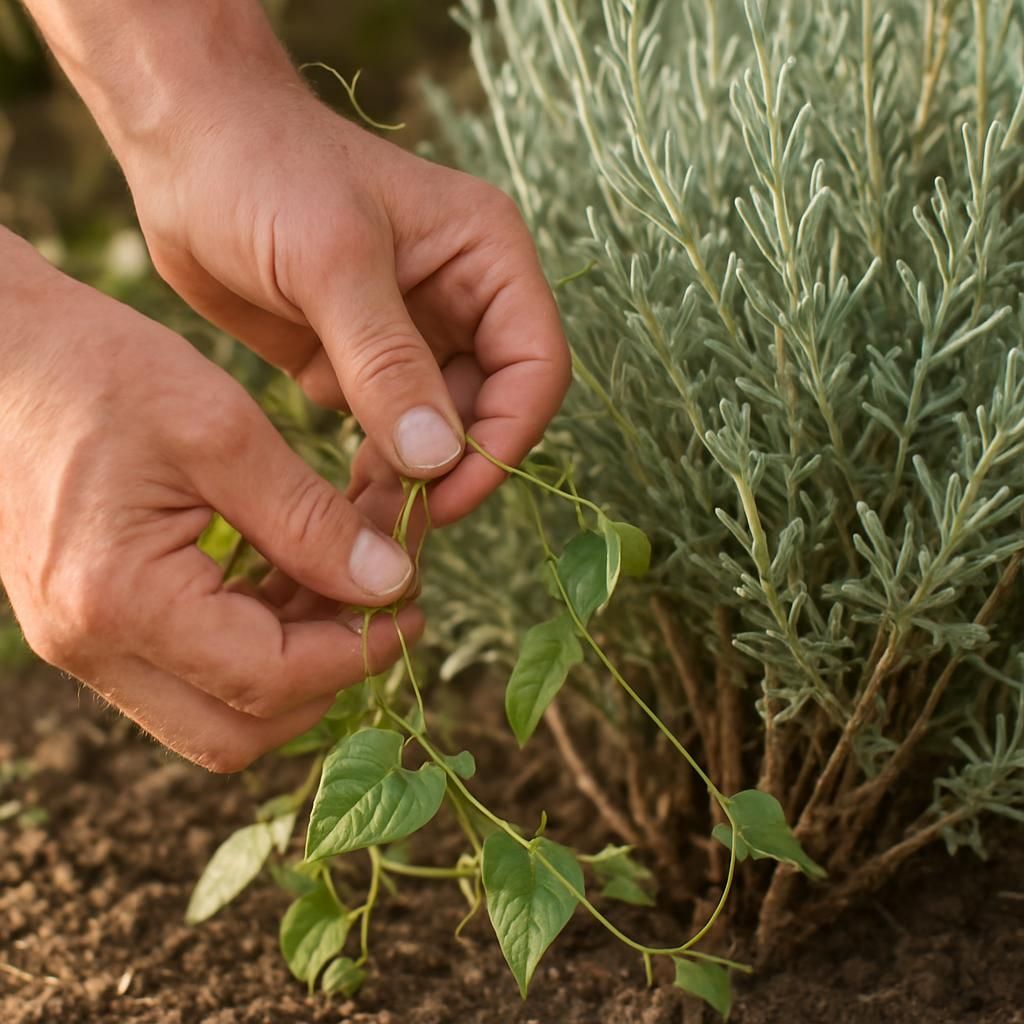
Examine the lavender from all angles. Identify where the tangle begins at soil level and trace upward. Wear gloves and use clean, sharp pruning shears sterilized with rubbing alcohol. Avoid pulling aggressively, as lavender stems are brittle and snap easily.Gently Loosen the Growth
Begin at the outer edges. Use your fingers to tease apart the offending stems rather than yanking. If roots are visible, loosen surrounding soil with a hand trowel to free underground runners. For stubborn bindweed, cut the vine at soil level first to weaken regrowth.Prune Damaged Lavender Sections
Remove any broken or crushed lavender stems with a clean 45-degree cut just above a leaf node. This encourages bushier regrowth. Never remove more than one-third of the plant in a single session.Extract Roots Thoroughly
Dig carefully around the base to remove as much of the weed root system as possible. Repeat every two weeks for persistent species like bindweed, which can resprout from fragments. Mulch the cleared area immediately with a 2-inch layer of organic material such as shredded bark or gravel to suppress new seedlings.Apply Organic Treatments
After clearing, water the lavender deeply but infrequently to encourage deep roots. A light application of diluted fish emulsion or compost tea supports recovery without chemical fertilizers.Monitor for Regrowth
Check the area weekly for two months. Early removal of new shoots prevents re-entanglement.
Prevention Tips
Prevent future tangles by creating an inhospitable environment for weeds while supporting lavender health.
- Plant lavender in raised beds or amended sandy soil with excellent drainage to reduce weed pressure.
- Space plants 18-24 inches apart and prune lightly after flowering to maintain an open structure that discourages vine climbing.
- Use Yarrow or other beneficial companions strategically; their deep roots help break up soil without competing aggressively.
- Apply seasonal mulch and edge beds with physical barriers such as landscape fabric or stones.
- Water at the base only and avoid overhead irrigation that spreads weed seeds.
Consistent observation and timely maintenance keep lavender looking its best while minimizing future intervention. With these organic practices, your lavender will regain its shape and continue producing fragrant blooms for years.