Introduction
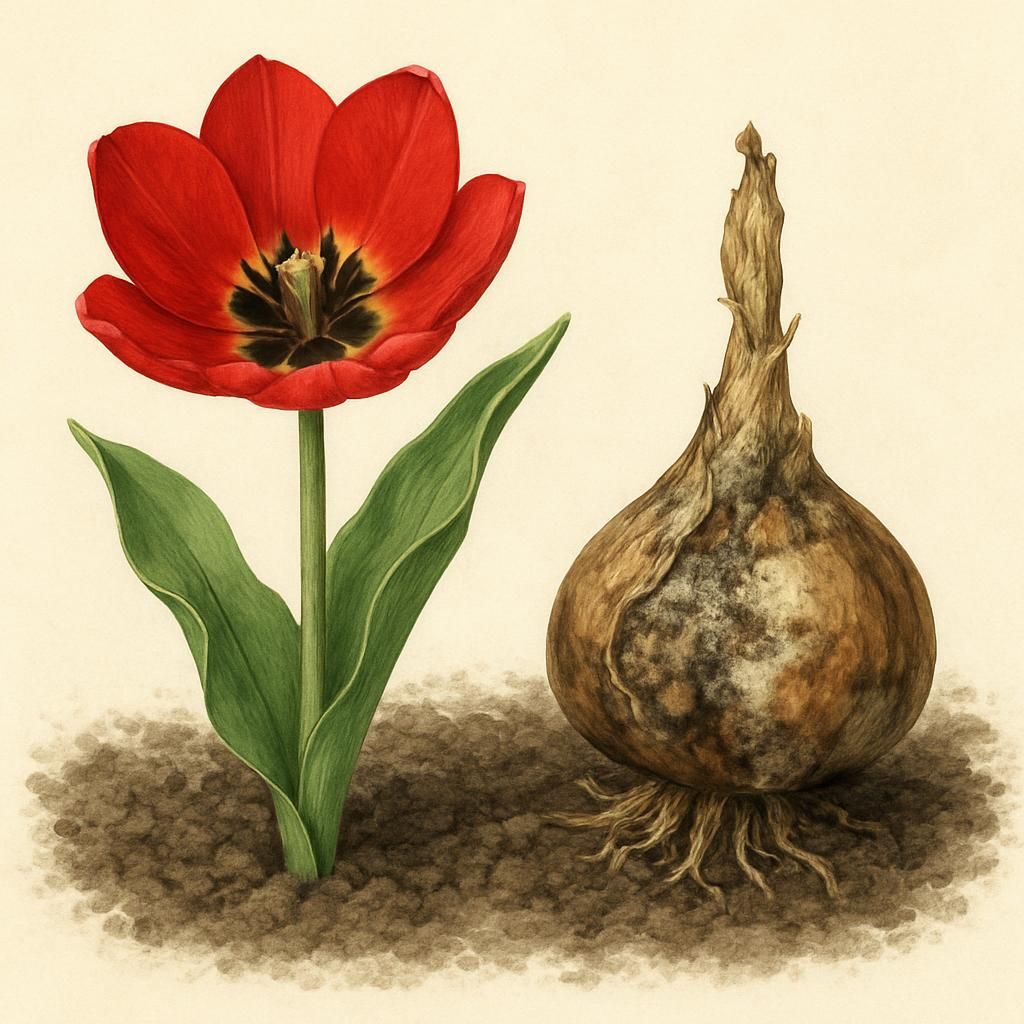
Tulip bulb rot is a common issue for gardeners, especially when excess moisture creates ideal conditions for fungal pathogens to thrive. Overwatering leads to waterlogged soil that deprives bulbs of oxygen, causing soft, discolored, and decaying tissue. Early recognition and corrective action can often save nearby plants and prevent widespread losses in the garden.
This guide outlines the primary causes of tulip bulb rot, provides step-by-step organic recovery methods, and shares proven prevention strategies that emphasize soil health and balanced irrigation.
Common Causes
Bulb rot in tulips typically stems from a combination of environmental factors and pathogens. The most frequent triggers include:
- Prolonged soil saturation that reduces oxygen availability around the bulb
- Poorly draining heavy clay soils that retain water after rainfall or irrigation
- Planting too deeply or in low-lying areas where water accumulates
- Use of infected planting stock carrying latent fungal spores
- Mild winter temperatures that fail to fully dormant the bulbs while moisture remains high
Fungal organisms such as Fusarium and Pythium species exploit these conditions, rapidly breaking down bulb scales and basal plates.
| Factor | Impact on Tulip Bulbs | Typical Signs |
|---|---|---|
| Overwatering | Creates anaerobic environment | Soft, brown, or black rot |
| Poor Drainage | Water pools around roots | Yellowing foliage, stunted growth |
| Infected Bulbs | Introduces pathogens at planting | Early collapse in spring |
| Compacted Soil | Limits air exchange | Slow emergence, weak stems |
Step-by-Step Organic Solutions
When rot is suspected, act quickly to limit spread.
Assess and Remove Affected Bulbs Carefully lift suspect plants. Discard any bulbs showing extensive softening or foul odor. Do not compost diseased material.
Improve Drainage Immediately Amend the planting area with coarse sand or well-aged compost to increase pore space. Raised beds are highly effective for future plantings.
Adjust Watering Practices Allow the top 5 cm of soil to dry between waterings. In established beds, reduce supplemental irrigation during cool, wet periods.
Apply Organic Fungicidal Drench Use a diluted solution of neem oil or a biological product containing Bacillus subtilis. Apply as a soil drench around remaining healthy bulbs.
Mulch Appropriately Add a thin layer of shredded bark or leaf mold to moderate soil temperature and moisture without trapping excess water against the bulbs.
Prevention Tips
Prevention focuses on cultural practices that keep bulbs healthy from the outset.
- Choose disease-free, firm bulbs from reputable sources
- Plant at the correct depth (typically three times the bulb height) in well-drained sites
- Rotate tulip plantings every three to four years to reduce pathogen buildup
- Incorporate organic matter annually to maintain soil structure
- Monitor soil moisture with a simple finger test or moisture meter before watering
By combining attentive irrigation management with organic soil amendments, gardeners can greatly reduce the incidence of tulip bulb rot while supporting vigorous spring displays.
For related bulb crops, see guidance on Garlic and Onion cultivation practices that share similar soil and moisture requirements.