Introduction
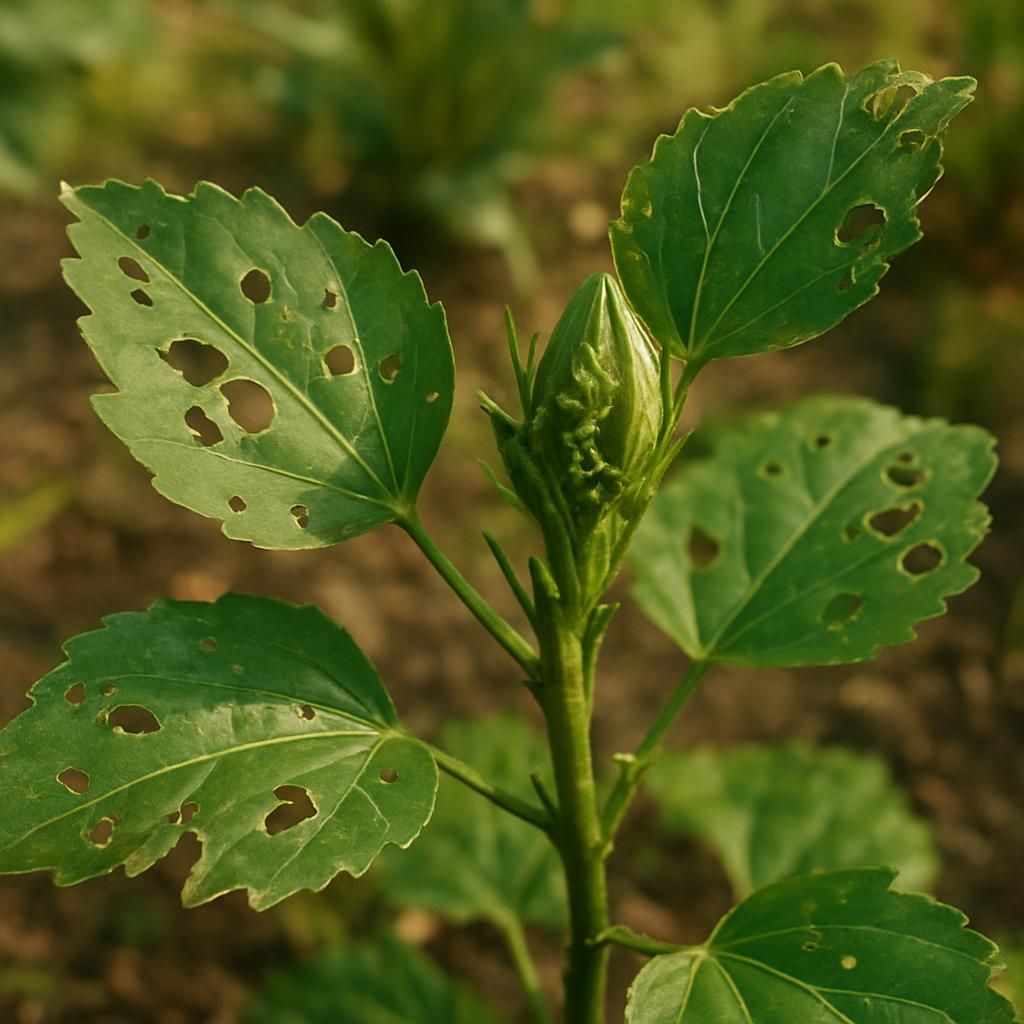
Hibiscus plants are prized for their large, vibrant flowers, yet many gardeners notice buds or leaves disappearing outdoors in summer while the same plant blooms indoors during winter. The culprit is often insect pests that target tender growth and flower buds. Identifying the damage early and using organic methods restores plant health without harsh chemicals.
Common Causes
Several common garden pests feed on hibiscus. Understanding their signs helps target the right solution.
Aphids cluster on new shoots and buds, causing distorted growth and sticky honeydew. Spider mites produce fine webbing and stippled leaves, thriving in hot, dry conditions. Japanese beetles chew large holes in leaves and devour flowers. Caterpillars such as hibiscus sawfly larvae strip foliage rapidly.
These insects are most active when outdoor temperatures rise, explaining why plants may bloom better indoors during cooler months when pest pressure is lower.
Step-by-Step Organic Solutions
1. Inspect and Confirm the Pest
Examine the undersides of leaves and inside flower buds with a magnifying glass. Note the type of damage--chewed edges, stippling, or clusters of tiny insects--to choose the correct treatment.
2. Remove Pests Manually
- Spray plants with a strong jet of water every two to three days to dislodge aphids and mites.
- Handpick larger beetles and caterpillars into a bucket of soapy water.
- Prune heavily infested stems and dispose of them away from the garden.
3. Apply Organic Sprays
Mix 1 teaspoon of mild liquid soap with 1 quart of water and spray thoroughly, repeating every 5-7 days. For mites, add 1 tablespoon of neem oil to the solution. Apply in early morning or evening to avoid leaf burn.
4. Introduce Beneficial Insects
Release ladybugs or lacewings near the hibiscus. These predators consume aphids and mites naturally. Provide water sources and avoid broad-spectrum insecticides that harm beneficials.
5. Use Companion Planting
Plant Nasturtium and Yarrow nearby to attract beneficial insects and repel aphids. Interplant with Garlic to deter beetles through natural sulfur compounds.
Prevention Tips
Maintain plant vigor with consistent watering and organic fertilizer to help hibiscus resist attack. Mulch the base to retain moisture and reduce mite habitat. Monitor weekly during warm months and treat at the first sign of pests. Move potted hibiscus to a sheltered location or use floating row covers during peak beetle season. Proper winter indoor care with bright light and moderate temperatures prepares the plant for strong outdoor blooming once pests are controlled.
Consistent monitoring combined with these organic practices ensures your hibiscus produces abundant flowers outdoors throughout the summer season.