Introduction
Rosemary is a hardy Mediterranean herb prized for its culinary uses, aromatic foliage, and drought tolerance. When an established rosemary bush or surrounding ground cover begins to yellow, wilt, or die back suddenly, the cause is often unintended exposure to herbicides like glyphosate (commonly found in Roundup). This guide explains how to confirm herbicide damage, restore affected plants organically, and protect your garden from future incidents.
Common Causes
Herbicide damage in rosemary and ground covers typically results from:
- Drift from neighboring properties: Wind can carry fine spray droplets onto your plants.
- Soil contamination: Glyphosate residues persist in soil, especially in compacted or low-microbe areas.
- Root uptake: Established plants absorb the chemical through roots after soil application nearby.
- Misapplication by the gardener: Accidental overspray during weed control.
Other potential causes like root rot, nutrient deficiency, or pests should be ruled out first through soil testing and visual inspection. Glyphosate damage is distinctive because it often appears in patterns aligned with wind direction or property lines.
Step-by-Step Organic Solutions
1. Assess the Damage
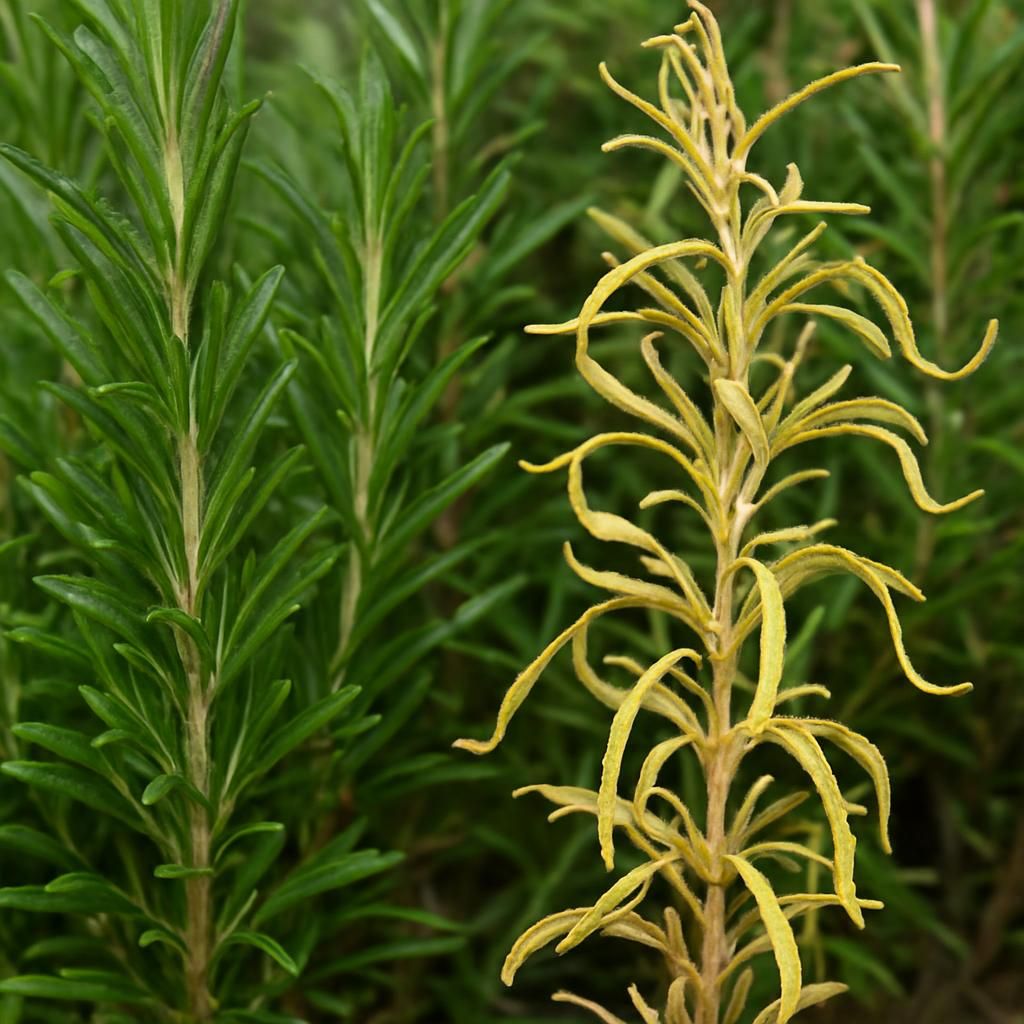
Examine plants for curled, twisted new growth, chlorosis (yellowing), and necrotic leaf tips. Established rosemary may show dieback from the tips inward. Test soil pH and glyphosate residue if possible through a local extension service.
2. Remove Contaminated Material
Prune away severely damaged foliage and stems. Dispose of clippings in sealed bags rather than composting to avoid spreading residues.
3. Improve Soil Biology
Glyphosate disrupts beneficial microbes. Apply:
- Compost tea or worm castings to boost microbial activity.
- Mycorrhizal inoculants to support root recovery.
- Biochar to bind remaining chemical residues.
4. Water and Mulch Strategically
Deep water the root zone weekly to encourage leaching of surface residues while avoiding waterlogging. Apply a 2-3 inch layer of organic mulch such as wood chips to protect soil life.
5. Support Plant Recovery
- Foliar feed with diluted seaweed extract or fish emulsion every 2-3 weeks.
- Avoid synthetic fertilizers that can stress recovering plants.
- Monitor for secondary infections and treat organically with neem oil if needed.
| Recovery Timeline | Expected Signs of Improvement |
|---|---|
| 2-4 weeks | Reduced wilting, new green shoots |
| 1-3 months | Stronger foliage and root growth |
| 6+ months | Full canopy recovery (if roots survived) |
Prevention Tips
- Communicate with neighbors about spray schedules and request buffer zones.
- Install physical barriers like hedges or tall fencing.
- Use mechanical weed control methods such as mulching, hand-pulling, or flame weeding.
- Maintain healthy soil biology year-round to increase plant resilience.
- Choose resistant companion plants like Thyme or Garlic that can help deter weeds naturally.
By following these organic-first steps, most rosemary and ground cover plants can recover from glyphosate exposure without chemical intervention.