Introduction
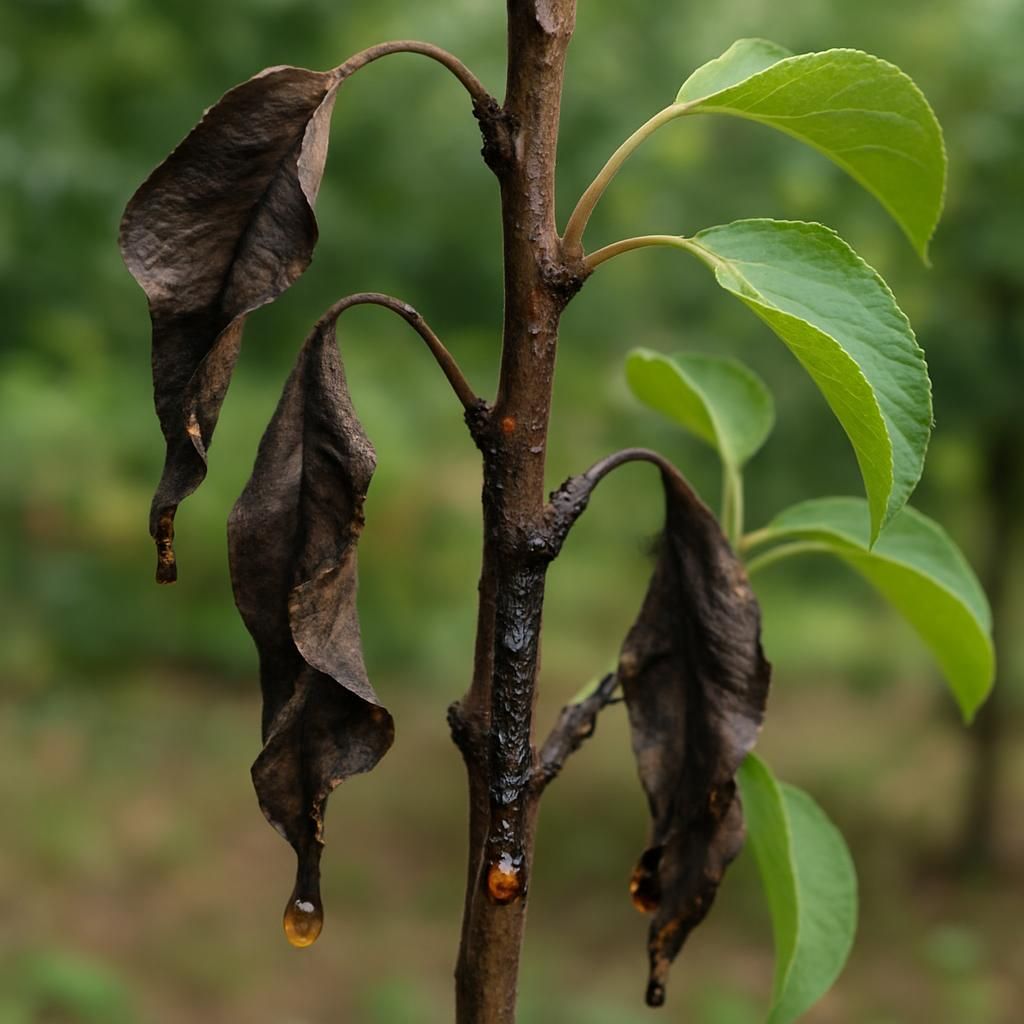
New pear trees showing sudden wilting, blackened leaves, or oozing cankers often raise concerns about blight. Fire blight, caused by the bacterium Erwinia amylovora, is a common and serious disease affecting Pear trees, particularly young specimens that have not yet developed full resistance. Early identification and prompt organic intervention are essential to limit spread and save the tree.
Common Causes
Fire blight spreads primarily through rain, wind, insects, and contaminated pruning tools. Warm, wet spring weather during bloom creates ideal conditions for infection. The bacteria enter through flowers, wounds, or natural openings and move rapidly through the vascular system.
Other contributing factors include:
- Over-fertilization with high-nitrogen products that promote succulent growth
- Poor air circulation in dense plantings
- Presence of nearby infected Apple or quince trees
- Improper pruning that leaves stubs or occurs during active infection periods
| Factor | Impact on Disease | Organic Mitigation |
|---|---|---|
| Irrigation | High humidity favors bacteria | Water at base only, avoid overhead |
| Fertilization | Succulent tissue more susceptible | Use compost tea, avoid synthetic nitrogen |
| Spacing | Poor airflow increases spread | Maintain 15-20 ft between trees |
| Tool hygiene | Direct transmission | Sanitize between cuts with 10% bleach |
Step-by-Step Organic Solutions
Confirm the diagnosis - Examine for shepherd's crook wilting, blackened blossoms, and amber-colored ooze. Cut into a branch to check for reddish-brown streaking in the wood.
Prune immediately - Remove infected branches 12-18 inches below visible symptoms. Make cuts on a dry day and sterilize tools after every cut.
Apply organic bactericides - During bloom, spray with copper-based products or Bacillus subtilis formulations labeled for fire blight. Repeat every 5-7 days while flowers are open.
Improve tree vigor - Apply well-aged compost around the drip line and maintain consistent moisture without waterlogging.
Monitor and remove secondary infections - Inspect weekly for new strikes and repeat pruning as needed. Destroy all prunings by burning or bagging.
Prevention Tips
- Choose resistant pear cultivars when planting new trees.
- Avoid late-season nitrogen applications.
- Practice dormant-season pruning only.
- Encourage beneficial insects that reduce aphid populations, which can spread bacteria.
- Maintain a diverse understory with flowering plants to support predatory insects.
Consistent cultural practices and vigilant monitoring during the bloom period provide the strongest long-term defense against fire blight in pear orchards.