Introduction
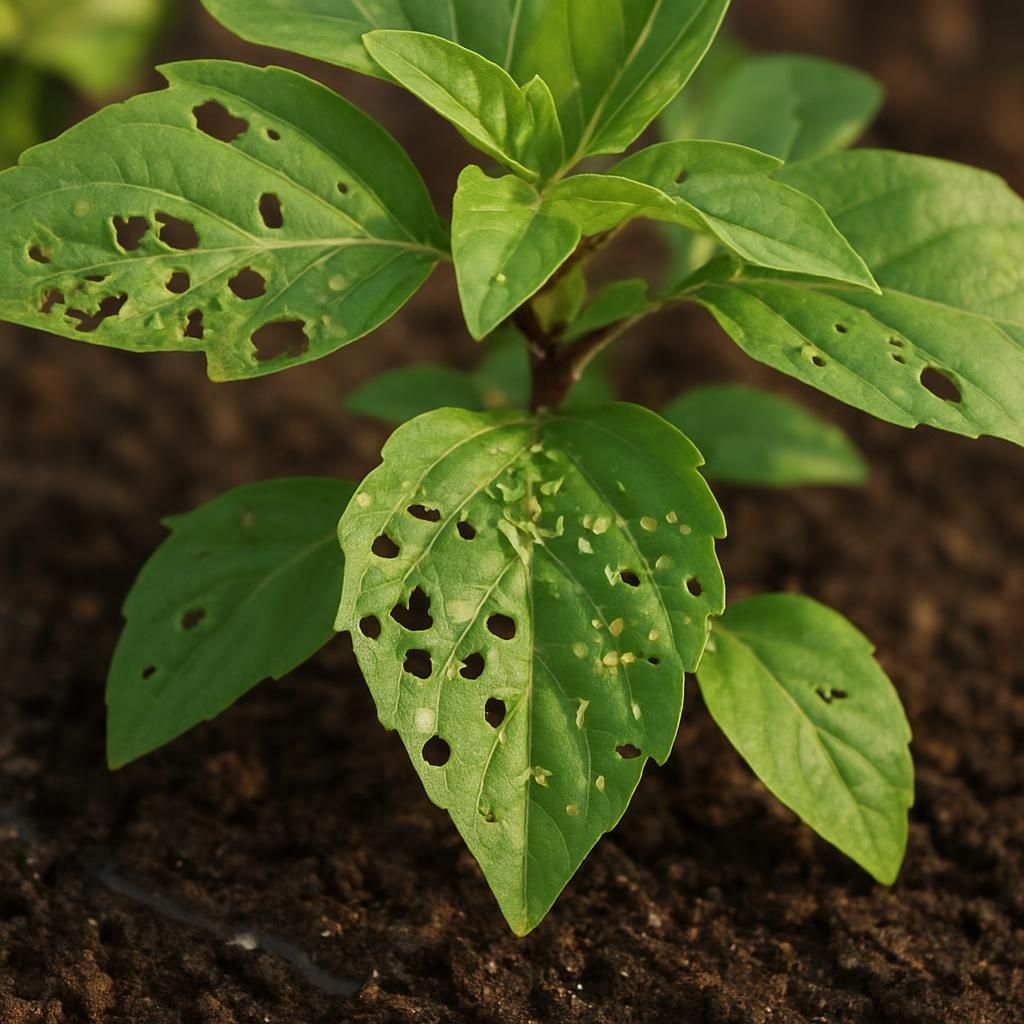
Basil is a favorite herb in home gardens, but it often falls victim to hungry insects that chew holes in leaves, skeletonize foliage, or suck sap from stems. When gardeners notice ragged edges or missing sections on their Thai Basil plants, the first question is always what is eating the basil and how to stop it quickly. Identifying the culprit early and using organic methods prevents further damage while keeping your harvest safe for culinary use.
Common Causes
Several insects commonly target basil. Understanding their signs helps narrow down the problem.
| Pest | Typical Damage | Active Season | Identification Clues |
|---|---|---|---|
| Aphids | Curled leaves, sticky honeydew | Spring to fall | Tiny green, black, or white insects clustered on new growth |
| Slugs and Snails | Large irregular holes, slime trails | Cool, moist nights | Silvery trails on soil and leaves |
| Japanese Beetles | Skeletonized leaves | Summer | Metallic green beetles with copper wings |
| Caterpillars (e.g., hornworms) | Defoliation, frass pellets | Late spring to summer | Green or brown larvae, often camouflaged |
| Leafminers | Winding tunnels inside leaves | Warm months | Serpentine patterns visible through leaf surface |
Other occasional visitors include spider mites in hot, dry conditions and flea beetles that create small shot-hole patterns.
Step-by-Step Organic Solutions
Begin with the least invasive methods and escalate only if needed.
Inspect and Hand-Remove Pests
- Check plants morning and evening when pests are most active.
- Handpick beetles, caterpillars, and slugs into a bucket of soapy water.
- Prune heavily damaged leaves and dispose of them away from the garden.
Apply Water Sprays for Soft-Bodied Insects
- Use a strong stream of water to dislodge aphids and mites.
- Repeat every two to three days until populations drop.
Introduce Beneficial Insects
- Release ladybugs, lacewings, or parasitic wasps near affected plants.
- Plant nectar-rich flowers such as dill or yarrow nearby to attract and retain beneficials.
Apply Organic Sprays and Dusts
- Mix neem oil at 1-2% concentration with insecticidal soap and spray thoroughly, including leaf undersides.
- Dust leaves with food-grade diatomaceous earth after watering; reapply after rain.
- For slugs, scatter iron-phosphate bait pellets around plant bases.
Use Physical Barriers
- Cover young plants with floating row covers until flowering begins.
- Place copper tape around containers to deter slugs.
Monitor results after each treatment. Most infestations respond within 7-10 days when methods are combined.
Prevention Tips
Healthy plants resist pests better than stressed ones. Follow these practices year-round:
- Space basil plants 12-18 inches apart for good airflow.
- Water at the base early in the day to keep foliage dry.
- Mulch with straw or shredded leaves to reduce slug habitat and conserve moisture.
- Rotate basil with unrelated crops such as Garlic or onions each season.
- Test soil annually and amend with compost to maintain balanced nutrition.
- Companion plant with marigolds or nasturtiums to repel aphids and beetles.
- Harvest regularly to encourage bushy growth and remove potential egg-laying sites.
By combining vigilant scouting with these organic strategies, gardeners can protect basil throughout the growing season and enjoy abundant, undamaged leaves for cooking and pesto making.