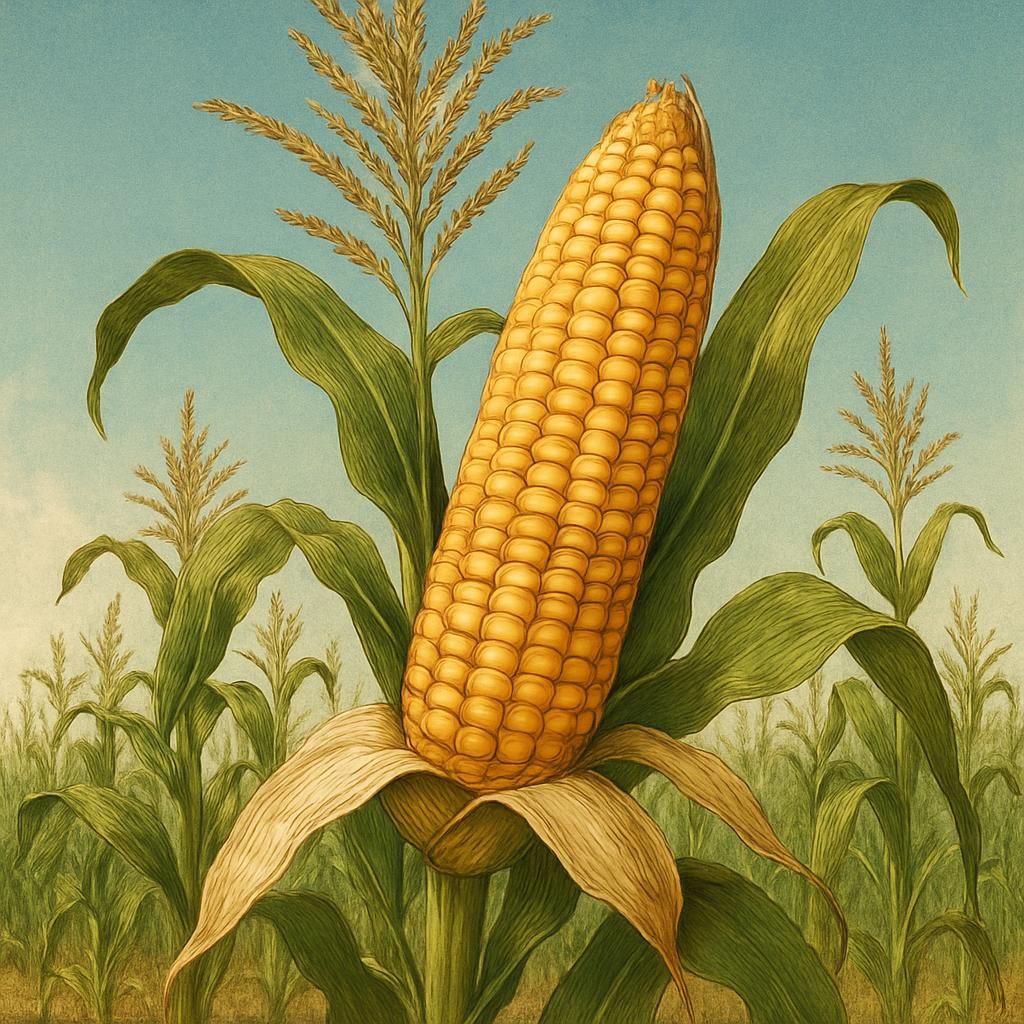
Introduction to Maize (Chulpi Corn)
Maize, or Chulpi Corn, is an ancient and vital crop that has been cultivated for thousands of years. Renowned for its robust kernels and adaptability, maize is pivotal in global nutrition and agriculture. This crop is especially popular in Latin America due to its distinctive, large, and sweet kernels which are cherished in various cuisines.
Botanical Profile of Maize (Chulpi Corn)
Maize belongs to the family Poaceae, with its scientific name being Zea mays. It is an annual crop that produces tall stalks, growing as high as 10 feet or more. The ear of maize develops along the stem, enclosed in protective husks, with each ear containing numerous rows of sweet kernels.
Soil, pH, and Climate Requirements for Maize (Chulpi Corn)
Chulpi Corn thrives best under specific conditions outlined as follows:
| Factor | Ideal Conditions |
|---|---|
| Soil Type | Well-drained loam |
| Soil pH | 5.8 - 7.5 |
| Temperature | 60°F to 95°F (15°C to 35°C) |
| Rainfall | 500-800mm annually |
| Sunlight | Full sun (at least 6-8 hours daily) |
Step-by-Step Planting & Propagation
- Seed Selection: Choose healthy, certified seeds known for good yield and resistance to pests and diseases.
- Site Preparation: Ensure the field is plowed and free of weeds. Incorporate organic matter to enrich the soil.
- Sowing: Plant seeds at a depth of 1-2 inches and space them about 8-10 inches apart, with rows 30-36 inches apart.
- Watering: Water immediately after planting, ensuring the soil remains moist until germination.
- Thinning: Once plants are 3-4 inches tall, thin seedlings to about one plant every 8-10 inches.
Care & Maintenance Regimes for Maize (Chulpi Corn)
Effective maintenance is crucial for optimal yield:
| Aspect | Schedule |
|---|---|
| Watering | Week 1-4: twice a week; Week 5-9: once a week based on moisture levels |
| Fertilizing | Week 2: Nitrogen-rich fertilizer; Week 6: Balanced NPK fertilizer |
| Pruning | Remove side shoots and ensure sufficient airflow around plants |
Pests, Diseases & Organic Management
Chulpi Corn faces threats from various pests and diseases, including:
- Corn Earworm: Use Bacillus thuringiensis Bt sprays or neem oil.
- European Corn Borer: Introduce beneficial insects like Trichogramma.
- Smut: Ensure crop rotation and clean fields.
- Gray Leaf Spot: Apply copper-based fungicides and improve field drainage. Consider implementing pest traps as outlined in 7 Summer Pest Traps That Sabotage Small Farm Harvests for comprehensive pest management.
Harvesting, Curing & Optimal Storage
- Harvesting: Ears are ready for harvest about 100 days after planting when kernels are fully developed and the husks begin to dry.
- Curing: Allow harvested ears to dry in the field or in a well-ventilated area to reduce moisture for several days.
- Storage: Store in a cool, dry place to prevent mold and maintain kernel quality.
Companion Planting for Maize (Chulpi Corn)
Companion planting can enhance growth and pest control:
- Beans: Fix nitrogen and benefit corn's nutrient uptake.
- Squash: Provides ground cover, reducing weed growth and preserving soil moisture.
- Thyme: Offers natural pest deterrent properties, improving pest management. For additional insights, explore guidance from Summer Companion Planting: 10 Organic Pairings to Boost Small Farm Resilience.
By leveraging these insights and applying best practices in maize cultivation, farmers can significantly enhance their yield and crop health.