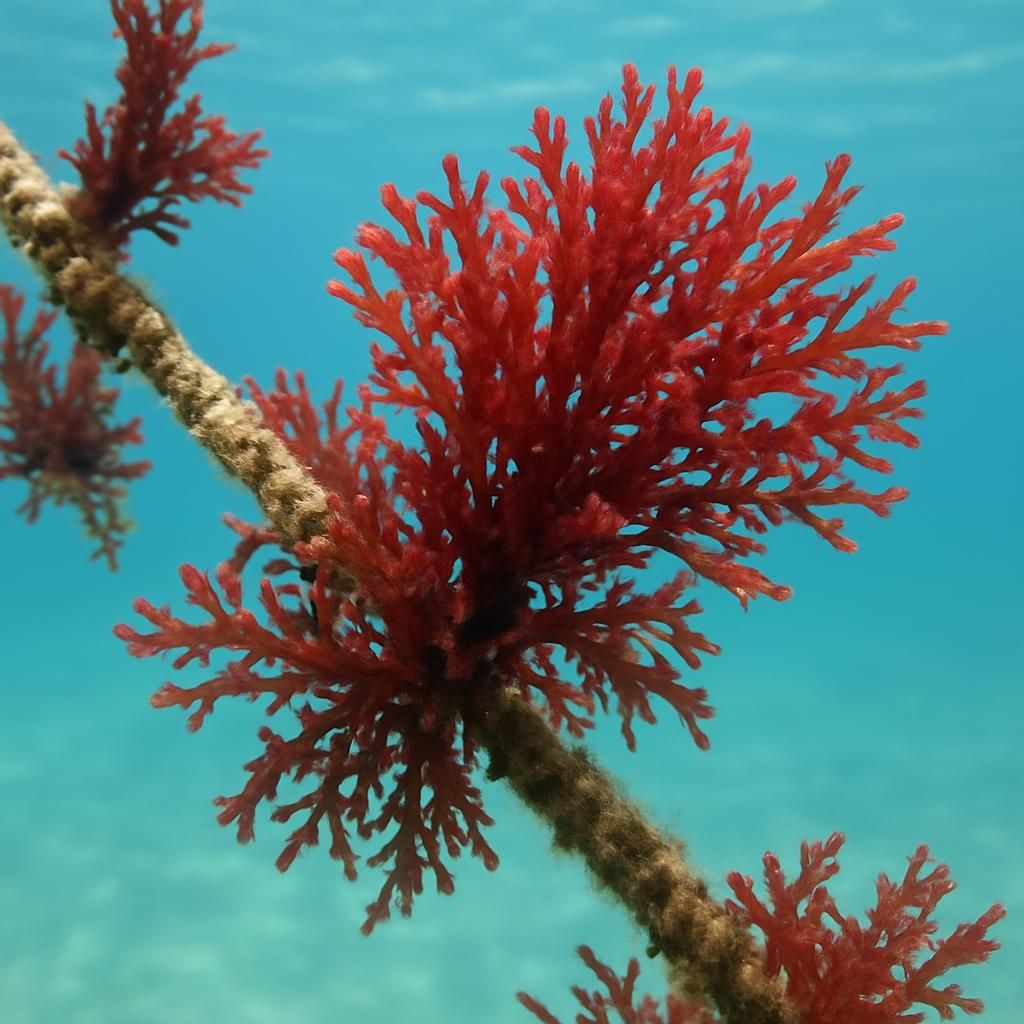
Introduction to Gracilaria
Gracilaria is a genus of red macroalgae belonging to the family Gracilariaceae. It is one of the most commercially important seaweeds globally due to its high agar content and versatile applications in food, pharmaceuticals, cosmetics, and animal nutrition. Cultivation of Gracilaria has expanded rapidly in tropical and subtropical coastal regions because of its relatively fast growth rate, tolerance to a range of salinities, and ability to be grown using low-tech methods such as rope, net, or pond systems.
The global demand for agar and carrageenan continues to rise, driving interest in sustainable Gracilaria farming. Unlike terrestrial crops, Gracilaria requires no freshwater irrigation or arable land, making it an attractive option for coastal communities seeking alternative livelihoods. Successful cultivation depends on careful site selection, appropriate propagation techniques, and consistent water quality management.
Botanical Profile of Gracilaria
Gracilaria species are multicellular red algae with a thallus that typically ranges from 10 cm to over 1 meter in length. The thallus is cylindrical to compressed, often branched, and exhibits a range of colors from deep red to greenish-brown depending on light intensity and nutrient availability. Reproduction occurs both sexually through tetraspores and asexually via vegetative fragmentation.
Common cultivated species include Gracilaria edulis, Gracilaria changii, Gracilaria tenuistipitata, and Gracilaria coronopifolia. These species vary in agar quality, growth rate, and environmental tolerance. Gracilaria is photosynthetic and obtains nutrients directly from the surrounding seawater, making water movement and nutrient concentration critical factors in productivity.
Soil, pH, and Climate Requirements for Gracilaria
Gracilaria does not grow in soil; it is a marine organism that attaches to hard substrates or is suspended in the water column. Optimal cultivation occurs in coastal marine environments with stable salinity, moderate water movement, and protection from extreme wave action. Water temperature, salinity, pH, and nutrient levels must be monitored continuously.
| Parameter | Ideal Range | Notes |
|---|---|---|
| Water Temperature | 20–30 °C | Growth slows below 18 °C or above 32 °C |
| Salinity | 25–35 ppt | Tolerates brief drops to 15 ppt |
| pH | 7.8–8.4 | Maintain stable alkalinity |
| Light (PAR) | 200–600 µmol m⁻² s⁻¹ | Avoid direct midday sun in shallow ponds |
| Water Depth | 0.5–2.0 m | Deeper for rope culture, shallower for ponds |
| Nutrient (N) | 0.5–3.0 mg/L | Supplement with nitrogen-rich fertilizers if needed |
| Current/Wave Action | Moderate | Prevents sedimentation and disease |
Step-by-Step Planting & Propagation
Gracilaria is primarily propagated vegetatively using healthy thallus fragments. Select vigorous, disease-free mother plants and cut 10–15 cm apical segments. These fragments can be tied to ropes, nets, or placed directly on the substrate.
- Site preparation: Clear debris, install mooring systems, and test water quality for at least two weeks prior to planting.
- Fragment preparation: Rinse thalli in clean seawater and trim to uniform length. Avoid damaged or discolored sections.
- Attachment: Tie fragments at 10–15 cm intervals along polypropylene ropes or insert into net pockets. Maintain 20–30 cm spacing between lines.
- Deployment: Suspend ropes horizontally or vertically in the water column at appropriate depth. In pond systems, broadcast fragments at 200–400 g/m² density.
- Initial monitoring: Check attachment success after 48 hours and replace any loose fragments.
Care & Maintenance regimes for Gracilaria
Regular maintenance ensures high biomass and agar quality. Monitor water parameters weekly and adjust nutrient inputs based on growth observations. Remove epiphytes and competing macroalgae every 7–10 days. In rope systems, periodically lower lines to manage light exposure and reduce biofouling.
| Task | Frequency | Details |
|---|---|---|
| Water Exchange | Daily–Weekly | 20–50% exchange in ponds to maintain nutrients |
| Fertilization | Every 7–14 days | Apply NPK or organic seaweed extract at 5–10 ppm |
| Pruning/Thinning | Every 14–21 days | Harvest 30–50% of biomass to promote regrowth |
| Epiphyte Removal | Weekly | Manual brushing or freshwater dip |
| pH & Salinity Check | Twice weekly | Adjust with lime or freshwater if needed |
| Equipment Inspection | Monthly | Check ropes, nets, and anchors for wear |
Pests, Diseases & Organic Management
Gracilaria is susceptible to several pests and diseases that can rapidly reduce yields. Common issues include epiphytic algae, grazing fish and invertebrates, and bacterial or fungal infections. Early detection through regular scouting is essential.
Organic management focuses on cultural and mechanical controls. Maintain optimal stocking density to reduce stress. Use physical barriers such as fine-mesh netting to exclude fish. In cases of heavy epiphyte load, perform brief freshwater dips (5–10 minutes) to kill attached organisms without harming the host alga. Avoid chemical treatments that could contaminate the marine environment.
Harvesting, Curing & Optimal Storage
Harvest Gracilaria when thalli reach 30–50 cm in length or when biomass density reaches target levels. Use sharp knives or scissors to cut apical portions, leaving basal sections for regrowth. In pond systems, partial harvesting every 4–6 weeks is common.
Post-harvest, rinse thalli thoroughly in clean seawater to remove sand and epiphytes. Sun-dry on raised racks for 2–4 days until moisture content drops below 15%. Store dried Gracilaria in cool, dry, dark conditions in breathable sacks. Properly cured product maintains agar quality for up to 12 months.
Companion Planting for Gracilaria
While Gracilaria is typically monocultured, it can be integrated with other marine species in polyculture systems. Oyster Mushroom cultivation is unrelated, but Gracilaria pairs well with filter-feeding bivalves such as oysters or mussels that help clarify water and recycle nutrients. In pond systems, combining Gracilaria with herbivorous fish like rabbitfish or tilapia can control epiphytes naturally. Avoid species that graze directly on the alga or compete aggressively for light and space.