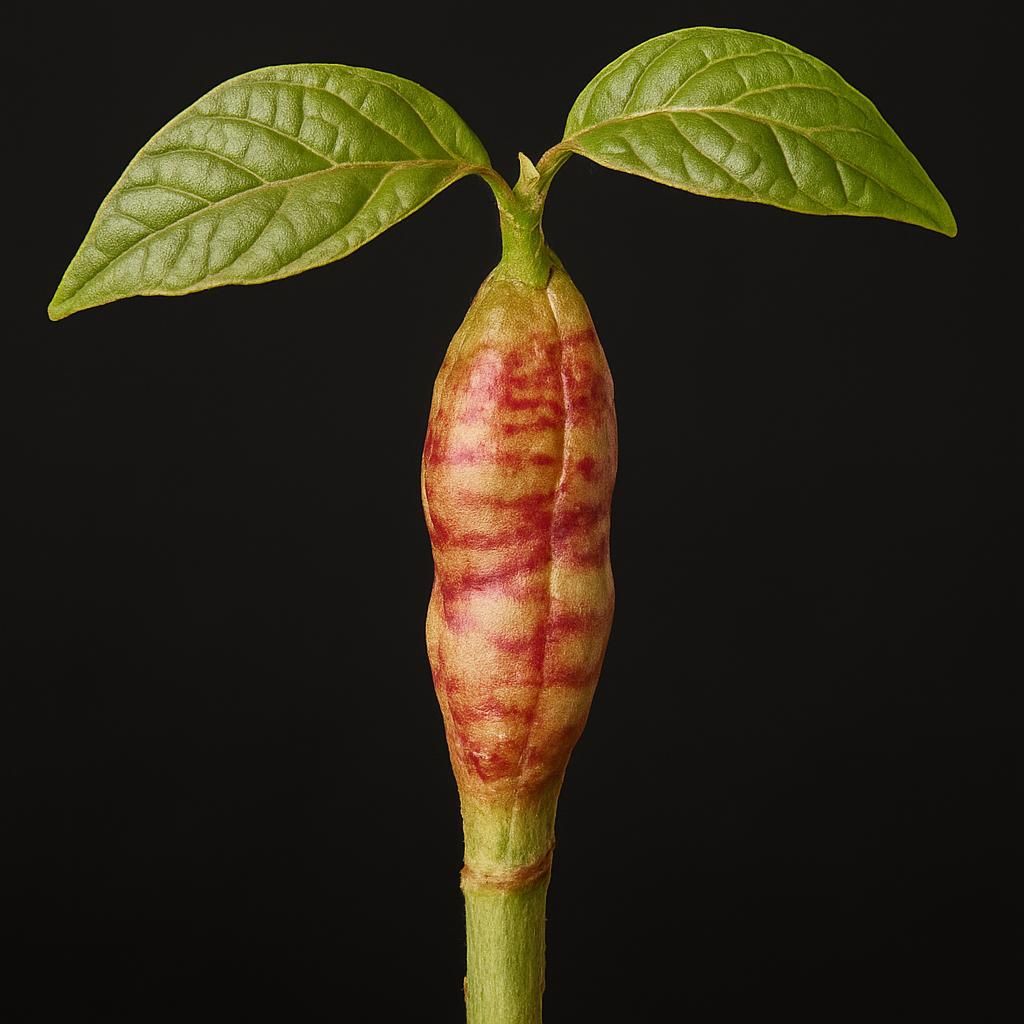
Introduction to Cocoa Swollen Shoot Virus
Cocoa Swollen Shoot Virus (CSSV) is one of the most economically damaging viral pathogens affecting Cacao worldwide. First identified in Ghana in the 1930s, the virus has since spread across West and Central Africa, reducing yields by up to 50% in heavily infected regions. The pathogen belongs to the genus Badnavirus and exists in multiple strains that vary in virulence. Infected trees exhibit systemic symptoms that progressively weaken the plant, eventually causing death within 3–5 years if left unmanaged. Because no curative treatment exists, integrated management focused on early detection, vector control, and removal of infected material remains the cornerstone of disease suppression.
Identifying Symptoms & Damage
Early recognition of CSSV is critical for limiting plantation-wide spread. The most characteristic symptom is the swelling of young shoots, petioles, and roots, giving the disease its common name. Leaves often display red vein banding, chlorotic mottling, or fern-leaf patterns that become more pronounced as infection advances. Pods may become smaller, irregularly shaped, and fewer in number, with beans showing reduced quality. In severe cases, trees exhibit dieback of branches and complete canopy defoliation. Secondary effects include increased susceptibility to opportunistic fungi and insect attack, accelerating tree decline.
Lifecycle and Progression of Cocoa Swollen Shoot Virus
The virus is transmitted exclusively by several species of mealybugs, primarily Planococcoides njalensis and Planococcus citri. These vectors acquire the virus during feeding on infected phloem tissue and transmit it to healthy trees in a semi-persistent manner. The pathogen moves systemically through the vascular system, replicating in parenchyma and phloem cells. Symptom expression typically begins 6–12 months after infection, although latency can extend up to 18 months in tolerant varieties.
| Lifecycle Stage | Description | Typical Duration | Key Indicators |
|---|---|---|---|
| Acquisition | Mealybug nymphs feed on infected cacao phloem and acquire viral particles | 1–7 days | Virus detectable in vector salivary glands |
| Inoculation | Viruliferous mealybugs move to healthy trees and inject virus during feeding | Minutes to hours | Initial infection at feeding site |
| Systemic Spread | Virus replicates and moves through xylem and phloem to shoots, roots, and pods | 3–8 weeks | Red vein banding appears |
| Symptom Expression | Swelling of shoots, chlorosis, and reduced pod set become visible | 6–18 months post-infection | Shoot hypertrophy, leaf mottling |
| Tree Decline | Progressive dieback, canopy thinning, and death | 2–5 years | Severe yield loss, tree mortality |
Environmental Triggers & Risk Factors
High mealybug populations, favored by warm, humid conditions (25–32 °C and >70% relative humidity), accelerate CSSV spread. Dense planting and lack of sanitation increase vector movement between trees. Shaded, poorly ventilated plantations and the presence of alternative host plants such as Cola and Ceiba further elevate risk. Drought stress or nutrient deficiency can mask early symptoms, delaying detection. Monoculture systems without resistant varieties are particularly vulnerable.
Organic Control & Treatment Plans
No chemical or biological agent eradicates CSSV once infection is established. Management therefore centers on cultural and biological practices that suppress vectors and remove inoculum.
| Treatment Option | Frequency | Application Method | Notes |
|---|---|---|---|
| Rogueing infected trees | At first confirmed symptom | Cut at ground level and destroy by burning or deep burial | Must include 10 m radius buffer zone |
| Mealybug monitoring & manual removal | Weekly during peak vector season | Hand-picking or water-jet dislodgement on young flushes | Combine with ant control to reduce protection of mealybugs |
| Neem oil (azadirachtin 0.3%) | Every 10–14 days during flush growth | Foliar spray at 5 ml/L water | Targets nymph stages; avoid spraying during flowering |
| Introduction of Cryptolaemus montrouzieri | Once per season or when mealybug counts exceed threshold | Release 5–10 beetles per tree | Most effective in shaded, humid microclimates |
| Barrier crops (e.g., Gliricidia) | At plantation establishment | Plant 2–3 rows around cacao blocks | Reduces mealybug immigration |
| Sanitation pruning of alternative hosts | Twice yearly | Remove Cola and Ceiba within 50 m of cacao | Prevents reservoir populations |
Preventing Cocoa Swollen Shoot Virus in the Future
Long-term prevention relies on planting certified virus-free material from reputable nurseries and selecting tolerant or resistant Cacao varieties such as Forastero or Trinitario hybrids. Implement a minimum 3-year crop rotation with non-host species before replanting cacao. Maintain strict quarantine protocols when introducing new germplasm. Regular scouting combined with prompt removal of symptomatic trees and rigorous mealybug suppression can keep incidence below economic thresholds. Diversifying shade trees and promoting beneficial insect habitats further reduces vector pressure.
Crops Most Affected by Cocoa Swollen Shoot Virus
While the disease is host-specific to Cacao, several botanical relatives and shade-tree species can harbor the virus asymptomatically. Cola acuminata, Ceiba pentandra, and certain citrus species have been documented as reservoirs. No other major commercial crops listed among common tropical commodities show significant infection under field conditions.