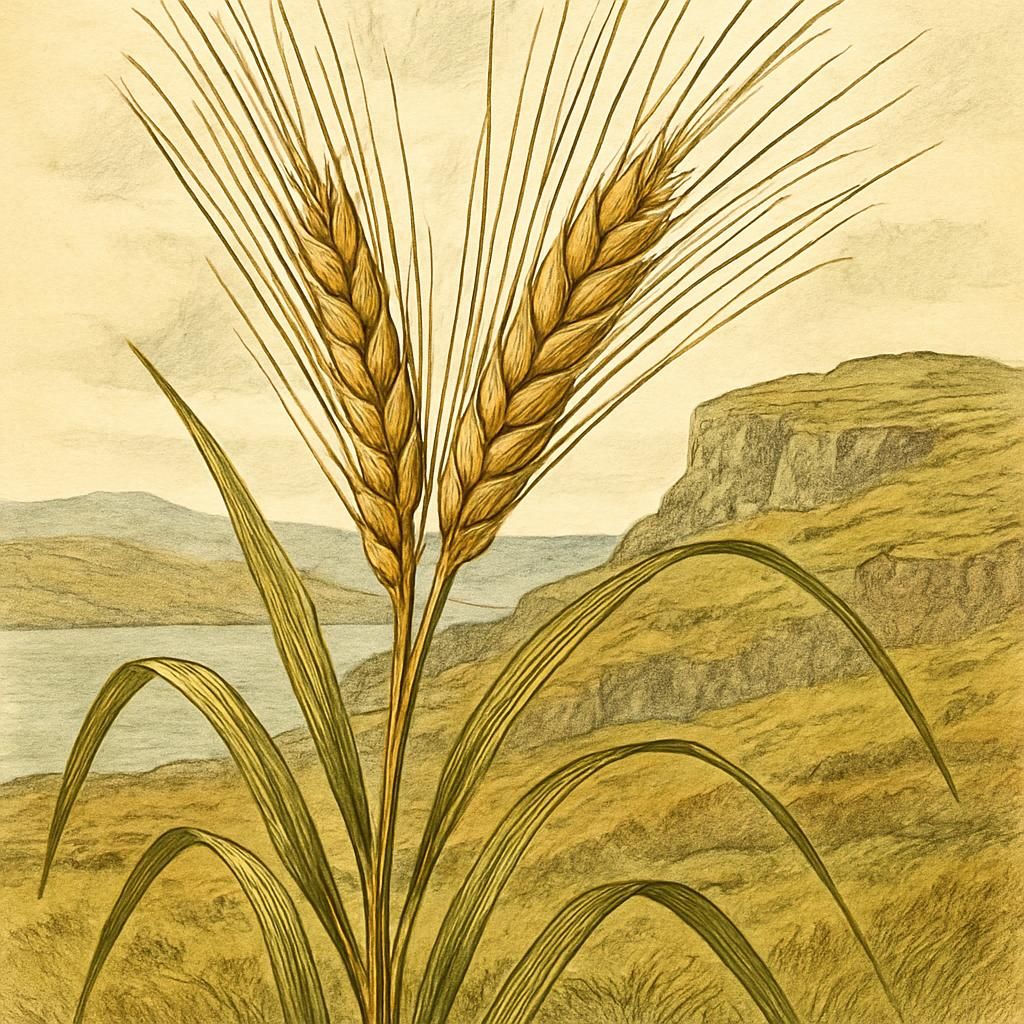
Introduction to Barley (Bere - Orkney)
Barley (Bere - Orkney) is an ancient heritage crop integral to Scotland's agricultural history, particularly in the Orkney Islands. Known for its ability to thrive in the harsh, windy climate of the north, Bere is celebrated not only for its historical value but also for its diverse uses in brewing, baking, and animal feed. This guide aims to provide comprehensive information for the cultivation and maintenance of this unique crop.
Botanical Profile of Barley (Bere - Orkney)
The Bere barley is a six-rowed crop, distinct from modern barley types because of its longer straw and resilience to low input conditions. Its scientific designation, Hordeum vulgare L., identifies it as a member of the grass family, characterized by its flexible adaptation to various soil types and climates, particularly the cooler and wetter environments of northern Europe.
Soil, pH, and Climate Requirements for Barley (Bere - Orkney)
For optimal growth, Bere barley requires specific conditions usually found in its native Orkney region. Here is a structured table representing the ideal growing conditions:
| Condition | Ideal Range |
|---|---|
| Soil Type | Sandy loam, Well-drained soils |
| Soil pH | 5.5 - 6.5 |
| Temperature | 15-20°C (growth phase) |
| Rainfall | 500-800 mm annually |
Bere barley thrives in well-drained, sandy loam soils with a slightly acidic to neutral pH. Its robustness allows it to withstand less-than-ideal conditions, but for optimal yield, these recommendations should be followed.
Step-by-Step Planting & Propagation
- Site Selection: Choose a well-drained location with full sun exposure. The soil should ideally be sandy loam with a pH close to 6.0.
- Preparation: Plow the field to a depth of 15-20 cm approximately 6 weeks before planting to help incorporate organic matter and prepare a fine seedbed.
- Timing: Sow in spring, once the risk of frost has passed, typically between late March and early May.
- Sowing: Using a seed drill, plant the seeds about 2-3 cm deep and 10-15 cm apart in rows spaced 30 cm apart.
- Watering: Ensure adequate moisture during the germination phase, but avoid waterlogging.
Care & Maintenance regimes for Barley (Bere - Orkney)
Routine care involves regular monitoring of the plant's needs in terms of water, nutrients, and protection from pests and diseases. Below is a table outlining these requirements:
| Care Aspect | Schedule/Requirement |
|---|---|
| Water | Moderate; increase during dry spells |
| Fertilizer | Low nitrogen; apply in spring |
| Pruning | Not applicable |
Pests, Diseases & Organic Management
Barley (Bere - Orkney) can fall victim to common cereal crop issues including Rusts, Barley Yellow Dwarf Virus, and Spider Mites. Employ crop rotation and companion planting to minimize risk. Organic management can include introducing beneficial insects to control pests naturally and applying compost teas to boost plant immunity.
Harvesting, Curing & Optimal Storage
Bere barley is typically ready for harvest by early to mid-autumn. Drying the grains thoroughly is crucial to prevent mold. Post-harvest, grains should be stored in cool, dry conditions in airtight containers to maintain their quality.
Companion Planting for Barley (Bere - Orkney)
Good companion plants for Bere barley include legumes such as Peas and Clover, which can help fix nitrogen in the soil. Avoid planting Bere barley close to other cereals to reduce the competition for nutrients.
For more insights into complementary growing methods, check our blog on The Truth About Fall Garden Transitions for Small Farm Resilience.
Explore more about Barley, a crucial crop with diverse applications.