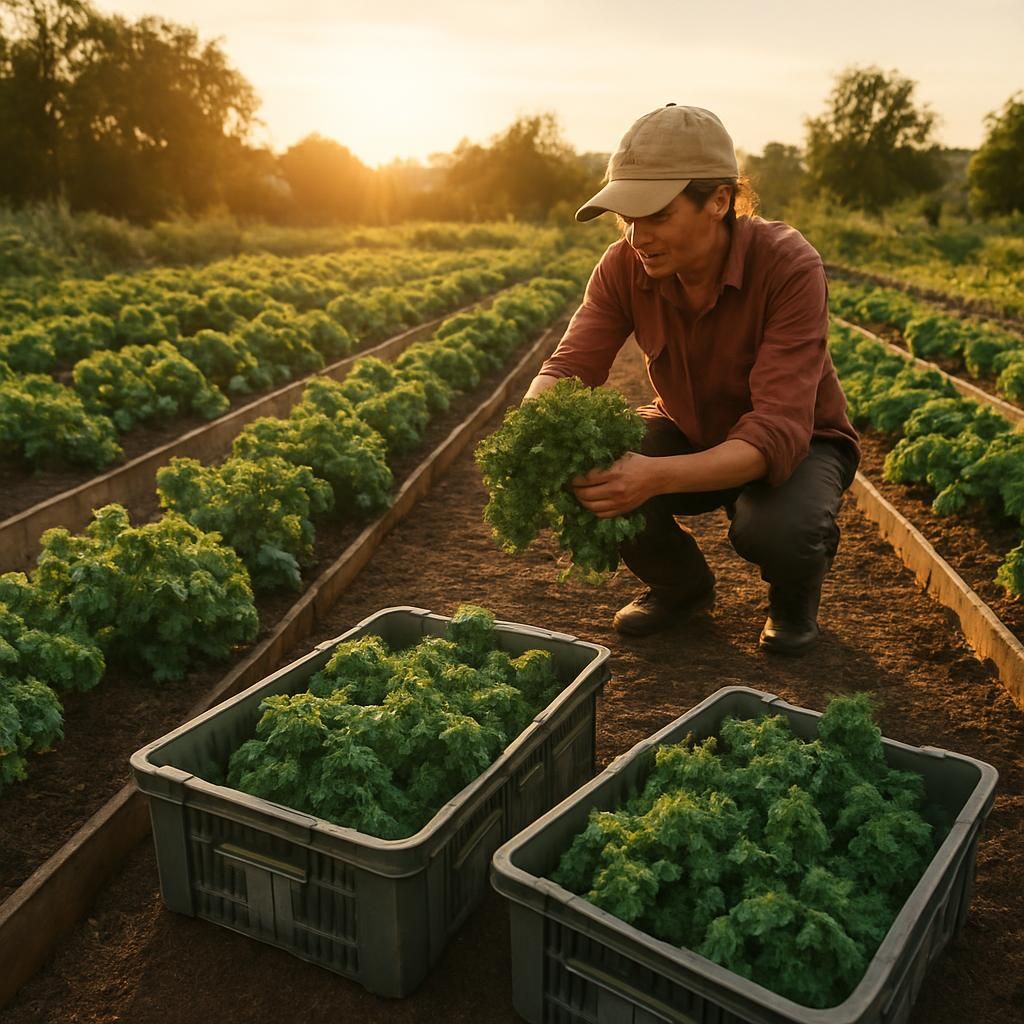
The Real Numbers Behind Kale Production
Most small-scale growers assume kale is an easy cash crop because it grows quickly and tolerates cool weather. After tracking every seed packet, amendment, and market sale across three seasons, the picture becomes much less romantic. Direct costs add up fast even on modest plots, and many growers discover their margins shrink once labor and opportunity costs are included.
Input Costs That Quietly Erode Profit
Seed represents the smallest line item but still matters when varieties are selected for disease resistance rather than just yield. Organic-certified seed often costs two to three times more than conventional options. Soil amendments including compost, aged manure, and mineral supplements represent the next largest expense. Even when these materials are sourced locally, delivery fees and the time required to spread them increase the true cost.
Labor quickly becomes the dominant expense. Hand weeding, successive sowings, and multiple harvests across a six-week window require consistent attention that cannot be rushed. Equipment depreciation for hoes, irrigation timers, and harvest knives should also be factored in even if purchases happened years earlier.
Revenue Streams and Market Realities
Direct-to-consumer sales at farmers markets provide the highest price per pound but introduce weekly variables. Weather, competing vendors, and customer traffic all affect weekly totals. Restaurant accounts offer steadier volume yet demand consistent sizing and delivery schedules that add logistical overhead. CSA shares spread risk across many customers but require careful planning so kale does not exceed what members actually want to receive.
| Sales Channel | Average Price per Pound | Typical Weekly Volume | Net After Direct Costs |
|---|---|---|---|
| Farmers Market | $4.50 | 35 lbs | $112 |
| Restaurant | $3.25 | 50 lbs | $105 |
| CSA Box | $2.75 | 60 lbs | $95 |
Hidden Factors That Change the Equation
Kale's reputation for cold tolerance sometimes leads growers to extend the season too far. Late-fall harvests increase the risk of quality loss from frost damage and reduce market appeal. Early-spring plantings face flea beetle pressure that requires row cover or timely interventions. Both situations add material and labor costs that were not budgeted in the original plan.
companion planting strategies can reduce some of those interventions by placing aromatic herbs nearby that naturally deter certain insects. The same approach works in reverse during summer when kale is interplanted with taller crops that provide afternoon shade and slow bolting.
Tracking Performance Across Seasons
Without a simple system for logging expenses and income per bed or zone, it becomes difficult to identify which variety or planting date actually delivers the best return. Many growers rely on memory alone and later realize certain successions consistently underperformed. Keeping basic records of seed lots, amendment dates, and harvest weights allows clearer decisions about which plantings to repeat and which to drop.
Practical Adjustments That Improve Margins
Reducing the number of varieties grown in favor of two or three reliable types lowers seed and labeling complexity. Concentrating plantings into fewer, denser successions reduces weeding time and simplifies irrigation scheduling. Selling value-added products such as kale pesto or dehydrated chips captures higher margins while using leaves that might otherwise be culled for cosmetic reasons.
The external source FAO provides detailed production guidelines that help calibrate expectations around spacing, fertility, and harvest windows for different climates.
When Kale Makes Sense on a Small Operation
Kale fits best when it fills a genuine gap in the crop plan rather than serving as a default cool-season filler. Operations that already have strong direct-market relationships and reliable labor can absorb the crop's demands. Farms lacking either of those foundations often find that kale consumes more resources than it returns once all costs are honestly counted.