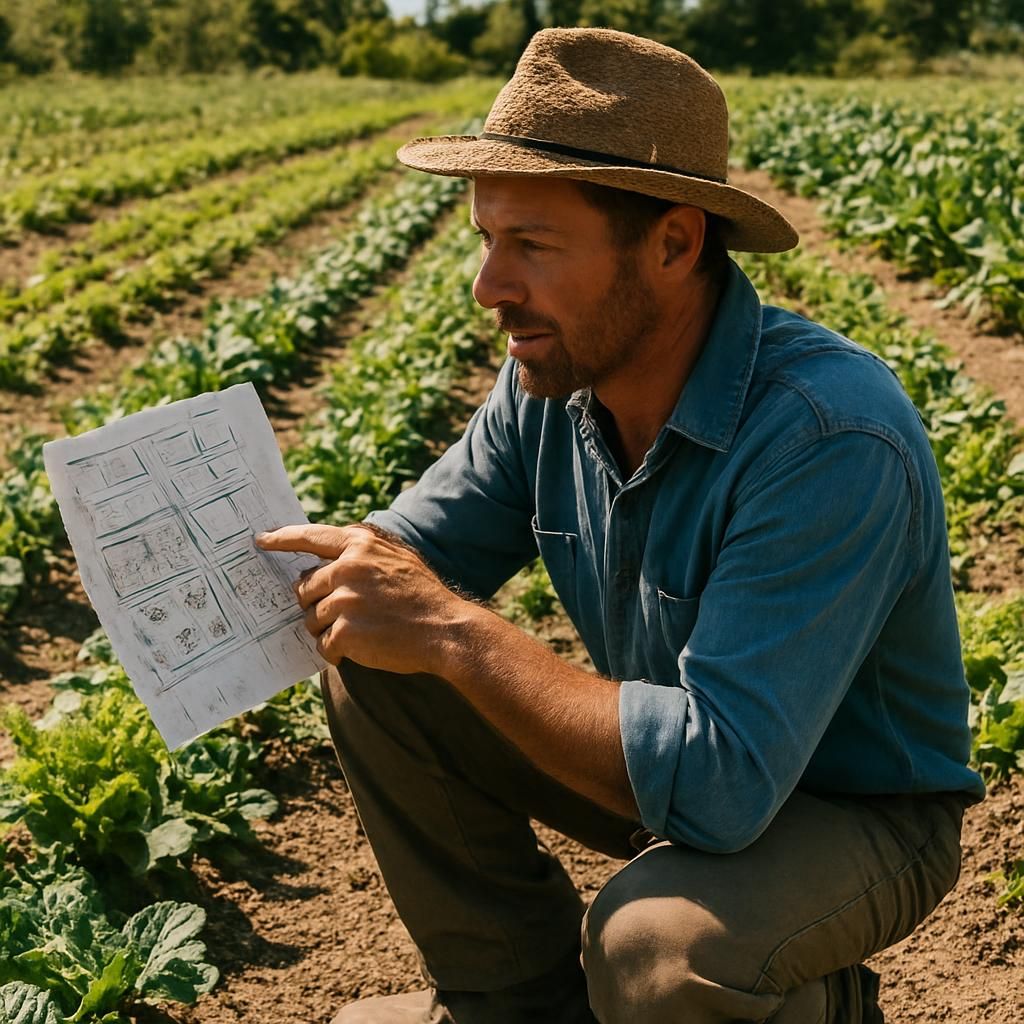
The Day My Uniform Plan Collapsed
Last spring I planted the same succession of lettuce across the entire half-acre. The east side bolted in six days while the west side still looked like it needed another two weeks. By the time I harvested what I could, nearly a third of the crop had gone to seed and the rest sold at a discount. That single mistake made me redraw the map of my land.
Why Uniform Planting Loses Money
Small farms rarely have perfectly consistent conditions. One corner may sit in a frost pocket, another may drain faster after rain, and a third may receive six hours of direct sun while the rest gets eight. When you treat every square foot the same, you force crops into environments they were never meant to handle. The result shows up in lower germination, faster disease pressure, and uneven harvest windows that make marketing difficult.
Mapping Your Actual Conditions
Walk the land at different times of day and different weeks. Note sun exposure at 10 a.m. and again at 3 p.m. Record which spots stay soggy after a storm and which dry out within hours. Mark areas that warm up earliest in spring and those that stay cool longest into fall. These observations become the real data you use instead of generic zone maps.
Creating Functional Zones
Divide the property into zones based on the patterns you recorded rather than arbitrary lines. A common setup includes a warm, well-drained zone for heat-loving crops, a cooler zone for leafy greens that bolt easily, and a transitional zone that works for both early and late plantings. Once the zones exist on paper, each one gets its own planting calendar and crop list.
Matching Crops to Conditions
Place tomatoes and peppers in the warmest, sunniest zone where soil warms quickly. Reserve the cooler, moister zone for lettuce, spinach, and cilantro that prefer steady moisture. Use the transitional zone for crops like kale and beets that tolerate a wider range of conditions. This matching reduces the need for constant intervention and improves harvest consistency.
Tracking Performance by Location
Keep simple records for each zone: planting date, first and last harvest, total weight sold, and any problems noted. Over two seasons these numbers reveal which zones consistently outperform others. You can then shift high-value or finicky crops into the strongest zones and use weaker areas for cover crops or low-maintenance staples.
| Zone Name | Primary Crops | Sun Hours | Soil Drainage | Best Planting Window | Notes from Last Season |
|---|---|---|---|---|---|
| Warm South Edge | Tomatoes, Peppers | 8+ | Fast | Late April | Highest yields, earliest harvest |
| Central Strip | Kale, Beets, Carrots | 6-7 | Moderate | Early April | Steady production, fewer disease issues |
| North Low Spot | Lettuce, Spinach | 5-6 | Slow | Mid March | Bolts quickly after May 15 |
Adjusting for Weather Shifts
Microclimates change with seasons. A zone that stayed cool in spring may become the only place that still produces greens in July. Review your zone notes at the start of each season and be ready to move plantings if conditions shift. Small adjustments based on real observations beat rigid calendars every time.
Using Records to Improve Next Year
At season's end, compare total income per zone against the labor and inputs required. If one zone consistently returns less than the cost of seed and time, consider converting it to a lower-maintenance use such as perennial herbs or a pollinator strip. The goal is not to maximize every square foot equally but to allocate resources where they generate the best return.
Building a Simple Rotation Across Zones
Once zones are established, plan rotations within each one rather than across the whole farm. This keeps soil-building crops in the same physical area year after year while still avoiding consecutive plantings of the same family. The microclimate approach makes rotation planning far more precise than broad calendar rules.
Practical Tools That Help
A notebook, a simple map, and a weather app that lets you drop a pin at your exact location are usually enough to start. Photograph problem areas after heavy rain or during heat waves so you have visual proof when planning the next season. Over time these records become more valuable than any generic growing guide.
When to Re-Evaluate Your Zones
Major changes such as new tree growth, construction, or shifts in irrigation patterns can alter sun and moisture patterns. Re-walk the land whenever something changes and update your zone boundaries. Keeping zones current prevents the slow drift back into uniform management that caused the original losses.
The Payoff of Zone Thinking
Farms that match crops to real conditions spend less time fighting problems and more time harvesting. The difference appears in steadier cash flow, fewer emergency interventions, and clearer decisions about which crops deserve more space next year. Zone planning turns scattered observations into a repeatable system that improves with every season.