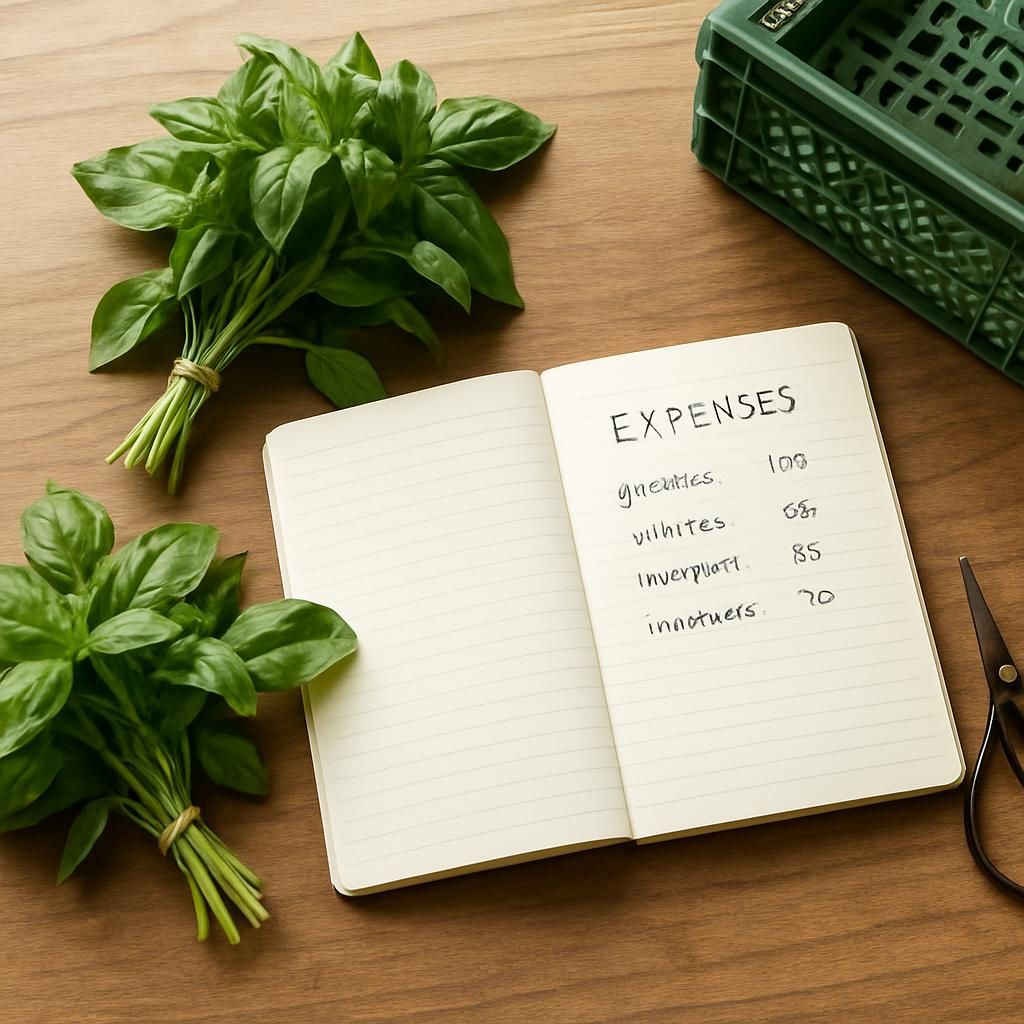
The Numbers That Actually Matter on a Small Basil Patch
I started the season with six raised beds of Genovese basil and a simple notebook. By day 90 the spreadsheet told a different story than the harvest baskets. Seed costs came in at $18, potting mix and compost totaled $64, and the biggest line item turned out to be the $112 spent on repeated organic foliar sprays. The basil itself sold for $287 at two local markets, leaving a net of $93. That margin only appeared after I stopped guessing and started logging every purchase against each bed.
Most people focus on yield per square foot. The more useful number is cost per marketable bunch. Once I divided total expenses by the 214 bunches that actually sold, the real cost landed at $1.34 per bunch. Selling price averaged $2.10. The gap looked comfortable until I noticed three bunches were lost to tip burn every week. Those hidden discards pushed the effective cost above $1.50 and cut the margin in half on those plants.
Where Basil Money Actually Leaves the Operation
The largest controllable expense was not seed or soil. It was the repeated decision to spray instead of adjust the environment. Switching to better airflow between beds and removing lower leaves that touched the soil cut the spray budget by more than half within three weeks. The change also reduced the amount of product that had to be washed before market, saving another hour of labor each harvest day.
Labor showed up next. Harvesting at the wrong time of day meant more wilting and more trimming waste. Moving the cut window to early morning before full sun dropped post-harvest loss from 12 % to roughly 4 %. That single timing adjustment added back almost 20 sellable bunches over the remaining six weeks.
A Simple Expense Tracker That Works Without Software
| Category | Week 1-4 | Week 5-8 | Week 9-12 | Notes |
|---|---|---|---|---|
| Seeds & starts | $18 | $0 | $0 | One purchase at season start |
| Soil & amendments | $64 | $12 | $8 | Top-dress only after week 4 |
| Foliar sprays | $42 | $38 | $32 | Cut after airflow changes |
| Harvest labor hours | 7 | 9 | 6 | Morning cuts reduced trimming time |
| Packaging & fuel | $19 | $21 | $17 | Reused crates after week 6 |
| Total per period | $143 | $80 | $63 | -- |
The table made two patterns obvious. First, soil and amendment costs dropped sharply after the initial build. Second, spray expense stayed high until the growing environment changed. Once those two lines moved, net margin per bunch rose from $0.76 to $1.12 without adding any new sales channels.
Pairing Decisions That Lower Input Costs
Basil benefits from specific neighbors that reduce pest pressure without extra sprays. Growing it beside marigolds cut aphid visits enough that I skipped two planned treatments. The same beds also produced fewer yellow leaves, which meant less culling at harvest. The pairing cost nothing beyond the price of the marigold seedlings already in the rotation.
Another low-cost adjustment came from microclimate awareness. The east edge of the patch stayed cooler and held moisture longer. Moving the more heat-sensitive varieties there reduced wilting losses on market days. The change required only a weekend of observation and one afternoon of transplanting.
Turning the Same Patch Into Steady Cash Flow
After the 90-day log, the next basil cycle started with a different plan. I kept the same six beds but added a simple weekly expense column on the same sheet. Every purchase had to be assigned to a bed and a date. Within four weeks the sheet showed that packaging costs had crept up because I was buying new pint containers every market. Switching to returnable crates used by two neighboring vendors dropped that line item by $11 per cycle.
The final change was deciding which varieties actually sold. Purple basil bunches moved slower and required more trimming. Replacing half the purple with a second Genovese sowing increased total bunches sold by 38 while keeping the same bed space. Revenue rose without any increase in inputs.
Keeping Records Without Overcomplicating the Day
A single notebook page per bed works better than complex apps for most one- or two-person operations. At the top of each page I wrote the variety, planting date, and expected first harvest window. Below that I listed every expense the same day it happened. At the end of each week I added a quick total and compared it to bunches harvested. The five-minute routine revealed problems before they became expensive habits.
Over three cycles the same six beds moved from $93 net profit to $171 while using the same amount of space and roughly the same labor hours. The difference came from three repeated actions: logging every purchase against a bed, adjusting the environment before reaching for a spray bottle, and choosing varieties that matched actual market demand rather than what looked good in the catalog.
Small basil patches rarely fail because of poor soil or bad seed. They lose money because the daily decisions around airflow, harvest timing, and variety selection are never measured against the actual dollars leaving the operation. Once those decisions are written down, the path to better margins becomes visible without any additional land or equipment.