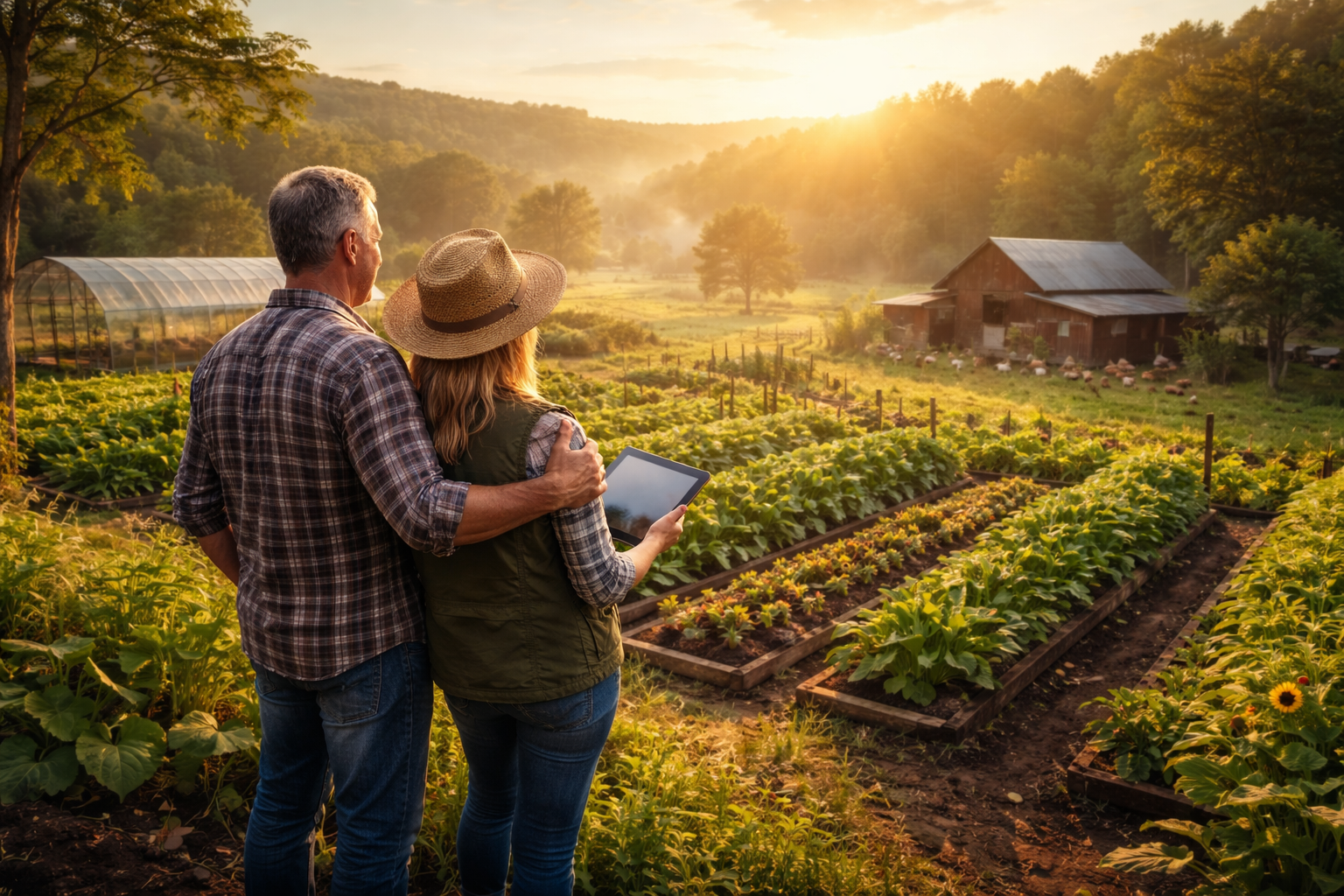
The New "Retirement Plan": A Farm
If you've worked in tech for a while, the fantasy probably sounds familiar: wake up with the sun, grow your own food, build something real with your hands, and stop living in constant notifications. For many people, "retire to a farm" isn't about giving up work--it's about choosing better work.
But there's a catch: farming is rewarding, yet it's also complex, seasonal, and unforgiving of missed details. The dream becomes sustainable when you treat the farm like a system--not just a lifestyle.
Why Tech Workers Are Drawn to Farming
There are a few common reasons this dream shows up again and again:
- Burnout and screen fatigue: meetings, metrics, and endless context switching
- Meaningful output: food, trees, soil health--results you can touch
- Independence: fewer bosses, more autonomy, more "owner energy"
- Health and family priorities: cleaner food, outdoor time, a calmer daily rhythm
- The desire to build: tech workers don't stop being builders--they just want a different medium
The Hidden Upside: Tech Skills Actually Translate
Many tech folks bring strengths that help on a farm:
- Systems thinking: seeing dependencies and bottlenecks
- Process design: turning chaos into routines
- Data comfort: tracking costs, yields, timing, and results
- Iterating fast: testing what works, cutting what doesn't
Those strengths become powerful when paired with practical farming habits.
The Reality Check: What Actually Makes Farming Hard
The hardest part isn't usually planting. It's the ongoing management:
- Timing: pruning windows, fertilizing intervals, pest cycles, irrigation schedules
- Observation: catching early signs of nutrient issues, disease, or water stress
- Consistency: repeating the right actions even when life gets busy
- Record-keeping: what you applied, when, where, how much, and what happened after
- Decision overload: dozens of small choices that compound into success or failure
A farm doesn't punish you for working slowly--it punishes you for forgetting.
Common Mistakes New "Retire-to-a-Farm" Farmers Make
Here are the big ones (and they're all fixable):
- Starting too big: more acres, more crops, more animals than you can manage
- Underestimating maintenance: weeds, fences, tools, pumps, paths, storage
- Not building routines: relying on memory instead of schedules and checklists
- Skipping records: then repeating the same problems every season
- Buying land first, learning later: the learning curve is steep--practice matters
A Better Strategy: Start Small, Build Confidence
Instead of jumping straight into "the forever farm," consider a staged approach:
- Year 0: garden + small orchard + compost + basic irrigation
- Year 1: one or two "primary crops" with repeatable routines
- Year 2: expand what's working, automate what's annoying, document everything
- Year 3+: diversify carefully (new crops, farmstay, value-added products)
Your goal is not just a farm--you want a farm you can manage without stress.
Planning Your Farm Like a Tech Project
Tech workers often succeed faster when they treat farming like product delivery.
Define your "MVP Farm"
Pick one clear outcome:
- "We grow 80% of our vegetables."
- "We maintain 100 fruit trees with consistent yield."
- "We produce a weekly basket for ourselves + neighbors."
Then build backward from that.
Create systems for the repeating work
Farms run on recurring tasks:
- watering
- mulching
- spraying (organic or otherwise)
- fertilizing
- pruning
- harvest
- pest scouting
- equipment maintenance
When those tasks live only in your head, you'll eventually drop one. When they live in a system, you can run the farm even on low-energy weeks.
How OnlyCrops AI Helps Tech Workers Transition to Farm Life
OnlyCrops AI is designed for exactly this challenge: turning a farm from a vague dream into a manageable system.
Use Farm Vision to Spot Problems Early
New farmers often miss early warning signs because they don't know what to look for.
With Farm Vision, you can:
- take a photo of a leaf, stem, or fruit
- catch patterns that suggest nutrient deficiency, disease risk, or pest damage
- get practical next steps without guesswork
This is especially helpful when you're learning, because it builds your "farm intuition" faster.
Use the AI Assistant for On-the-Spot Guidance
When you're standing in the field wondering, "Is this normal?" you don't want a two-hour research spiral.
The OnlyCrops AI Assistant helps you:
- troubleshoot issues (yellowing leaves, curling, spots, slow growth)
- get clear suggestions based on the crop and situation
- decide what to do next: observe, prune, feed, treat, or wait
It's like having a calm second brain while you learn.
Stay Consistent With Tasks, Schedules, and Records
This is where most new farms fail: not effort--consistency.
OnlyCrops AI helps you:
- create recurring tasks (fertilize every 21 days, prune monthly, scout weekly)
- record what you did and when (so you don't double-dose or forget)
- build a simple history you can learn from season to season
Over time, your farm becomes easier because your system gets smarter.
The Real Goal: A Farm That Feels Like Freedom
The farm dream isn't just "grow food." It's:
- calmer mornings
- healthier routines
- meaningful work
- pride in self-reliance
- a life that doesn't feel like a treadmill
But freedom doesn't come from having land--it comes from having control. Control comes from visibility, routines, and good decisions.
Start Simple: A Practical Checklist for Your First Season
If you're beginning (or planning), focus on these foundations:
Pick 3-5 crops you genuinely enjoy eating (motivation matters)
Set up basic irrigation that doesn't depend on memory
Create a weekly farm walk routine (observe before you act)
Track a minimum set of records:
- planting dates
- inputs (compost, fertilizer, sprays)
- pest or disease events
- harvest dates and quantities
Build your task list into a system so you don't carry it in your head
Call to Action: Turn the Dream Into a Managed Farm
If you're a tech worker planning your move toward farm life, don't rely on vague motivation and best intentions. Build a system you can actually run.
Start using OnlyCrops AI to:
- identify issues early with Farm Vision
- get practical help from the AI Assistant
- keep your tasks, schedules, and records organized in one place
Start with OnlyCrops AI today--and make your future farm feel like freedom, not another full-time job.