Introduction
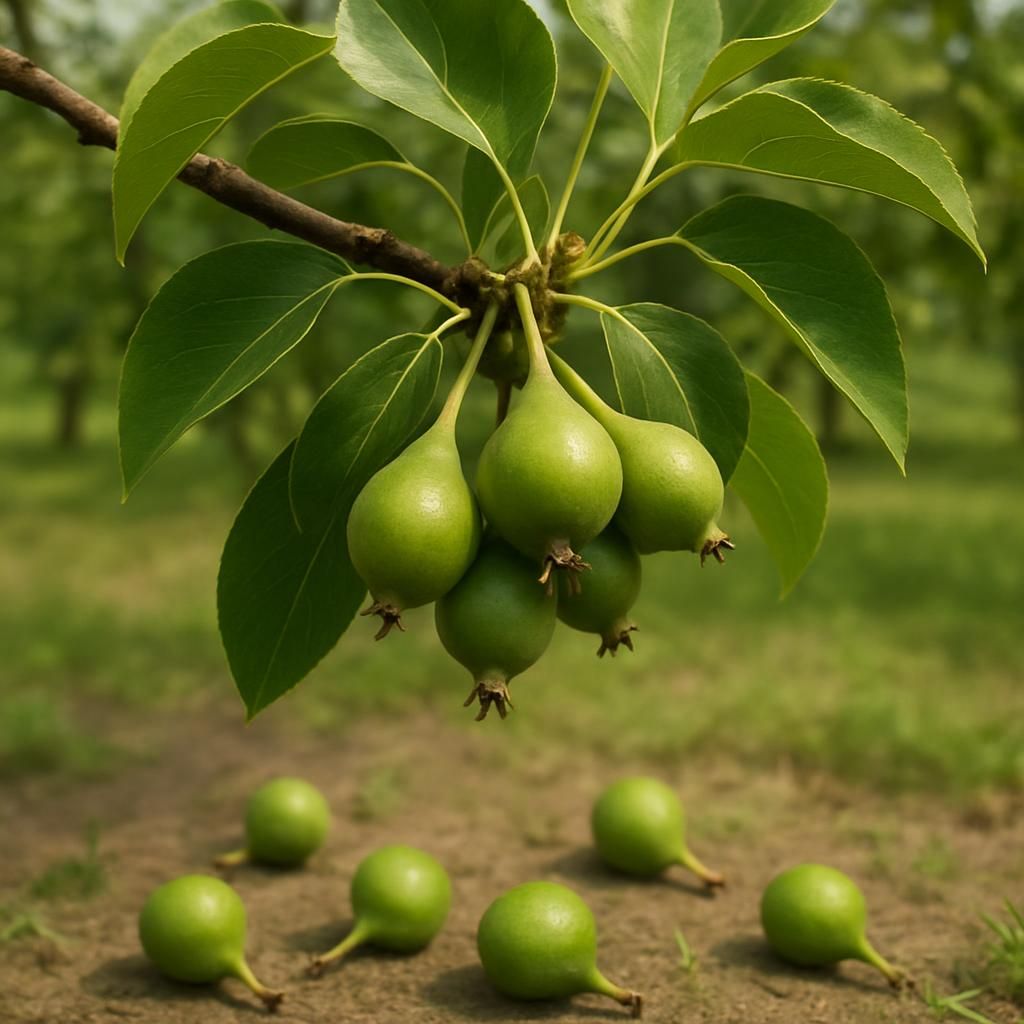
Many gardeners notice their pear trees shedding green, unripe fruit early in the season, leading to disappointing harvests. This premature fruit drop is a widespread issue that can stem from environmental stress, nutritional imbalances, or biological factors. Understanding the underlying causes allows you to intervene effectively with organic practices that support tree health and improve fruit retention.
Common Causes
Several factors commonly trigger fruit drop in pear trees. These include:
- Pollination and Fertilization Problems: Incomplete pollination often causes young fruit to abort shortly after petal fall.
- Water Stress: Inconsistent soil moisture, whether from drought or overwatering, disrupts nutrient uptake and signals the tree to shed fruit.
- Nutrient Deficiencies: Shortages of nitrogen, potassium, or boron weaken fruit development.
- Pests and Diseases: Insects like pear psylla or diseases such as fire blight can damage developing fruit.
- Environmental Conditions: Late frosts, extreme heat, or heavy winds place additional stress on the tree.
| Cause | Typical Timing | Key Symptoms |
|---|---|---|
| Pollination failure | 2-4 weeks after bloom | Small, shriveled fruit that drops uniformly |
| Water stress | Throughout fruit development | Wilting leaves, cracked soil, or waterlogged roots |
| Nutrient deficiency | Mid-season | Yellowing leaves, poor fruit size |
| Pest damage | Early to mid-season | Visible insects, holes, or sticky residue |
Step-by-Step Organic Solutions
1. Improve Pollination
Plant compatible pollinator varieties near your pear tree and encourage native bees by avoiding broad-spectrum sprays during bloom. Installing solitary bee houses can increase visitation rates.
2. Optimize Water Management
Apply a 2-3 inch layer of organic mulch around the drip line to retain moisture. Water deeply once or twice weekly during dry spells, aiming for 1 inch of water per week. Install drip irrigation for consistent delivery without wetting foliage.
3. Correct Nutrient Imbalances
Conduct a soil test in early spring. For nitrogen deficiency, side-dress with well-aged compost or fish emulsion. Apply a foliar spray of diluted seaweed extract to supply trace minerals like boron. Avoid high-nitrogen fertilizers after fruit set.
4. Manage Pests Organically
Monitor for pear psylla and use insecticidal soap or neem oil at the first sign of infestation. Introduce beneficial insects such as lacewings and predatory mites. Remove and destroy fallen fruit to break pest life cycles.
5. Address Disease Issues
Prune out infected wood during dormancy and dispose of it away from the orchard. Apply copper-based sprays at bud break for fire blight suppression. Maintain good airflow by thinning interior branches.
Prevention Tips
- Choose disease-resistant pear cultivars suited to your climate.
- Thin fruit clusters to 1-2 fruits per spur when fruit reaches marble size to reduce competition.
- Maintain consistent cultural practices including annual compost applications and proper pruning.
- Monitor weather forecasts and protect trees with row covers during late frosts.
- Keep the orchard floor clean of debris to minimize overwintering pests and pathogens.
Following these steps consistently will strengthen your pear trees and significantly reduce fruit drop over successive seasons. Regular observation remains the most valuable tool for catching problems early.