Introduction
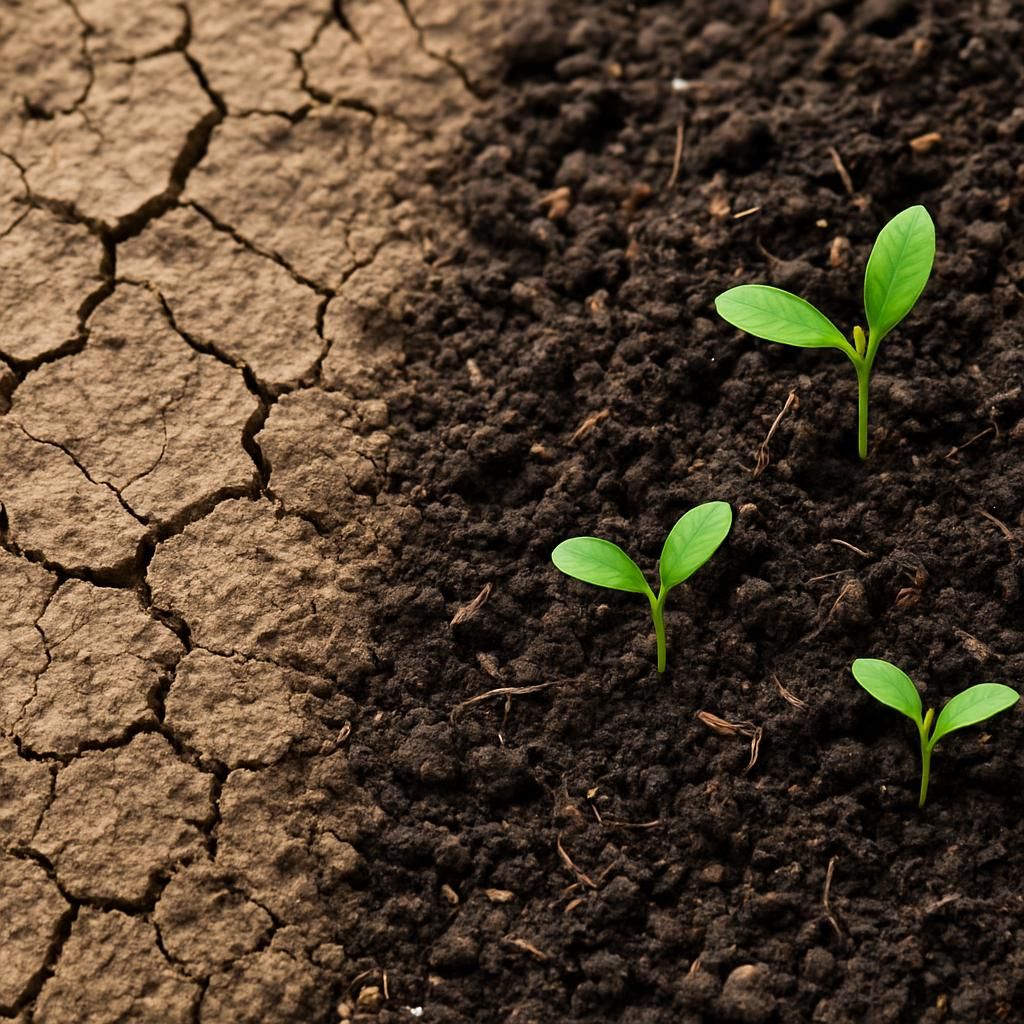
Many gardeners notice their soil developing a hard, crusty layer on the surface after watering or rainfall. This crusting prevents seed germination, restricts root growth, and signals underlying issues with soil structure. The problem often stems from poor soil quality, especially in compacted or low-organic-matter ground. Whether starting with heavy clay, depleted urban soil, or sandy ground that packs down, the good news is that organic methods can rebuild soil health without expensive inputs. This guide explains the causes and provides step-by-step solutions focused on building long-term fertility.
Common Causes
Soil crusting rarely happens in isolation. It results from a combination of factors that reduce pore space and organic binding agents. Understanding these helps target the right fixes.
| Cause | Description | Impact on Plants |
|---|---|---|
| Low Organic Matter | Depleted soil lacks humus to bind particles | Weak root penetration and poor water infiltration |
| Compaction | Foot traffic, heavy equipment, or rain impact packs particles | Reduced aeration and stunted seedlings |
| Clay Content | Fine particles swell when wet and shrink when dry | Forms surface crust that blocks emergence |
| Overwatering or Poor Drainage | Excess water disperses clay and silt | Creates hardpan layer after drying |
| Lack of Cover | Bare soil exposed to sun and rain | Accelerated crust formation and erosion |
These issues compound in budget-conscious gardens where synthetic amendments are unavailable. Organic matter is the universal remedy because it improves aggregation in all soil types.
Step-by-Step Organic Solutions
1. Assess and Loosen the Surface
Begin by gently breaking the crust without disturbing deeper structure. Use a garden fork or broadfork to aerate the top 4-6 inches. Avoid tilling if possible, as excessive disturbance can worsen compaction over time.
2. Add Organic Matter Generously
Incorporate well-rotted compost, aged manure, or leaf mold at a rate of 2-4 inches across the bed. These materials feed soil organisms that produce glues holding particles in stable aggregates. For budget gardeners, free sources include municipal leaf collections, coffee grounds from local cafés, and grass clippings from untreated lawns.
3. Apply Mulch Immediately
Cover the loosened soil with 2-3 inches of organic mulch such as straw, shredded bark, or wood chips. Mulch protects against raindrop impact, moderates temperature swings, and gradually decomposes into humus. Replenish as needed to maintain coverage.
4. Introduce Cover Crops
Plant fast-growing cover crops during off-seasons to build soil structure naturally. Species like Clover fix nitrogen while their roots penetrate compacted layers. Buckwheat grows quickly and scavenges phosphorus, while Sunflower roots help break up hardpan. Mow or chop the cover crop before flowering and leave residues on the surface as green manure.
5. Improve Drainage Over Time
Create slight raised beds or contour the surface to direct excess water away. In persistently wet areas, mix in coarse sand or fine gravel only if organic matter alone proves insufficient after one season.
6. Water Wisely
Water deeply but infrequently to encourage deep roots. Use drip irrigation or soaker hoses to minimize surface disturbance. Allow the top inch to dry slightly between waterings.
Prevention Tips
- Never work soil when it is wet; wait until it crumbles rather than smears.
- Rotate crops and avoid planting the same heavy feeders repeatedly in one spot.
- Limit foot traffic by creating permanent paths between beds.
- Maintain year-round soil coverage with living plants or mulch.
- Test soil pH and texture every two years to track improvement.
- Start a simple compost system using kitchen scraps and yard waste to produce ongoing organic matter.
Consistent application of these practices transforms even the most challenging soil within two to three growing seasons. The crusty surface disappears as biological activity increases and aggregation improves. Gardeners on tight budgets succeed by focusing on free or low-cost organic inputs and patience rather than quick chemical fixes.
Over time, the soil becomes darker, more crumbly, and capable of holding moisture without becoming waterlogged. Seedlings emerge easily, roots explore deeper, and yields increase without additional fertilizer costs. This organic approach builds resilience against both drought and heavy rain while supporting beneficial insects and microbes essential for healthy plant growth.